
At Pompeii, Italian archaeologists complete the biggest dig in a generation, where they strike gold and luxury in one of Pompeii’s richest homes
Monday: Pompeii: The New Dig – House of Treasures (BBC Two, 9pm)
Almost 2,000 years after it was buried under millions of tons of volcanic ash, Pompeii is still a source of incredible fascination for people around the world.
In the centuries that have passed since the snapshot of Roman life was discovered in the late 16th century, you’d think archaeologists would have found everything they could possibly discover – but in fact, only about two-thirds of the former Roman resort near Naples has been fully excavated.
The first three-part series of the BBC’s Pompeii: The New Dig followed the most extensive archaeological excavation there for a generation.
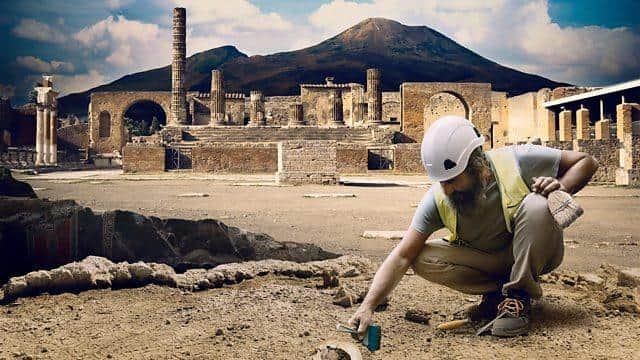

Over the course of a year, an all-Italian team of archaeologists excavated an entire city block, Insula 10, in the north of the city, aiming to unearth the buildings, their purpose, who lived there and what happened to the structures and the people during the eruption in AD 79.
The subsequent investigations revealed the remains of a thriving commercial bakery, a wealthy residence and a laundry.
Now, this special new one-hour episode reveals the latest findings as the groundbreaking project reaches its climax.
Told through the drama of the dig and stylised fresco-inspired animations, House of Treasures continues to paint a vivid picture of what life was like in Pompeii.
The focus of the excavation moves from a cluster of commercial buildings, which include the bakery and laundry, to an adjacent luxurious residence, possibly owned by Pompeiian bigwig and local politician Aulus Rustius Verus.
Set away from the noisy streets, this peaceful and opulent dwelling is one of the most glamorous in Pompeii and extraordinary new finds build a picture of the upper-class life which was in stark contrast to that of the enslaved workers next door.
The first finds from this wealthy residence have already made headlines – including some astonishing frescoes in the banqueting room known as the ‘Black Room’.
Now the archaeologists reveal the full extent of its elaborate mosaic floor, imagining the lavish banquets the owners would have hosted, illustrated with rare examples of fine tableware preserved in the site’s store rooms.
In a nearby small room, the team then make another extraordinary discovery: the body of a woman, crouched on the floor, clutching a pouch containing pearl earrings and gold coins, worth thousands of pounds in today’s money.
To learn more about the room, the team uses plaster casts of the cavities in the ash to reproduce the shapes of the furniture that filled the room, including a chest, a bed and a small table.
On top of the table (a marble slab) are objects from everyday life – bottles, pots and plates.
As the archaeologists continue to expose the extent of Aulus’ affluent residence, in the small room where the woman with the pearl earrings was found, another dramatic discovery is then made – a second victim, this time a man, who died under a collapsing wall.
So who were these people and why did they stay behind when so many fled?
As the team piece together their identities and continue to build a picture of one of the wealthiest houses in town, they also feed our continued fascination of this world-famous Roman city, which was frozen in time.