
In Monday's second episode of Mozart: Rise of a Genius, we see more cinematic drama vignettes depicting Mozart’s life
Monday: Mozart: Rise of a Genius (BBC Two, 9pm)
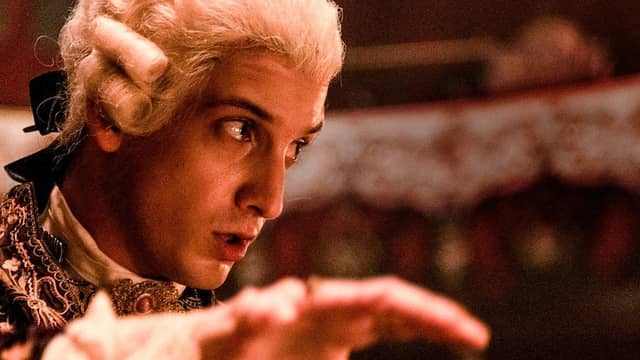

In a creative lifetime spanning only 30 years, Johann Chrysostom Wolfgang Amadeus Mozart redefined the symphony, composed some of the greatest operas ever written and lifted chamber music to new heights.
However, away from his musical and artistic achievements, the complex and contradictory character’s life was just as captivating and compelling, as director Alice Smith’s three-part series Mozart: Rise of a Genius, narrated by Juliet Stevenson, is illustrating.
Across three episodes, Mozart’s letters, music manuscripts and performances of some of his most famous pieces are showing how this child prodigy who was driven mercilessly from infancy and flawed human battled his domineering father and defied the social conventions of his time.

In tonight’s second episode, we will see more cinematic drama vignettes depicting Mozart’s life, featuring a host of stars, world-leading musicians and experts including Stephen Fry, Sheila Hancock, Richard E Grant, Chris Addison, Adjoa Andoh, Karla Crome, Ed Gardner, Lucy Crowe, Golda Shultz, David McVicar, Dr Robert Greenburg, Jane Glover, James Hawes and Dr Flora Willson.
They are all paying homage to the prolific and influential Austrian genius who was feted by kings and emperors, but whose life was cut short by a bitter musical rivalry.
At the end of last week’s opener, we heard how Mozart finally broke free from his oppressive father, Leopold, and made his way to Vienna.
The story picks up again in 1781, at the beginning of his ‘golden decade’.
However, when the 25-year-old composer first arrived in the Austrian capital, he faced an uncertain future in a city where he had few friends.
Eventually, he found solace and security with his old friends the Weber family, particularly with Constanze, with whom he fell in love.
Their courtship faces challenges, with his own father refusing to give his permission to Mozart to marry.
Mozart even hotly denied his romance in a letter to his father, writing: “I have never thought less of getting married… besides, I am not in love with her.”
Scandalously, they go ahead with the union anyway, and a newborn baby follows quickly after.
This period marked a low point in the relationship between father and son.
Musically, though, more fame and success followed for the composer.
Mozart creates his most rebellious and provocative work to date, an opera called The Marriage of Figaro, which reached the stage on May 1, 1786, and was warmly received.
It was part of his three-opera collaboration with the librettist, Lorenzo Da Ponte, which also included Don Giovanni and Così fan tutte, with the trio regarded as the highpoint of 18th-century comic opera.
While in Vienna, Mozart also composed what are widely considered to be two of his greatest works – Mass in C Minor and Piano Concerto 21 – but, along the way, he would continue to ruffle the feathers of the elite patrons who had previously supported his rise to stardom.
Mozart famously once said: “I pay no attention whatever to anybody’s praise or blame. I simply follow my own feelings.”
However, as he moved onto his later years, which will be chronicled in next week’s concluding programme, the question remained: could he finally overcome his demons?