
Famous for building the Titanic, the Belfast company was founded in 1861 by Yorkshireman Edward Harland and his German business partner, Gustav Wolff.
By the early 20th century, the shipyard dominated global shipbuilding and had become the most prolific builder of ocean liners in the world.
But it has also faced long-standing financial problems and over the decades about £1bn plus of taxpayers' money has been pumped into Harland and Wolff to keep it afloat.
Once one of Northern Ireland's biggest employers and the engine room of its economy, the iconic shipyard maybe in peril again however its cultural and historical significance still looms large in Ulster history.
Founding and early years (1861-1900)
Harland & Wolff was established in 1861 in Belfast, by Edward James Harland and Gustav Wilhelm Wolff. The company quickly grew into one of the most prominent shipbuilders of the 19th and early 20th centuries. By leveraging innovative techniques and focusing on the construction of large iron ships, Harland & Wolff built a reputation for high-quality shipbuilding, contributing significantly to the industrial growth of Belfast.
Golden Age and RMS Titanic (1900-1930)
The early 20th century marked Harland & Wolff's golden age, highlighted by the construction of the RMS Titanic. Commissioned by the White Star Line, the Titanic was built between 1909 and 1912. Despite its tragic maiden voyage in April 1912, the Titanic remains a symbol of Harland & Wolff’s engineering prowess and ambition.
During this period, the company also constructed other notable ships such as the RMS Olympic and HMHS Britannic, making the Belfast shipyard a hub of maritime innovation and luxury shipbuilding.
War efforts and mid-century expansion (1930-1970)
Harland & Wolff played a crucial role during both world wars, focusing on the construction of warships and repair of naval vessels. The shipyard's capacity and expertise made it a key asset for the British war effort.
Post-World War II, the company continued to diversify its production, building tankers, cargo ships and other commercial vessels. This era saw Harland & Wolff's expansion into various segments of shipbuilding, contributing to its global reputation.
Challenges and decline (1970-2000)
The latter half of the 20th century brought significant challenges for Harland & Wolff. The global shipbuilding industry faced a downturn due to competition from emerging shipyards in Asia, economic recessions and shifts in maritime trade patterns.
In the 1970s and 1980s, Harland & Wolff struggled with reduced orders and increasing financial difficulties. Despite efforts to modernise and diversify, including ventures into offshore construction and repair, the company faced a prolonged period of decline.
21st century transformation and financial struggles (2000-2019)
Entering the 21st century, Harland & Wolff continued to adapt by focusing on offshore wind and renewable energy projects.
In 2003, Harland & Wolff's parent company sold 185 acres of surplus shipyard land and buildings to Harcourt Developments for £47 million. This is now known as the Titanic Quarter, and includes the £97 million Titanic Belfast visitor attraction.
However, financial instability persisted. In 2019, the company faced administration due to severe financial distress and the inability to secure new contracts.
And on 1 February 2011 it was announced that Harland & Wolff had won the contract to refurbish SS Nomadic, effectively rekindling its nearly 150-year association with the White Star Line.
Harland & Wolff was acquired by Infrastrata (now known as Harland & Wolff Group Holdings) in late 2019, saving it from complete closure. This acquisition aimed to leverage the shipyard's facilities and expertise for energy and marine infrastructure projects.
Recent developments and future prospects (2020-present)
In August 2020, InfraStrata also bought the dormant Appledore shipyard for £7 million. The deal saw the shipyard renamed H&W Appledore complementing the H&W Belfast shipyard by focusing on smaller ships of up to 119 metres in the shipbuilding and ship repair market.
In February 2021, InfraStrata acquired two BiFab yards, the £850,000 deal was struck for the Methil and Arnish yards, (but not the Burntisland facility). These Scottish facilities will trade under the Harland & Wolff brand. In September 2021, Infrastrata plc was renamed Harland & Wolff Group Holdings plc.
In April 2023, the Belfast yard completed its first new vessel since Anvil Point in 2003. It is a barge for the waste management company, Cory, the first of an order for 23 such craft.
The company recently achieved a significant milestone as part of the Team Resolute Consortium, winning a contract to deliver three Fleet Solid Support (FSS) ships for the Royal Fleet Auxiliary. This project represents a critical strategic win, providing a foundation for future growth and stability.
On Monday Harland & Wolff suspended trading of its shares on the London Stock Exchange due to delayed financial results. Ongoing discussions with auditors over revenue accounting for complex contracts delayed the publication of annual results, leading to a temporary suspension of trading.
Despite reporting a narrowed pre-tax loss of £43.1 million in unaudited 2023 results, the company’s revenues more than tripled to £86.9 million. Harland & Wolff continues to grapple with high debt and financing costs, further complicated by uncertainty over a £200 million government loan guarantee.
At present Harland & Wolff is actively seeking support through the Government’s Export Development Guarantee scheme, aiming for a 100% guarantee on loans to secure large, multi-year contracts. Achieving stable long-term working capital and reducing financing costs are central to the company’s strategy for recovery and growth.
Harland & Wolff's journey from a premier shipbuilder of iconic vessels like the RMS Titanic to its current state reflects both the evolution of the global shipbuilding industry and the challenges of modern financial pressures.
Belfast's skyline is still dominated today by Harland & Wolff's famous twin gantry cranes, Samson and Goliath, built in 1974 and 1969 respectively.
As it navigates its present financial and operational hurdles, Harland & Wolff remains a symbol of industrial resilience and adaptability, striving to secure a place in the future of maritime and offshore industries.
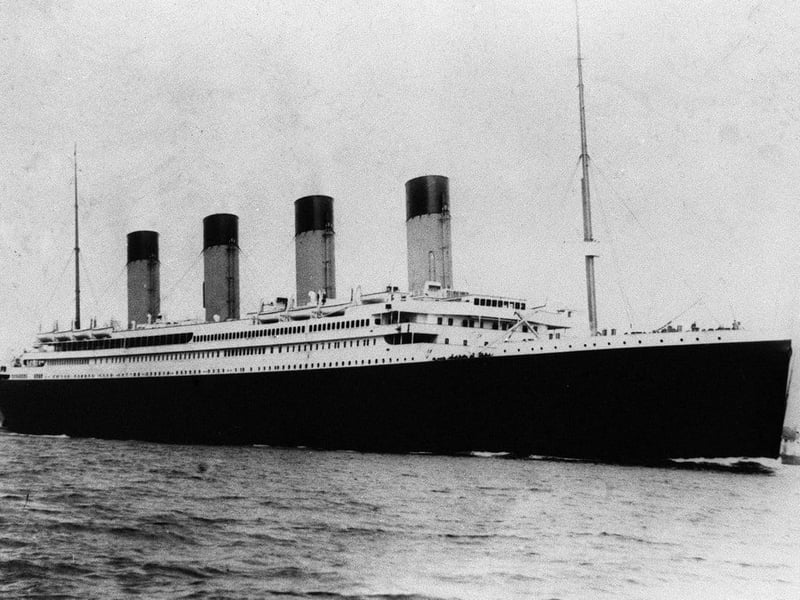
1. Harland and Wolff
Titanic set sail from Southampton to New York on April 10 1912, 110 years ago. It had left Belfast eight days earlier, on April 2, The idea for the 900-foot vessel, one of the then grandest to have ever been built, was hatched in 1907 and work had begun in Harland and Wolff in 1912 Photo: u
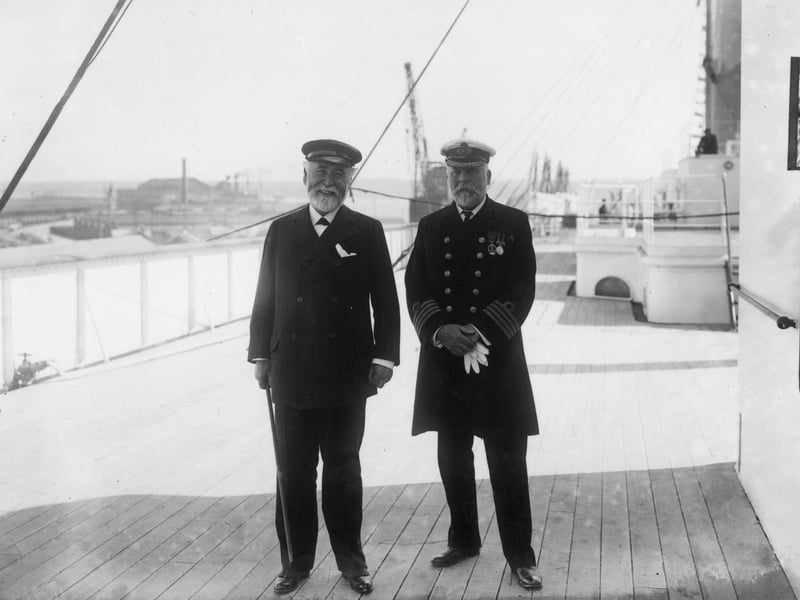
2. 9th June 1911: Captain John Smith (1850 - 1912) and Lord James Pirrie, Chairman of the Harland & Wolff Shipyard, on the deck of the White Star Liner 'Olympic'. Captain Smith later became Captain of the ill-fated 'Titanic' and went down with his ship. (Photo by Topical Press Agency/Getty Images)
9th June 1911: Captain John Smith (1850 - 1912) and Lord James Pirrie, Chairman of the Harland & Wolff Shipyard, on the deck of the White Star Liner 'Olympic'. Captain Smith later became Captain of the ill-fated 'Titanic' and went down with his ship. (Photo by Topical Press Agency/Getty Images) Photo: Topical Press Agency
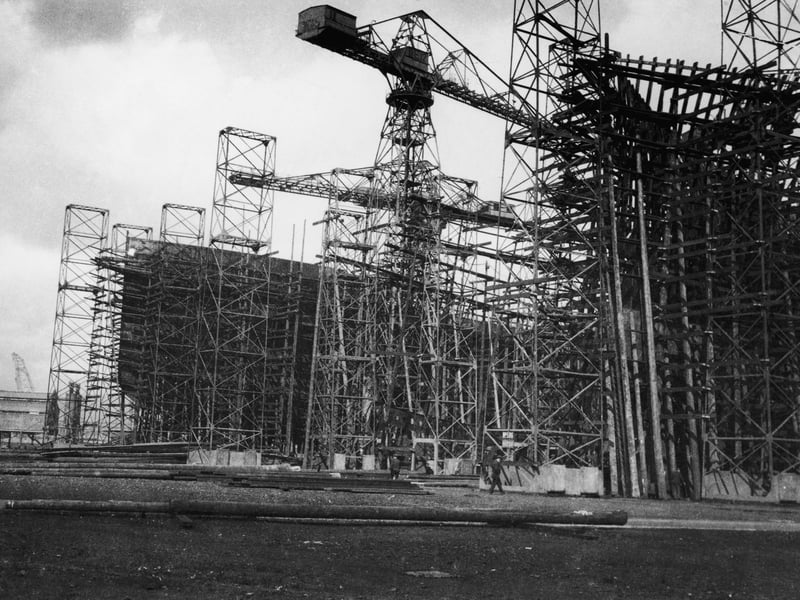
3. Shipbuilding at the Harland And Wolff shipyard in Belfast, circa 1910. (Photo by F. J. Mortimer/Hulton Archive/Getty Images)
Shipbuilding at the Harland And Wolff shipyard in Belfast, circa 1910. (Photo by F. J. Mortimer/Hulton Archive/Getty Images) Photo: F. J. Mortimer
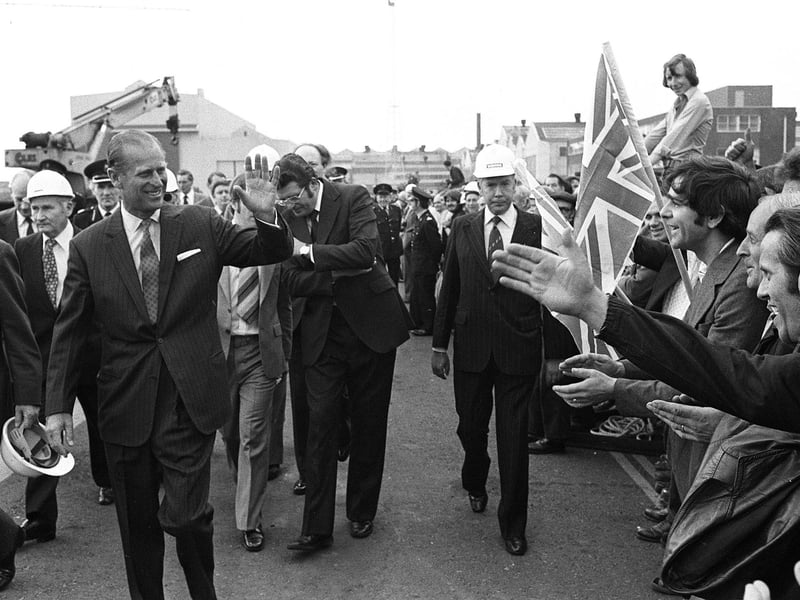
4. Duke of Edinborough visiting Harland and Wolff during the Jubilee visit..July 77 Ref 280/77/bw
Duke of Edinburgh visiting Harland and Wolff during the Jubilee visit..July 77 Photo: u