
Boxing Day slump as traditional British sales period increasingly replaced by pre-Christmas Black Friday and Cyber Monday deal imported by big online stores
Boxing Day sales appear to have taken a tumble, with footfall down around Northern Ireland’s stores.
Industry bodies say it’s too early to tell how sales are going, and that it’ll be next month before full details are known.
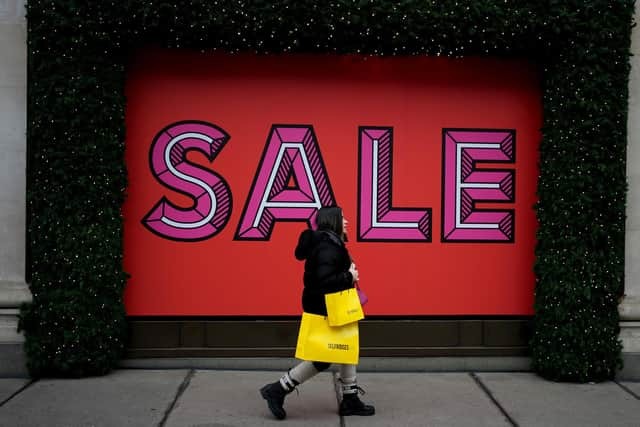

But anecdotal evidence suggests that far fewer people are heading out to scoop a bargain immediately after Christmas.
Glyn Roberts, chief executive of Retail NI, suggests that could be down to what he calls ‘promotions fatigue’ – that people are so gorged on pre-Christmas deals and offers like Black Friday and Cyber Monday, they don’t come out in force for Boxing Day.
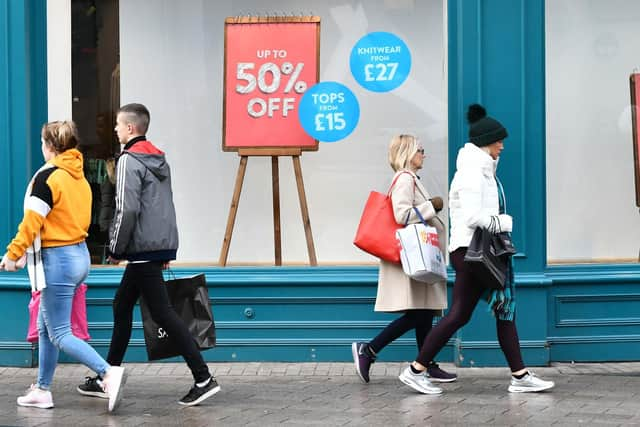
“That, plus the fact that the bulk of sales are online now,” he says.
"It’s estimated that last year, 63% of sales were online. When you take that into account, it’s very easy to see why footfall would be down.”
Asked if he believes this could be a marker of a cultural shift that’s seeing traditional British Boxing Day deals edged out in favour of the likes of Black Friday, an American import largely brought in by massive international internet-based retailers, Mr Roberts agrees.
"Yes,” he says. “But from a retailer’s point of view, joining in with that is understandable – they’ve bought a lot of stock in specifically for Christmas, so they want to make sure it sells in advance of the day.”
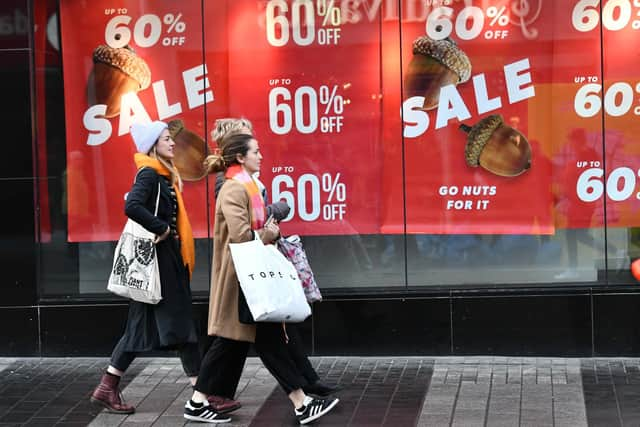
One shop manager in the Belfast area, who asked to remain nameless, said she’s seen a noticeable fall in Boxing Day customers over the past few years.
"There has been a decline,” she said. “Obviously Covid was a hit, but after that the cost of living crisis had people prioritising paying their winter food and energy bills, and I think many would still be in that situation.
"It’s difficult for a bricks and mortar store to compete with the prices and convenience of the internet, and many of the big retailers on there have huge sales before Christmas and not so much on Boxing Day. It seems to be a trend, people follow where they go.”
Data gathered across the UK on Boxing Day indicated the number of people heading out to sales was down almost 5% compared to last year.
Many preferred to browse sales online, it’s suggested, and several major retailers such as Next, John Lewis, and Marks and Spencer deciding to stay shut until December 27.
Mr Roberts reinforced that the actual amount of money spent on Boxing Day isn’t known yet, stating: “It’s not footfall that counts, it’s sales, and we won’t know that detail for quite a while.”
But, he added, online retail continues to have a massive effect on the ability of High Street stores to survive, to the point that he believes government intervention may be necessary.
“Online retailers have a number of advantages over bricks and mortar stores,” he said. “For example, they don’t pay rates in the same way as a High Street store does.
"I think there may need to be some legislation to correct that and help small businesses thrive. All I want to see is a level playing field; currently, we don’t have one.”