
Cost of living: Irish Sea border hiking up electricity costs in Northern Ireland says regulator
Electricity costs more in Northern Ireland thanks to the Irish Sea border, MPs have been told.
John French, the CEO of the Utility Regulator NI, said that Northern Ireland being “re-coupled” to the GB electricity market means wholesale prices could be up to 20% lower.
That would not necessarily translate into a 20% reduction in consumer bills though; the regulator stressed that wholesale prices, paid by suppliers, are only a part of the final bill which consumers end up with.
Mr French made the comments at a meeting of the Northern Ireland Affairs Committee in Westminster on Wednesday.
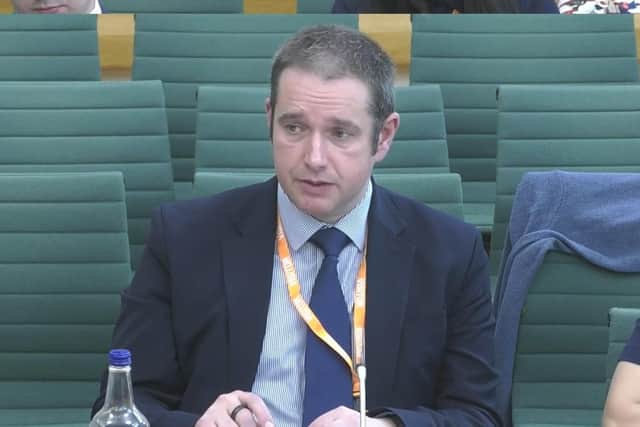

During discussions in the committee about the cost-of-living, Mr French told MPs: "The real benefit that would make a huge difference to Northern Ireland is re-coupling with the GB market.
"So post-Brexit the wholesale market was de-coupled from the GB market.
"If we were to re-couple, it would probably be up to a 20% reduction in wholesale electricity prices in Northern Ireland.
"It would be a huge benefit.
"So in terms of the EU treaty that's potentially going forward this year, if Northern Ireland can re-couple to the day-ahead market in GB – 80% of electricity is bought on that day-ahead market – we could see huge reductions in wholesale electricity.”
“Day-ahead” electricity involves firms buying electricity in anticipation of the demand in 24 hours’ time, and makes up the bulk of the electricity that is traded.
Prior to January 1, 2021, the energy markets of Great Britain and the island of Ireland were mixed together.
Basically that meant NI, GB, and the RoI all together bought electricity from one another at a set, mutually agreed price.
As a result of the Northern Ireland Protocol, Northern Ireland and the Republic of Ireland (which together make up something called the Single Electricity Market, or SEM) have been “de-coupled” from the GB market, where energy is cheaper as a result of their nuclear power plants and links to the continental grid.
While the RoI and NI still get electricity from GB, “the process for buying electricity from GB is now less efficient,” said the regulator, adding that “it means we are not able to take advantage of lower GB prices as effectively as before”.
The regulator told the News Letter that the “re-coupling of the Single Electricity Market with the GB day-ahead market would be part of negotiations between the UK government and the EU”.
It added that the EU had announced last month that “negotiations are underway regarding the UK’s participation in the EU’s internal electricity market, with a further UK-EU summit expected to take place this summer”.
After the meeting, committee member Gavin Robinson wrote to the Northern Ireland Secretary to say that access to the GB market, and the north-south interconnector, are “substantial, practical opportunities to ease cost pressures on households and businesses”.
He added: "However, political agreement and engagement at HM government level would be required for the re-coupling, particularly within the context of UK–EU arrangements.”
He is seeking to find out “what engagement the HM Government has undertaken regarding electricity market recoupling between Northern Ireland and Great Britain” and “what steps are being taken to support greater interconnectivity within the UK and the British Isles” generally.
The Utility Regulator describes itself as "an independent non-ministerial government department”, and it controls the licences for gas and electricity companies in the Province.
At present, the wholesale electricity price makes up only about half of your final electricity bill.
The rest includes things like network charges, supplier costs, and government regulation costs.
While wholesale costs in NI are higher than in GB, according to the regulator the average annual Power NI electricity bill is £1,029, compared with an average electricity bill of £1,073 in GB.