
Haulage bosses say that firms in the sector will start to go under if fuel stays at present price
The bosses of haulage firms have told the News Letter that some fellow companies will start to founder if fuel prices continue at the current rate.
They were speaking to the newspaper as prices of both diesel and petrol in Northern Ireland remained more-or-less steady this week.
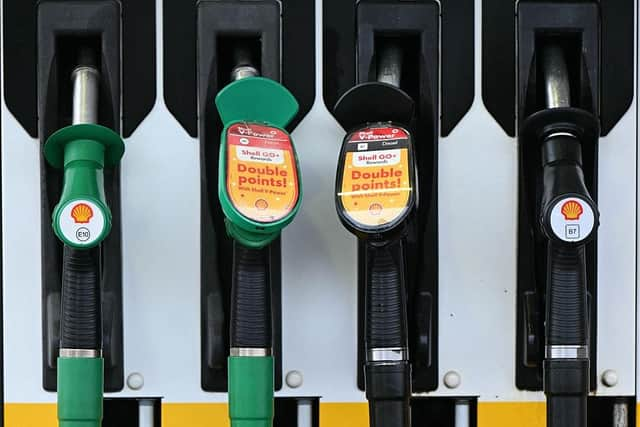

They now stand at an average of 190.3p per litre for diesel (unchanged against the previous seven days) and 165.2p per litre for petrol (down by a mere 0.6ppl on the week before).
After rising steeply in September, prices have plateaued throughout October according to the latest weekly data from the Consumer Council for Northern Ireland, which regularly surveys the prices at forecourts in 30 towns and cities across the Province.
Before the Iran war in late February, diesel had stood at an average of 132.6ppl, then spiked at 188.1ppl in mid-April, before dipping back down to 154.6ppl in July – since which it has climbed upwards again to its present level.
Pre-war petrol had cost an average of 124.8ppl, then spiked at 154ppl in mid-April, before meandering up and down until it burst through the 160ppl-mark about six weeks ago, where it remains.
Ciara Magill, operations manager for Magill Freight in west Belfast, told the News Letter: “I would blame it completely on the actions of Trump and on Israel.”
The firm is a small family-run one, started by her father in about 1991.
It owns five small diesel-engine haulage vehicles and manages shipments of freight on larger lorries run by contractors.
"We don’t like to pass this on to our customers, so we are trying to absorb the cost as much as possible,” said Miss Magill, 30.
"You can’t make much profit when you’re trying to run a business and a service for our customers without losing these customers.
"But it’s not just us – it’s across the board...
“It’s getting to a stage now, it’s going to hit a stage, where we won’t be able to work, we won’t be able to run a business, because there is no stopping these increases currently.
"I just don’t understand what we can possibly do ourselves.”
She said that, as the weather gets colder, the vehicles tend to use up more diesel.
She suggested the government "step in” and "levy taxes” on the fuel multinationals which continue to enjoy profitability.
Her father has been in the freight business for perhaps 50 years, said Miss Magill, and “has seen a lot”.
But “speaking on his behalf, I don’t think he’s seen anything like this,” she said.
She was asked whether firms could go to the wall if prices stay where they are.
"I can absolutely see that as a reality,” she said.
"I don’t even think it’s something you can say ‘oh that will eventually happen’ – I would think it would be very soon that a lot of places may decide to either pivot what they do or close, I really do.”
Does that apply to themselves?
"I’m unsure,” she replied.
"Magill Freight has been here a while.
"I’d say it’d continue to be here.”
Meanwhile the boss of another haulage firm in the Lisburn area (whose identity the News Letter is witholding) said customers are “not sending as much” as a result of the high fuel cost.
There have been squeezes on the price of fuel before down the decades, “but maybe not just going on for as long, as I remember”.
"I’d like to think it’s going to change soon, but then we’ve been saying that from Easter time,” he said.
"You live in hope…
"There’s only so much you can pass it on.”
He wants to see the government cut fuel duty.
Will firms go under if things stay they same?
"Without doubt, without doubt,” he said.
"Fuel is generally paid in no more than 30 days, whereas customers can drag their heels a lot longer, so I’d say while profit might be good cashflow will start to hit a lot of companies.”
Home heating oil, which is also monitored by the Consumer Council, has been fairly steady for the past several weeks.
A 900-litre load now costs about £1,023, down roughly 50p on a week before, and close to double its pre-war price of £517.