
Housing waiting list look set to grow further as Northern Ireland building far fewer social homes than planned
Northern Ireland is building far fewer social homes than it needs, official figures reveal.
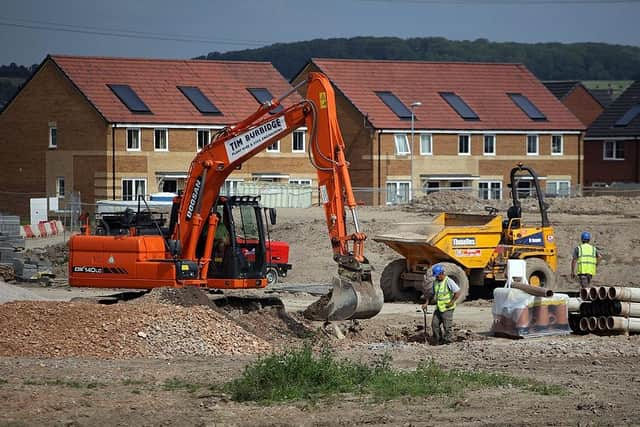
According to figures drawn from the Housing Executive, Northern Ireland built just slightly more than 1,500 new social homes last year.

The government’s target is 2,200.
In other words, the Province got 68% of the way to that target last year.
And the data shows that 2025/26 was not an unusually-poor year for housebuilding, but was pretty typical compared with the last several years.
While Northern Ireland continues to under-build like this, 50,381 households are on the Housing Executive waiting list (about 6.5% of all the households in NI).
In 2016, the figure was 37,586 (or about 4.8%).
Beyond just social homes, data from the Department of Finance also shows that 5,957 new homes of all types were built in the year up to March this year in Northern Ireland.
But Ulster University economist Esmond Birnie estimates that to keep pace with demand the real number should perhaps be 8,000.
“It isn’t just an inadequacy of new builds of social housing,” Dr Birnie said.
“There is plenty of evidence that overall house building in NI, sitting at about 6,000 to 6,750 annually, falls short of the numbers which would satisfy new demand (given population growth and new household formation we may need about 8,000 annually).
“The fact that house price growth in NI in recent years has generally out-stripped much of England, including the south-east, is indicative of demand ahead of supply.
“One clear issue is the way in which the inadequacy of the water and sewerage system is blocking developments which itself reflects another policy choice (or ‘non-choice’) by Stormont ministers – that is, the absence of domestic water charges.”
Dr Birnie said “not only has Housing Executive insufficient funding to build new houses, it has a massive backlog of needed expenditure regarding repair and maintenance on its existing stock”.
The government’s Housing Supply Strategy, approved by the Executive in December 2024, “includes a target of 2,200 new social housing starts per year over a 15-year period” said the Housing Executive.
It told the News Letter: “However, this target is underpinned by the availability of funding.
“If the budget available for new social housing delivery falls short of the level required, the annual starts target would need to be reduced accordingly to align with the funding available.”
The News Letter decided to look into the issue after noticing something in the Assembly’s questions archive.
Earlier in the summer, UUP deputy Diana Armstrong had asked the Department for Communities (the parent body of the Housing Executive) for the “number of social housing properties built since 2008”.
The Housing Executive said its figures cover new social builds and existing private stock that has been converted to social use.
It also said that “is better to look at the development plans over the course of their lifetimes, rather than year on year”, because the numbers can ebb and flow significantly.
According to the NI Federation of Housing Associations, social housing is defined as that which is “owned and managed by local councils, governments, or not-for-profit organizations (such as housing associations) and rented to people on lower incomes at below-market rates”.