
Mass fuel protests fail to materialise across Northern Ireland as UFU warn of squeeze on farmers
A suite of planned fuel protests appears to have come to nothing.
There were no reports of any protest-related traffic disruption at any location in Northern Ireland at 4pm today according to the regularly-updated government website TrafficWatch NI.
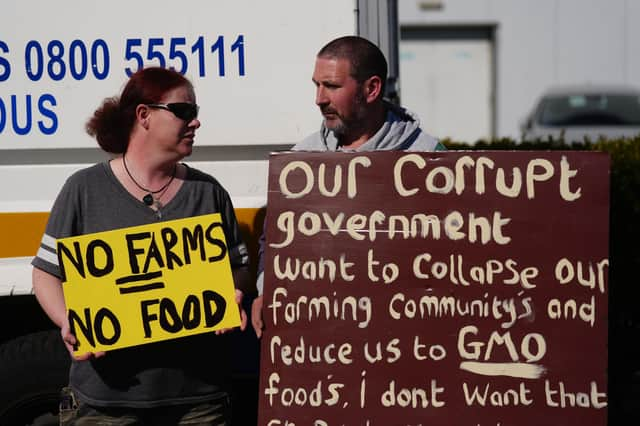

Nor did a trawl through social media reveal any evidence of the supposed demonstrations at eight locations across Northern Ireland.
The PSNI did not report anything either.
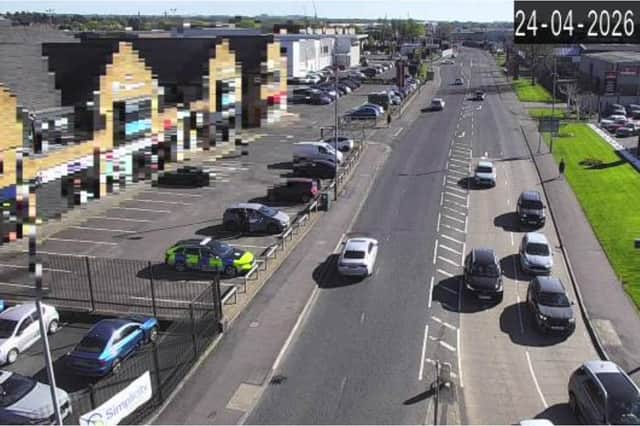
They are just the latest in a string of several such protests which have been advertised online then failed to materialise, with the PSNI having made “preparations for a policing response”.
The locations widely circulated online were: Belfast International Airport; two sections of Belfast Port; Boucher Road, south Belfast; the Asda distribution centre and P&O terminal in, Larne; Nutts Corner; and Warrenpoint Port.
PRICES DROP:
It came as the price of diesel and petrol fell this week for the first time since the war began.
According to the Consumer Council’s weekly survey of prices across 28 towns and cities in the Province, diesel is down by 2.3% to an average of 183.8p per litre, whilst petrol is down 1.2%, to 152.1ppl.
But compared to February 26, the last survey before the US and Israel attacked Iran, diesel remains 38.6% higher, and petrol is 21.8% higher.
The average prices above also mask the local extremes; for example, the most expensive diesel the Consumer Council found was at a station in Carrickfergus (189.9ppl) and the most expensive petrol was found at stations in Antrim, Belfast, Magherafelt, Londonderry, and Ballyclare (154.9ppl).
According to the website Boilerjuice.com, red diesel in Northern Ireland today stands at 107.38ppl (excl. VAT), though it has been steadily coming down from a high of 119.97ppl on April 7.
Before the war began it stood at 72.03ppl, meaning it is currently 50.7% higher.
The price of home heating oil also fell this week.
It had peaked two weeks ago at just over £1.20 per litre (when bulk-buying a 900 litre load), but has since fallen to about £1.04 per litre.
Pat Austin of the charity National Energy Action NI said at this rate it could “take some time before that would come back to anything like what it was, pre-war”.
“I just think we can’t expect it’s going to be the end of the summer that it’s going to be over, that it’s going to bounce back to where we were,” said Miss Austin.
She added that the £100 vouchers for home heating oil offered to some low-income and benefits-dependent households, while welcome, “won’t even touch the sides of the oil tank”.
The Consumer Council this week found that 300 litres of home heating oil now averages at £330.79 (down by 8.1% on a week earlier), 500 litres averages £531.86 (down 7.5%), while 900 litres averages £936.63 (down 7.9%).
All remain way above where they were on February 26, before war began: 300 litres is now 63.6% more expensive compared to then, while 500 litres costs 73% more, and 900 litres costs 74.5% more.
MEETINGS SOUGHT:
UFU President William Irvine said he has written to the main retailers “seeking urgent meetings” about food prices.
He wants “to ensure that cost pressures are shared appropriately” because “farmers cannot continue to shoulder rising costs alone”.
“Farmers across Northern Ireland are facing sustained and, in many cases, unsustainable increases in the cost of doing business,” he said.
"We know that it can take several months for cost increases to filter through to retail, but the reality is that primary producers are carrying these costs now.
"They cannot continue to absorb this level of pressure indefinitely.
“There is a growing disconnect between what is happening on farms and what is being reflected in the marketplace.
"While retailers understandably want to protect consumers, this must not come at the expense of primary producers who are already operating on extremely tight margins.”
David Blevings of the Northern Ireland Oil Federation said “we have seen a huge increase in purchases of home heating oil since the invasion of Iran”.
He said: “That demand has now been satisfied, and we have seen prices drop slightly due to market movements.
"The improving weather has helped slow demand, but the future still looks uncertain.
"Even if the war ends this month, there is unlikely to be any cargoes of refined product from the Persian Gulf arriving in Europe for four-to-six weeks.
"This region accounts for around 40% of the region's jet fuel (kerosene) imports, and oil companies are looking to the US and Nigeria to try and replace this ‘lost’ product.
“In terms of pricing, if we see a rapid resolution we could see prices fall back over the summer months, but a prolonged ‘oil shock’ could lead to higher costs for a longer period.”