
Minimum wage rise today will be real help, says NI Secretary Hilary Benn, as business community warns of 'costs triple whammy'
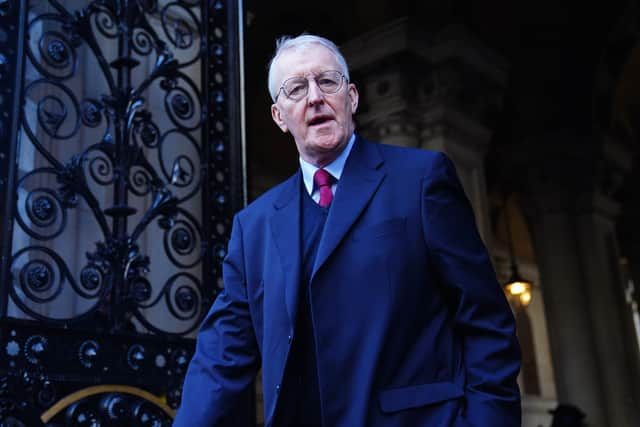
Raising the minimum wage today (1st) will be a boost to 170,000 people during tough times, Northern Ireland Secretary Hilary Benn has said.
Eligible full-time workers are set for a pay boost of up to £117 from this month as a government increase to the national living wage comes in.
According to Mr Benn, around 170,000 in Northern Ireland are paid the national living wage or national minimum wage; for all of them, he said, today’s rise is “really good news”.
“For a low-paid, full-time worker it will mean an additional £1,400 a year, and that is a big boost that I’m sure will be widely welcomed,” he stated.

The changes mean the national living wage for those aged 21 and over will increase from £11.44 per hour to £12.21 per hour; for 18 to 20-year-olds, it goes up from £8.60 to £10 per hour.
The apprenticeship rate, and minimum wage for 16 to 17-year-olds, rises from £6.40 per hour to £7.55 per hour.
But the business community has warned that employers may be forced to reduce staff hours or even cut jobs to be able to pay the new wage, with industry body Retail NI stating the people it represents face a “triple whammy of costs”.
In addition to minimum wage rises, business rates and employers’ National Insurance contributions are also being hiked today.
That’s added to what Retail NI chief executive Glyn Roberts describes as an ongoing “cost of doing business crisis”.
“Based upon our member survey, this perfect storm of cost of business increases today will cost the average independent retailer a staggering £90,000, with 74% indicating they will reduce the number of employees as well as reducing remaining staff working hours,” he said.
“86% of those said that expansion plans will be cancelled with new employment opportunities restricted.”
Stating that Retail NI recently launched a five-point plan of policies the Northern Ireland Executive needs to implement to help businesses, Mr Roberts added: “Government, at all levels, needs to address the ongoing perfect storm of increased business costs that will result in businesses closing, workers losing their jobs, scale-up plans being cancelled and economic stagnation.”
According to government statistics, around 6.5% of the UK’s workers are paid at or below the minimum wage. That equates to around 1.9m people.
Speaking outside Westminster, Mr Benn was also asked about protection for people on disability benefits in the face of looming government cuts.
Eligibility for personal independence payment is to be tightened, while sickness elements of universal credit are to be reworked – and chancellor Rachel Reeves last week stated universal credit health benefits for new claimants will be halved in 2026, then frozen.
Northern Ireland has a much higher rate of disability benefit claimants than the rest of the UK, which is commonly theorised to relate to the legacy of the Troubles.
While praising the Northern Irish economy for growing faster than the UK as whole, Mr Benn said: “The current welfare system isn’t sustainable, and it doesn’t actually help people who can get back into work to do so, and that’s why we’re making a number of changes.
“But for people who can’t work at the moment and will never be able to, it’s quite clear that they will be protected.”