
Northern Ireland business leaders respond to Chancellor Rachel Reeves' Spring Statement
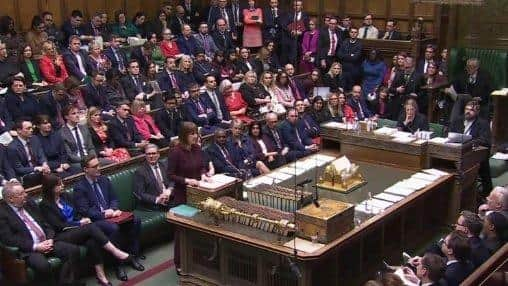
Chancellor Rachel Reeves outlined increased spending on defence, innovation and housebuilding to help drive economic growth, but blamed global challenges for a weak UK economy as the Office for Budget Responsibility revised its forecast for 2025 down
Business leaders have responded to Chancellor Rachel Reeves' Spring Statement...
Reeves outlined increased spending on defence, innovation and housebuilding to help drive economic growth, but blamed global challenges for a weak UK economy as the Office for Budget Responsibility revised its forecast for 2025 down.
The OBR halved its forecast for growth in gross domestic product in 2025 from 2 per cent to just 1 per cent.

Despite the downgrade in 2025, Reeves said the OBR had upgraded its forecasts for subsequent years with GDP expected to increase by 1.9% in 2026, 1.8% in 2027, 1.7% in 2027 and 1.8% in 2029.
The Statement follows the Budget in the autumn where the Chancellor announced that the Northern Ireland Executive will be provided with an £18.2bn settlement in 2025/26 – the largest in real terms in the history of devolution.
This includes an additional £1.5bn through the Barnett formula, with £1.2bn for day-to-day spending and £270m for capital investment.
The measures taken in the Statement were said to top these Barnett consequentials up by a further £14m in 2025/26. The Northern Ireland Executive are receiving over 24 per cent more per person than equivalent UK Government spending in the rest of the UK, including the 2024 restoration financial package.
The UK Government said it had already made "considerable progress" on growth in Northern Ireland, including confirming the Mid-South West and Causeway Coast and Glens City deal.
Earlier this month, the Prime Minister also announced a £1.6bn deal to provide air defence missiles for Ukraine, which will create 200 jobs in Northern Ireland.
Our Business Briefing newsletter means you won’t miss a story - click here to subscribe: https://www.newsletter.co.uk/newsletter
Aisléan Nicholson, partner at Deloitte in Belfast, said: "Business and individuals alike will welcome the fact that there were no further tax increases announced in the Spring Statement, in line with commitments made by the Chancellor in the Budget in the autumn.
"While some individuals are looking forward to the boost in wages from the increased National Minimum Wage (NMW), for business, however, the real economic impact of the autumn announcements will only kick in from April, with both the increase in NMW rates, and the increase in the rate of Employer National Insurance Contributions (NICs) from 13.8% to 15 per cent taking effect, along with the reduction in the secondary threshold at which those NICs apply.
"Hopefully most local businesses at this stage will have explored any measures available to them to mitigate the impact of the NICs increases – for example the increase in the Employment Allowance and the existing exemptions relevant to employing under 21s, young apprentices etc. Whether - or more likely when - the impact of these changes start to flow through to the local economy in the form of, for example, lower pay increases in future years or price rises for consumers and therefore a direct impact in the pockets of individuals, is harder to predict."
Nicholson added: "Overall, whilst there are some areas of detail to be explored in light of the various new consultations issued alongside the Spring Statement which may lead to further amendments to tax legislation in the future, the previously announced changes to NICs and stamp duty, and in particular capital gains and inheritance tax, remain the most significant additional tax raising measures impacting businesses and individuals."
In response to the Chancellor’s 2025 Spring Statement, Andrew Webb, chief economist at business advisory firm Grant Thornton Northern Ireland, said the legacy of former Prime Minister Liz Truss was still being felt.
"While the Chancellor’s 2025 Spring Statement did not directly reference Northern Ireland, the increased spending on defence that was declared could deliver an economic boost for businesses in the region that service that industry," said Webb.
"However, it is important to remember that more defence spending does not translate to a Barnett consequential for Northern Ireland as the Stormont Executive does not have devolved defence powers.
"This government’s first multi-year spending review, due to be published in June, will be a more telling announcement for Northern Ireland. By that stage we will have a comprehensive sight of how departmental spending will look in the coming years, so it is a case of ‘watch this space’."
He added: "Analysing the Spring Statement more widely, it is interesting to note that, while the Truss premiership was one of the shortest in history, it may have cast the longest shadow. Governments now seem to live in perma-fear of how the markets react to anything they do.
"No matter how much the Chancellor might want to play the ‘blame game’ - the previous government, geo-political uncertainty, higher interest rates, and trade wars all got a touch - there were choices here and the Chancellor chose to punch down on some of the poorest and most vulnerable.
"Having boxed herself in on no further tax increases after the Autumn Budget, and having decided that her self-imposed fiscal rules are unbendable, a £4.8bn cut to the benefits system was the choice she made. That said, spending more on chasing down tax evaders is a welcome move in this statement."
Northern Ireland secretary Hilary Benn welcomed "the fact that Northern Ireland will receive a £14m boost in Barnett consequentials".
"This also follows a £235m package to transform public services in Northern Ireland, which will support the transformation of key public services which make a real impact on people’s lives, including health, education, planning and justice," Benn said.
"Importantly, today’s announcement reinforces the economic growth potential of the UK defence sector, and follows the Prime Minister’s announcement of a £1.6bn deal to provide air defence missiles for Ukraine, which will create 200 jobs in Northern Ireland and demonstrates the strength of the local defence industry.
"From next week, working people across Northern Ireland and the UK will also benefit from an increase to the National Living Wage, putting more money into the pockets of hard-working people."
Ross Boyd, owner and director of Belfast-based chartered accountancy, RBCA, said: “Chancellor Reeves has been desperate to downplay the Spring Statement as a fiscal event – but the economy is well known for not bending to a Chancellor’s will. The Office for Budget Responsibility has halved the 2025 UK growth estimate from an underwhelming 2% to a virtually flatlining 1%. Inflation has dropped 0.2% to 2.8%. If we needed confirmation that the age of stag-flation has arrived, this is it.
“Simply put – any fiscal headroom she had planned for is gone. And in a few short months economic stimulus is now being sacrificed as the global geo-political position shifts and defence spending finds itself top of the bill.
“We expected the rhetoric about encouraging long term growth and productivity, and nothing to support local businesses in the coming months. There remains no plan for short term economic growth.
“Reeves talked a lot about working people – and getting people into work, however employment must be delivered through the private sector and whilst owner-managed businesses are the backbone of our local economy, they remain an afterthought in Reeve’s economic policy.
“What we did hear about is ‘transformation’, designed to bring down the cost of government. In reality this means cuts are coming, and cuts equate to job losses. So, on the one hand working people are central to this governments policy – and on the other, more working people will enter the job market.
“The private sector in Northern Ireland is renowned for its resilience – but they need an environment within which they can grow. Confidence is everything, and this Labour government is making local businesses nervous. Not only has the tax burden on business increased, ominously it looks likely to increase even further as Reeves will need to raise capital in the Autumn Budget.”
Commenting, Suzanne Wylie, Chief Executive, NI Chamber, said: “After 9 in 10 of our members found themselves under pressure to raise prices because of the Autumn Budget, it is welcome that there are no further tax rises in today’s Spring Statement.
“Business urgently needs an injection of confidence to drive investment and stimulate growth. While instilling that confidence against a backdrop of geopolitical uncertainty and rising fiscal pressures is not an easy task, we need government to be courageous in driving economic momentum.
“With challenging forecasts and UK exports falling significantly, stimulating growth demands a bold approach from government. It has a difficult hand to play, but there are a host of opportunities in the near-term that can deliver meaningful economic gains. Whether that is the new Industrial Strategy, the AI Action Plan or the UK-EU reset, government must take every opportunity to eradicate red tape, drive innovation and rebuild a strong investment proposition.”
Eamonn Donaghy, tax partner and executive chairman at HNH, added: “The absence of new tax announcements in Rachel Reeves’ Spring Statement was no surprise with the breaking of a clear election pledge not to raise taxes appearing to be a bridge too far. The Chancellor limited herself to announcing further anti-avoidance measures which are expected to raise an additional £1bn. However, unless things dramatically change in the next six months, the Budget this autumn could well see additional taxation being raised with growth hoped for last October already halved in the current year from 2% to 1%.
“But it isn’t a case of no pain, with many of the proposals announced last October soon coming to fruition. In April, the employer’s National Insurance rate will rise to 15% and this, together with the proposed increases in the national minimum wage, have already had an unwelcome impact on business.
“The proposed changes to inheritance tax relief for business and agricultural property, meanwhile, are not due to come into effect until next April. Business owners and farmers who die post April 2026 could be in for a large tax bill but there is still significant scope and time for estate planning including the use of trusts, which can not only reduce the exposure to inheritance tax but help protect family wealth for the benefit of future generations.
“For those thinking of selling their business, there is still an advantageous tax relief available in Business Asset Disposal Relief while for those with a pension scheme, the advice must surely now be to consider using the funds in their scheme during their lifetime rather than risk funds becoming subject to inheritance and income tax post April 2027.”