
Northern Ireland printer to be honoured after producing 'a document which would change the history of the world'
Strabane-born John Dunlap, who printed the first copies of the Declaration of Independence in 1776 and later served as a bodyguard to George Washington, will be commemorated in his home town by the Ulster History Circle
A Strabane-born printer who played a pivotal role in one of the most significant moments in world history is to be commemorated with a blue plaque in his hometown.
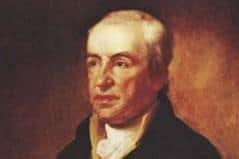

John Dunlap, the man responsible for printing the first copies of the American Declaration of Independence in 1776, will be honoured by the Ulster History Circle at Gray’s Printshop in Strabane today (Wednesday, June 17).
Born in Strabane in 1746, Dunlap emigrated to Philadelphia as a young boy after being sent to assist his uncle William, a printer who had settled in America. What began as an apprenticeship and then ownership, eventually placed the Co Tyrone native at the centre of the birth of the United States.
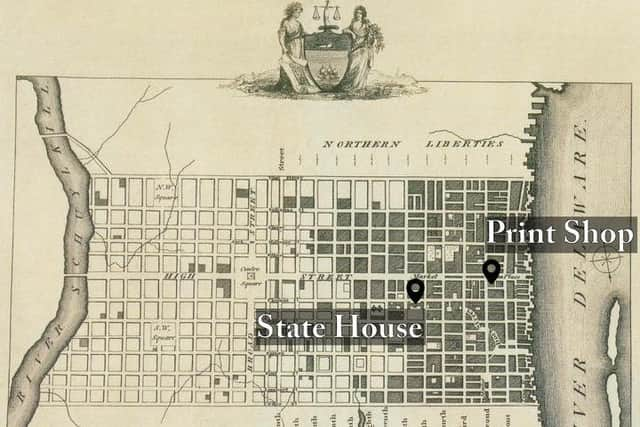
By the mid-1770s, tensions between Britain and its American colonies had escalated into armed conflict. As revolutionary leaders gathered in Philadelphia to debate independence, Dunlap had established himself as a successful printer with premises close to the State House, now known as Independence Hall.
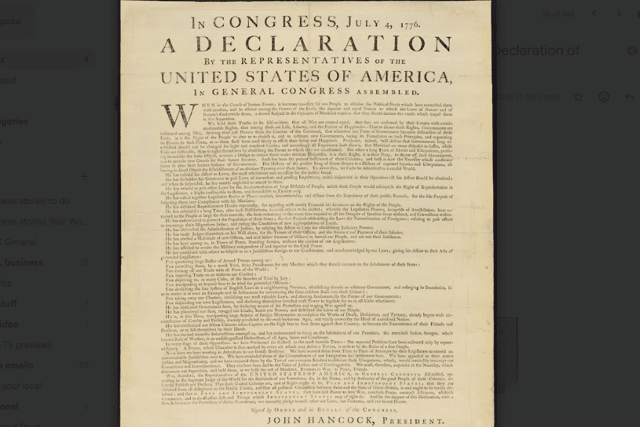
On July 4, 1776, after the Continental Congress approved the Declaration of Independence, Congress president John Hancock instructed Dunlap to print copies of the historic document.Working through the night, the 29-year-old printer set the handwritten text in type and produced what is believed to have been around 200 copies of the Declaration. Known today as the “Dunlap Broadsides”, these were the first printed versions of the document and were distributed across the 13 colonies within the next two days.
Commander-in-Chief George Washington ordered that the Declaration be read to the troops on July 9.
At the time, however, printing the document was a dangerous undertaking. With British troops advancing and war already underway, those involved in producing and distributing the Declaration risked severe consequences if the rebellion failed.
The Declaration’s famous assertion that “all men are created equal” and are entitled to “Life, Liberty and the pursuit of Happiness” would go on to become one of the most influential political statements in history.
Only 26 copies of the original Dunlap Broadside are known to survive today, with most held in museums and major collections in the United States.
Dunlap’s contribution to American history extended far beyond the Declaration. He founded the Pennsylvania Packet, which became the first successful daily newspaper in the United States, and later printed the US Constitution as part of his work for Congress.
He also served in the American War of Independence, joining the First Troop Philadelphia City Cavalry and acting as a bodyguard to General George Washington. He is believed to have fought alongside the Continental Army during key battles, including Trenton and Princeton.
He married Elizabeth Ellison, a widow from Liverpool, in 1773. They had eight children, two of whom died in infancy.
Following the war, Dunlap became a prominent businessman and landowner, amassing significant wealth and influence. He died in Philadelphia on November 27, 1812 and was buried with military honours.
The blue plaque will be unveiled at Gray’s Printshop, the last surviving historic printshop in Strabane and now in the care of the National Trust.
Paul Roelle from the U.S. Consulate in Belfast said Dunlap’s story highlights the deep historical connections between Northern Ireland and the United States.
“As we mark Freedom 250 and celebrate the ideals that have shaped the American nation, we’re reminded that the early chapters of our history are strongly intertwined with emigrants from these shores,” he said.
“As printer of the Declaration of Independence, John Dunlap played a central role in bringing our nation’s founding document to the American public. His legacy reflects the profound influence of people from places like Strabane in the trajectory of the United States.
"We commend the Ulster History Circle, the Ulster-Scots Agency and the National Trust for their dedication to preserve the stories that connect us. Their work enriches our understanding of a shared past, but it also strengthens the bonds of friendship and partnership that unite Northern Ireland and the United States today.”
Chris Spurr, chairman of the Ulster History Circle, said the plaque recognises the extraordinary achievements of a young Irish emigrant who helped shape world history.
“John Dunlap arrived in Philadelphia as a boy, with no inkling that there in July 1776 he would print a document which would change the history of the world,” he said.
“250 years later, we are delighted to commemorate the Strabane-born printer of the American Declaration of Independence with a blue plaque in his hometown.
“The Circle is grateful for financial support towards the plaque from the Ulster-Scots Agency, and to the US Consulate in Belfast and the National Trust for their valued assistance.”
The plaque will be officially unveiled at Gray’s Printshop, 49 Main Street, Strabane, on Wednesday, June 17 at 2pm.