
'Remarkable legacy': Blue plaque to honour Fermanagh-born co-founder of global giant Procter & Gamble
Enniskillen-born James Gamble, who helped found Procter & Gamble in 1837 and shape one of the world’s largest consumer goods companies, is to be commemorated on the day of his death with an Ulster History Circle blue plaque in his hometown
A Fermanagh-born entrepreneur who co-founded one of the world’s largest consumer goods companies is to be commemorated with a blue plaque in Enniskillen.
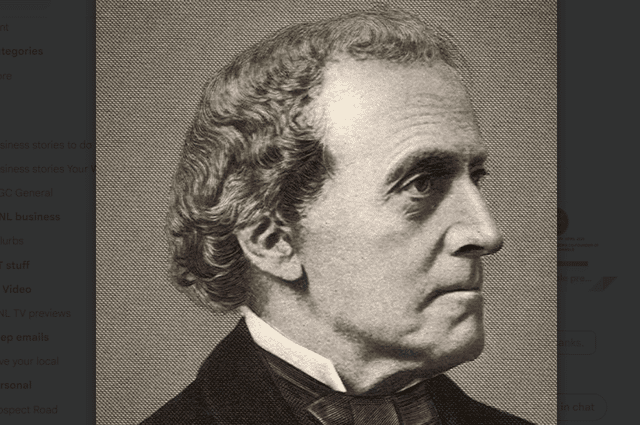
James Gamble, born in Graan townland near Enniskillen on April 3 1803, will be honoured by the Ulster History Circle in a ceremony at The Church Mouse on East Bridge Street. The plaque marks his role in establishing Procter & Gamble in Cincinnati in 1837 — a business that would grow from a small soap and candle manufactory into a global multinational worth tens of billions of dollars annually.
Gamble’s early life began in County Fermanagh, where he attended Portora Royal School before his family emigrated to North America amid economic difficulties following the Napoleonic Wars. Travelling from Londonderry to New Brunswick, the family continued by boat and wagon through Pittsburgh before journeying down the Ohio River to Cincinnati — then a rapidly growing frontier city.
It was in Cincinnati that Gamble’s path into industry began. After recovering from serious illness as a teenager, he was apprenticed to a soapmaker before setting up his own small soap manufacturing business. The city itself, a major centre of meatpacking in the 19th century, provided abundant animal fats — a key raw material for both soap and candle production.
His future would be shaped not only by enterprise but by family connections and coincidence. While courting sisters Elizabeth Ann and Olivia Norris — emigrants from Belfast — Gamble met William Procter, an English candlemaker who was also involved with Olivia. The two men were encouraged by their father-in-law, Alexander Norris, to combine their businesses rather than compete for raw materials.
On 31 October 1837, amid a financial crisis in the United States that triggered a wider recession, the partnership of Procter & Gamble was formally established. Gamble oversaw manufacturing, while Procter managed sales and administration — a division of labour that helped lay the foundations for rapid growth.
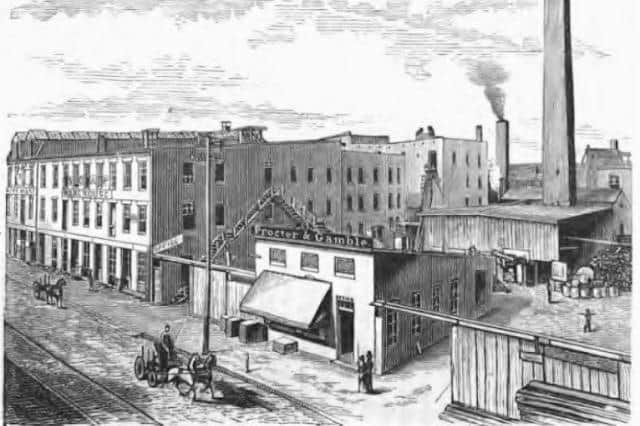

From the outset, the company focused on affordable household essentials, distinguishing itself from other local soap and candle makers through transparency and consistency. As railways expanded across the United States, so too did the company’s markets. By 1859, profits had reached around one million dollars — a significant sum for the era.
During the American Civil War, Procter & Gamble was selected to supply soap and candles to Union forces, dramatically expanding its reach and reputation. Thousands of cases of product were shipped daily, and returning soldiers helped spread the brand nationwide, embedding it in everyday American life.
The company also became an early pioneer in advertising and workplace innovation. It introduced one of the first profit-sharing schemes in American industry, a model that continues in modified form today. Later, its marketing strategies would help redefine commercial advertising itself.
In 1879, Gamble’s son James Norris Gamble used his chemical expertise to develop Ivory Soap, marketed with the slogan “It Floats!” The product became a breakthrough success, combining practicality with branding ingenuity. The company also experimented with advertising innovations, including customer-submitted poems and promotional artwork tied to product wrappers — early examples of modern brand engagement.
Procter & Gamble would go on to play a defining role in the birth of broadcast advertising. In the early 20th century, it became one of the first companies to sponsor daytime radio dramas, a format that later became known as the “soap opera” — a term still used today. Its long-running series The Guiding Light, first broadcast in 1937, holds a Guinness World Record as the longest-running drama in broadcasting history.
As technology evolved, so did the company. It gradually moved away from candles with the arrival of electric lighting and expanded into a vast portfolio of household and personal care products, from shampoos and razors to medical and hygiene goods. Today, it remains one of the most recognisable consumer brands in the world.
James Gamble died in Cincinnati on April 29 1891 and is buried in Spring Grove Cemetery. More than 130 years later, his legacy continues through a company with global reach and influence.
Tom Moody, Northern Europe senior vice president at Procter & Gamble, said: “There’s something powerful about standing at the place where it all began. It’s a particular source of pride that one of Procter & Gamble’s founders called Northern Ireland home. James Gamble left Enniskillen with little more than his values and a determination to build something meaningful.
"Nearly 190 years later, those same values continue to shape not just what we do, but how we work and grow as people at P&G. Working at P&G means having the opportunity to make a meaningful impact while growing both professionally and personally. P&G provides a career, not just a job, by investing in people’s development, supporting work-life balance, and fostering a culture where people feel valued, rewarded and inspired.
"We’re proud to support the Ulster History Circle in honouring James Gamble’s remarkable legacy here in Northern Ireland.”
Agreeing US Consul General in Belfast James Applegate continued: “As we approach the 250th anniversary of the founding of the United States, it’s important to acknowledge that a significant part of the American story originates on these shores. Tides of emigrants from places like County Fermanagh established settlements along the Ohio River which became a cornerstone of the State’s strong industrial heritage.
"From humble beginnings as a soap-maker to shaping one of the world’s largest consumer goods companies, James Gamble’s legacy epitomizes the work ethic, resilience and ambition of early Scots-Irish pioneers who shaped our fledgling republic.
"I am grateful to the Ulster History Circle and to local partners like Selwyn Johnston for acknowledging one of our most important entrepreneurs and for their longstanding efforts to preserve and promote our deep, shared history.”
Local man Selwyn Johnston, who nominated Gamble for the plaque, said he was motivated by a desire to see his achievements recognised in his birthplace: “Several years ago, I was greatly intrigued to learn that James Gamble was born in Enniskillen and attended Portora Royal School before emigrating with his family to Cincinnati, where he would go on to co-establish one of the most successful companies in the world.
"I felt that his birthplace deserved proper recognition. I am confident that this recognition will instill a strong sense of pride within our community."
Ulster History Circle chairman Chris Spurr added: “On the 135th anniversary of his death the Ulster History Circle is pleased to commemorate this innovative industrialist with a blue plaque in his hometown. The Circle is grateful to Procter and Gamble for their donation towards the plaque and to Enniskillen Presbyterian Church for their valued assistance.”
The blue plaque will be officially unveiled today (Wednesday) at 2pm.