
Stormont is 'normalising' money mismanagement says watchdog chief as UK government loan to Northern Ireland is dubbed a 'bailout'
Stormont’s "serious financial mismanagement" is being "normalised" because of the UK government’s willingness to bail the Province out, the head of a fiscal watchdog has said.
Sir Robert Chote, chairman of the NI Fiscal Council, was speaking today as his body delivered a report saying that a loan of £400m by the Treasury is actually “a de facto bailout” that could merely make Stormont think that it can just keep on overspending, year after year.
Dr Esmond Birnie, a senior economist at Ulster University (and a former UUP MLA) agreed, saying that it “arguably only encourages the Executive to, yet again, kick the can down an already very long road” and put off tough choices like reforming the public sector and raising more money itself.
Meanwhile DUP leader Gavin Robinson said that “fair funding for Northern Ireland must go hand-in-hand with reform,” and that “Northern Ireland cannot afford business as usual”.
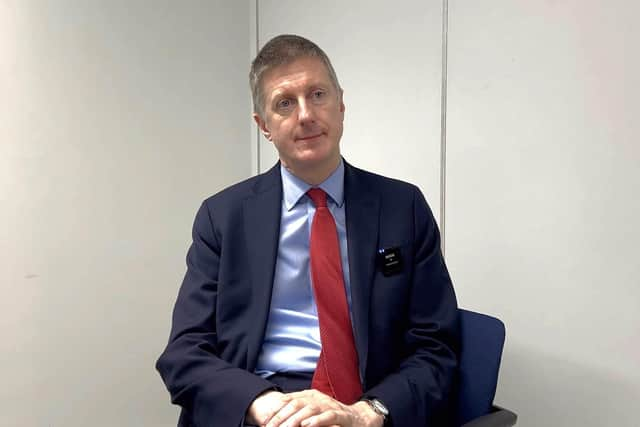

The NI Fiscal Council’s report looked into the fact that Stormont departments are on course to overspend their budgets again this year by almost £460m, with the UK Treasury having agreed to provide a loan of £400m (to be repaid over three years) to help plug the gap.
The Fiscal Council’s report said: “The Treasury loan acts as a de facto bailout.
"By offering substantial assistance without any significant conditionality, the Treasury risks signalling that similar interventions are likely to be available in future years.
"This could dull the Executive's incentive to take difficult fiscal decisions on revenue, the size of the public sector workforce and the sustainability of pay parity with Great Britain.”
It warned that “the Executive needs to "address the underlying causes of overspending".
The council found that public sector pay remains the dominant structural pressure, and predicted that rising pay settlements, overspend recovery, and restricted flexibility caused by earmarked funding are heightening the likelihood of renewed overspending in the next budget period.
Speaking on Monday Sir Robert said Stormont departments continuing to overspend was creating a "a particularly difficult environment in which to be setting out a budget for the next three years".
"The departments have been essentially overspending, on average, the amounts of money that they've been allocated for the last four years or so," he said.
"And under each of those circumstances, the Treasury, the UK Government has essentially come in and said, 'well, okay, we'll provide you with some short term supports to help you deal with that, and then we'll ask you to repay that later'.”
He added: "So the positive of that for Northern Ireland departments is it makes the squeeze on spending that much less severe next year, but also the danger is that it affects the behaviour.
"People think that there's going to be more money available in the future, they know that there's an election coming up here in a year's time, which will mean that it's a more difficult time for the UK Government to take tough decisions.
"So there is this danger that you end up essentially taking, what the Treasury would define as serious financial mismanagement, which is not sticking within your budget in a particular year, but almost normalising that by having essentially offered bailouts over recent years, and that means that the Executive is under less pressure to deal with some of the big choices that confront it.
"Do we want to match parity with the pay levels elsewhere? Do we want to continue to have as large a public sector workforce as we have relative to elsewhere?
"Do we feel the need to raise more revenue, the old favourite, of course, of domestic water charging? Are there savings you can make elsewhere?"
Sir Robert is an economist and president of Trinity College, Oxford, who previously chaired the UK Statistics Authority and the Office of Budget Responsibility.
Finance minister John O’Dowd’s latest draft budget has not been accepted by the Executive, with DUP leader Gavin Robinson having said there is no point agreeing to a budget which "doesn't work" just because it lasts for three years.
Asked about the possibility of achieving political consensus on the budget, Sir Robert said: "It wasn't possible to get the Executive to agree around even that relatively neutral sort of package.
"So given that any alternative package would involve making some departments and parties better off relative to others, you have to ask whether that's going to make it any more likely that you can reach an agreement under those circumstances."
Health and education are two departments set to enter 2026-27 with lower budget allocations than the amount expected to spend this year despite these departments being responsible for this year's overspend.
The fiscal council has concluded there is a significant risk that no budget will be agreed before the new financial year.
Economy Minister Caoimhe Archibald said not securing a three-year budget would be a "huge missed opportunity, it would be a dereliction of duty on ministers around the Executive table".
Asked how the Executive would deal with the financial pressures caused by commitments to pay parity, Ms Archibald said: "Clearly there is a challenge here in terms of our budget and our public services and being able to deliver the type of public services that people rightly expect and deserve.
"But our public sector workers also need to be paid for the jobs that they are doing. They are critical in terms of the delivery of public services.
"So we need to be properly funded. The Executive has been very clear too that we are up for transformation of our public services, but that requires investment as well."
IDEA OF NI REPAYING LOAN ‘LACKS CREDIBILITY’:
Asked if the £400m loan by the Treasury will actually be repaid by Northern Ireland, Dr Esmond Birnie said “based on past experience of repeated overspends, it has to be said that any statements regarding the Executive repaying the £400m over the three years may lack some credibility”.
He went on to add: “Does it blunt incentives to transform the NI public sector? The Fiscal Council is raising a concern that it may do that.
"After all, this has all happened before. The Executive also had an overspend in 2022-23.
"The danger is that we are settling into a pattern of repeated ‘bad behaviour’ in fiscal terms and each time the UK Government/Treasury step in and pay up.
"The Executive can see that pattern and may be adapting their own behaviour accordingly.”
What does he think would happen if the Treasury did not step forward with its “bailout”?
"One plausible answer would be that the level of disagreement between the Executive Parties would only escalate and perhaps lead to another collapse of the Executive,” he said.
"Critically, and repeatedly, there has been an absence of a willingness to take hard decisions – for example, raising more revenue, being more realistic about whether Stormont can always afford pay parity with GB, giving transformation and reform enough of a priority.
"The surprise appearance of this £400m de facto bail out arguably only encourages the Executive to, yet again, kick the can down an already very long road.”
DUP AND SDLP REACT:
In response, the DUP issued a statement saying that leader Gavin Robinson had helped negotiate the £400m from the Treasury, and had “ensured that any new funding would be accompanied by firm conditions on scrutiny”.
The statement quoted Mr Robinson as saying: “Crucially, this agreement was not about writing blank cheques.
"The DUP insisted upon robust accountability measures, including a commitment to line-by-line scrutiny of departmental budgets.
"This safeguard was designed to ensure that waste is challenged and long-standing inefficiencies are addressed.
"Securing fair funding for Northern Ireland must go hand-in-hand with reform and securing value for money.
"At a time of significant pressure on public services, Northern Ireland cannot afford business as usual.
“Just because £10m was spent on a project last year, should not automatically include it with an inflationary rise for the next year.
"There has to be a pause and consideration of priorities.
“The focus must now be on rigorous budget oversight and sustainable spending decisions.”
The SDLP meanwhile, which is the largest party not in the Executive, said the £400m “will effectively go towards filling the same funding gap that has existed for years in the NI Executive budget – with apparently little achieved in the past two years in relation to either public service transformation or raising additional local revenue”.
It quoted the party’s Stormont leader Matthew O’Toole as saying: “As the Fiscal Council indicates, the Executive is simply availing of the same balance transfer year after year rather than getting to grip with the fundamental challenges.
“Two years ago, the public were promised a clear plan to address our long-term challenges, backed with a plan to transform public services and get a grip of public finances.
“None of that has happened, and we arrive at the absurd situation we have today where the Sinn Fein Finance Minister harps on the evils of British austerity while inviting the Treasury in to scrutinise what is supposed to be devolved spending.”
That is a reference to the BBC reporting earlier this month that, after the £400m loan, “Mr O'Dowd said he will continue to engage with the Treasury to ensure the budget is properly financed”.
Mr O’Toole concluded: “And most frustrating of all, while enthusiastically shifting blame to London and each other, Executive parties cannot or will not agree a multi-year Budget to give some degree of certainty to public servants.”