
Trade union chief warns of emerging 'sea border' for workers' rights while Good Jobs Bill lies on ice
A trade union leader has pointed to what he says is an emerging “sea border” between Great Britain and Northern Ireland when it comes to workers’ rights.
Gerry Murphy, assistant general secretary of the Irish Congress of Trade Unions (ICTU), told the News Letter that this is something that could be addressed by Sinn Fein’s Good Jobs Employment Rights Bill, which is now in abeyance after being blocked by unionists.
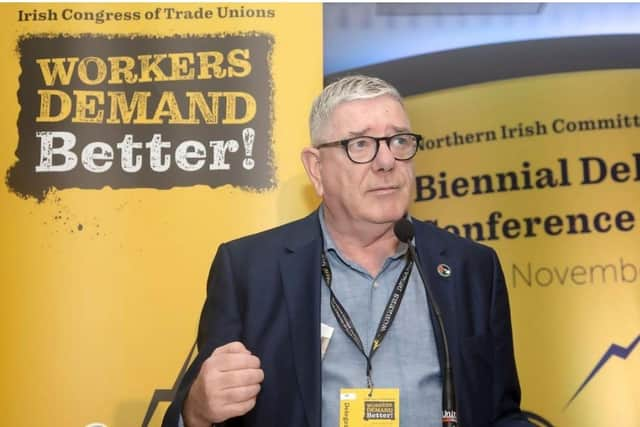

The UUP said this claim “doesn’t stand up”.
Meanwhile the DUP said that opposition to the bill came not just from unionists, but from “every business organisation in Northern Ireland”.
The issue came to the fore this week after lobby group Manufacturing NI told its members that they are under no obligation to heed letters being sent to them by trade unions asserting new organising rights.
The Employment Rights Act 2025 – and the Trade Unions (Right to Access Workplaces) Regulations 2026 which stem directly from it – grant unions access to workplaces with upwards of 21 employees for the purpose of “meeting, supporting, representing, recruiting or organising workers, and facilitating collective bargaining”, according to the government – something which UNISON has called “a major organising opportunity”.
But Manufacturing NI issued a bulletin to members pointing out "these new statutory access arrangements apply in Great Britain and not Northern Ireland”.
“Manufacturers should not feel obliged to grant access or enter statutory negotiations based on GB provisions that do not apply to their NI workplaces,” said Manufacturing NI.
Mr Murphy told the News Letter: “This advice from Manufacturing NI to its members is an acknowledgement of the sea border in workers' rights, which business lobbyists imposed by blocking of the Good Jobs Employment Rights Bill with the assistance of some parties at the NI Executive.
"The advice that ‘manufacturers should not feel obliged to grant access or enter statutory negotiations based on GB provisions that do not apply to their NI workplaces’ is simply confirmation of the business lobby’s strategy of intransigence.”
He added: “What is clear from Manufacturing NI’s reaction to these letters is that this was never about the details of any model of trade union access.
"Their hostility is to trade unions full stop.”
Stephen Kelly, CEO of Manufacturing NI, responded by saying: “Trade unions have been writing to Northern Ireland businesses asserting statutory rights and deadlines which do not apply here
"Pointing that out is not hostility to trade unions; it is simply ensuring that employers understand their legal obligations...
“Businesses should not be misled about their rights or obligations.”
Sinn Fein’s Good Jobs Bill had contained clauses about guaranteeing unions access to workplaces too.
As to Mr Murphy’s suggestion that this bill could prevent an employment rights “sea border” between GB and NI, UUP deputy leader Diana Armstrong said: “Gerry Murphy’s argument doesn’t stand up.
"The Good Jobs Bill was never about keeping Northern Ireland in step with GB.
"On union access it went further than GB and would eventually have covered every business, however small.
"On zero-hours it copied the Republic’s model, not GB’s.
"Had it passed as drafted, we’d simply have had a different gap with GB.
“Northern Ireland has had its own employment law for decades, and our rules have sometimes been better than GB’s.
"That’s devolution, not a sea border.
"If the ICTU wants to talk about the sea border, it can start with the Windsor Framework.”
DUP economy spokesman Phillip Brett said: "Employment law is devolved in Northern Ireland, and changes introduced by the Labour government do not apply.
"The anti-jobs bill proposed by Sinn Fein was opposed by every business organisation in Northern Ireland.”
He said that the DUP had sought a “compromise”, but this had been “arrogantly dismissed”.