
UFU president condemns 'profiteering' as he says farmers hit twice by Iran war oil spike because fertiliser prices are up
The UFU president has said that farmers have been doubly hit by the oil price spike since the Iran war began.
William Irvine told the News Letter that with probably upwards of 90% of farmers reliant on home heating oil, they are especially "vulnerable" to the price surge – added to which is a jump in the cost of fertiliser.
He accused big business of “profiteering” at farmers’ expense.
He was speaking as politicians in Northern Ireland hit out at what they say is a lack of support from the London government after the oil price spike was discussed at a high-level meeting.
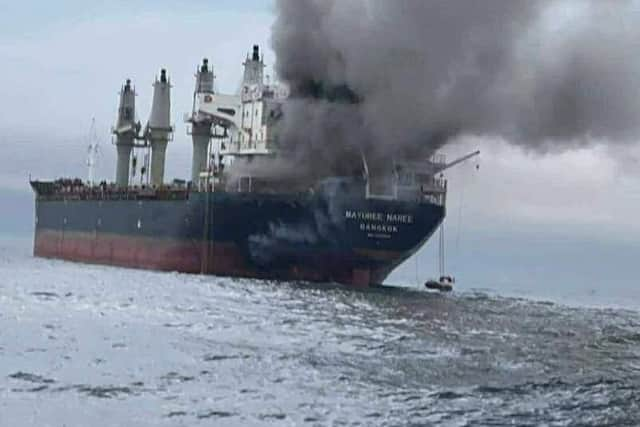

While one firm in Northern Ireland dropped its prices today, the upward pressure on global prices was visibly underlined when a bulk carrier in the Straits of Hormuz burst into flames after being bombed by Iran.
Mr Irvine said the recent heating oil spike is "just one of these cost rises that have come at farmers with no warning really".
But he also estimates that the cost of fertiliser has risen by 12% since the start of the hostilities (or by "at least £60 a tonne").
"It's just like oil: the fertiliser being delivered this week to Northern Ireland farms was not made on these dear prices," he said.
"It was made four months ago on a very different energy price.
"So just like oil, the big companies are profiteering."
He added: "And it could well go further.
"It's not the local guy who delivers the oil or the fertiliser - it's the companies they're getting it off."
He said people expect farmers just to "soak up" these price hikes, adding: "We're coming into the start of the grazing season, and if they hadn't bought prior to this, there's probably a significant portion of fertiliser still to be bought.
"It's going to cost what it costs. If we want to grow this grass, that's what we need."
He added: "Just like every person heating their home, we're caught.
"We're passengers in what's playing out.
"The best hope we have is this war doesn't last and normality resumes again."
Northern Ireland in general is particularly dependent on home heating oil, with about 60% of households using it as opposed to gas or electricity.
In GB, the figure is less than 5%.
Unlike electricity and gas, oil prices are not regulated by the government in Northern Ireland, meaning they can be more volatile.
For much of the last fortnight, the News Letter has been monitoring home heating oil prices from six firms – one in each county.
One supplier in north Down today dropped its quote for 500 litres from £615 on Tuesday down to £571. On Monday, it had been £621.
Another firm in west Fermanagh had dropped its price from £600 on Monday and Tuesday to £599 today.
The other firms we have monitored were offering basically identical prices for 500 litres compared with the day before (though some fluctuated by one penny):
North Armagh firm – £574; mid-Antrim firm – £615.83; south Tyrone firm – £599.81; Londonderry city firm – £599.
Tomorrow will be crucial, because the Consumer Council’s weekly analysis of average oil prices across the whole of Northern Ireland will be out (its previous update last Thursday found these rose by between 72% and 81%, depending on the volume people bought).
According to the Financial Times, before the Iran war began on February 28, Brent crude oil (a raw material for kerosene – home heating oil) had cost about $70 per barrel.
But with oil supplies from the Persial gulf throttled, the price reached about $117 by March 9, though it has since dropped back down after Donald Trump signalled that the US-led attack may be close to ending.
At time of writing today, the price was back down to about $90 per barrel.
The UUP and TUV today voiced disappointment that more is not being done to blunt the rise in oil prices for Northern Irish consumers after Ulster MPs met with UK ministers to lobby for help.
Jim Allister said there had been “no shortage of sympathetic words” at the meeting, “there was very little in the way of concrete action” from the Westminster government.
“Ministers gave no indication that they are prepared to remove the 5% VAT on home heating oil, despite the fact that so many households across Northern Ireland rely on it as their primary source of heat,” he said.
"Nor was there any commitment to retain the 5p per litre fuel duty rebate, a measure which has at least offered motorists some modest relief in recent years.”
And Robin Swann said his message to the Treasury is that his constituents “need action on the price”, and that the government’s response to far “offers no comfort to a constituent sitting in a cold house today".