
Larne legend and Ulster Scots poet John Clifford, who kept the folk tales of County Antrim alive, to be honoured with blue plaque
A man who kept Country Antrim’s folk traditions alive in the 20th century is to be honoured with a blue plaque.
Ulster Scots poet John Clifford dedicated his time to preserving the heritage and the old way of life in and around his beloved Larne.
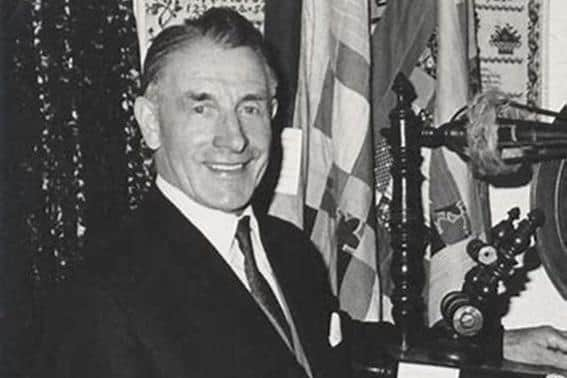

The man who restored the traditional “Hirin’ Fair” to the area and was the first curator of what is now Larne Museum, the Bard of Kilwaughter, as he was known, became a legend within his own lifetime.
He’s now to be honoured with a blue plaque in his home town, which will be unveiled this Friday morning.

The Ulster History Circle, which erects the plaques throughout Northern Ireland, said they’re only too happy to honour a man they described as a “renowned folklorist, actor and poet”.
Said the body’s chairman, Chris Spurr: “John Clifford recognised it was important to remember and celebrate the speech and the history of the people in East Antrim.
“The Ulster History Circle is delighted to commemorate this renowned folklorist, actor and poet with a blue plaque on the building where he was the first curator of the Larne Historical Centre.”
Born in Enniskillen in 1900, Clifford moved to Larne as a child and worked in a number of farms in the area before being convinced to move to London by his friend, the famous actor and singer Richard Hayward.
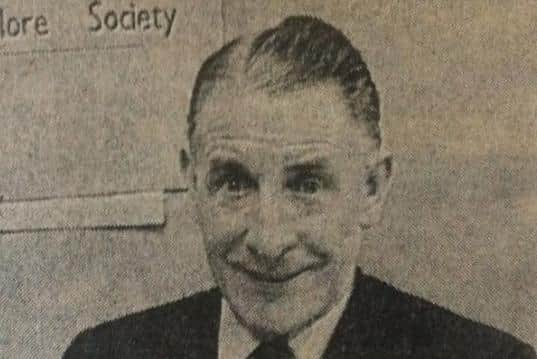
Initially finding a job as a wireman for the city’s telephone exchange, he eventually joined the civil service and became an actor with the Unity Theatre, specialising in socially conscious and political dramas.
A devotee of the regional culture and folklore of East Antrim, he wrote numerous poems in Ulster Scots about his homeland.
One of the best known is “The Hirin’ Fair”, which Clifford wrote on the south coast of England during the Second World War.
As well as being a place for socialising, entertainment, and buying and selling livestock, a hiring fair in Ulster was also a place where men, women and children made themselves available for jobs, hoping to escape poverty or limited employment opportunities at home.
Clifford’s poem celebrates the fun of the fair while keeping an eye on the potential for exploitation, always aware that the poor workers could be run ragged by as he put it “maisters, middlin’, guid or bad” who left “some weel-fed, happy and respected – but ither craiters, starved, neglected”.
Returning to Larne after 30 years in London, he helped start a folklore society in the town and brought the tradition back to life, recreating the flavour of an old hiring fair with local traditional musicians, people dressed in early 20th century costume and a horse-trading re-enactment.
One of the most prominent folklorists of his day in East Antrim, he also played fiddle and accordion, sang and wrote and performed plays.
Clifford also helped revive one of the oldest horse fairs in Ireland, Mounthill Fair in Larne, and is honoured with a gallery named after him in Larne Museum.
After his death in 1983, a fellow folklorist paid tribute by saying: “Those of us who were privileged to know him were ever conscious that we were in the presence of a living legend.”
The blue plaque at Larne Museum is unveiled at 10.30am on Friday (29th).