
Unresolved adversity in childhood and adult trauma in Northern Ireland costs an estimated £1.3 billion annually – trauma conference hears
The Safeguarding Board for Northern Ireland (SBNI) is leading efforts to create a trauma-informed Northern Ireland, addressing the significant emotional, social, and economic impact of unresolved adversity and trauma here.
Hosting a major conference on the impact of unresolved childhood adversity and trauma on society in Belfast this week, the Safeguarding Board for Northern Ireland (SBNI) emphasised the importance of adopting a whole-systems approach and integrating trauma-informed services across all relevant organisations in Northern Ireland.
Delegates heard that the cost to the Northern Ireland economy of unresolved childhood adversity and trauma is estimated to be around £1.3 billion per year.
The conference themed: ‘Systems to Support our People: Embedding a Trauma-Informed Approach Across Northern Ireland‘ heard from keynote speakers including Professor Mandy Davis, Director of Trauma Informed Oregon, Portland State University, Dr Sandra Ferguson NHS Education Scotland and Dr Suzi Macpherson Unit Head Trauma, Adverse Childhood Experience, Resilience, Survivor Support and Veterans Mental Health for the Scottish Government.
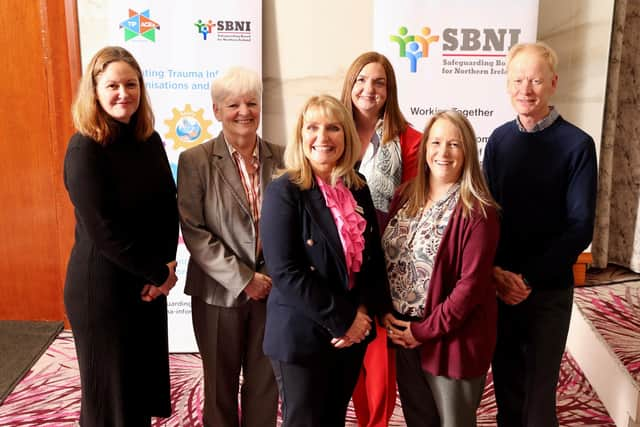

The speakers shared how they have successfully implemented trauma- informed structures within their respective jurisdictions and discussed how organisations can continue to embed a trauma informed approach throughout Northern Ireland.
Speaking at the event, Junior Minister Aisling Reilly said: “The SBNI have done some amazing work to date by bringing the relevant agencies together and agreeing a plan to work collaboratively to safeguard and promote the welfare of our children and young people.
“We know that trauma is not confined to the individual. It affects everyone, including families, our communities and wider society, so it is important that trauma-informed practices are at the core of government policy.”
Junior Minister Pam Cameron said: “Trauma has impacted many of us in Northern Ireland - if not directly, it has impacted someone we know. The impact of our history, combined with everyday adversities means trauma is embedded in many of our communities.
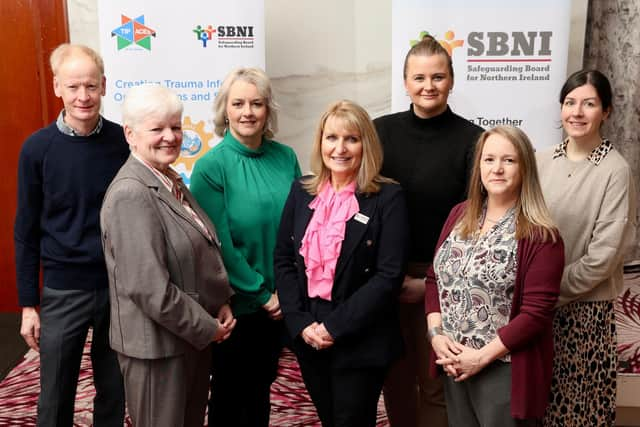
“Addressing it requires coordinated action, and the SBNI is well positioned to lead on cross-departmental and multi-agency working, creating an opportunity for systems-level change.”
Speaking at the event, SBNI Independent Chair Bernie McNally reflected upon the progress made towards embedding trauma-informed practices to better support the people of Northern Ireland: "We have come a long way in our journey to implement a trauma-informed approach across all sectors. "Our vision is to create a trauma-informed Northern Ireland.
"We face many of the same adversities seen in other regions, but we are also a post-conflict society where one third of our population has experienced conflict-specific trauma. This has a lasting effect on our young people, as we witness the intergenerational impact of trauma on the next generation.
“Our ambition is to improve society for the people we serve, ensuring that trauma-informed systems are integrated at all levels."

The SBNI continues to drive change by facilitating knowledge exchange, pilot projects, and the development of implementation models that support transformation across its member agencies. A special awards ceremony also took place yesterday to celebrate and acknowledge those individuals and organisations who have played their part in the journey so far.
In October 2024, SBNI also launched a toolkit for organisations, designed to help leaders, workforces, services and organisations on their journey to implement a trauma informed approach across policy and practice. It aims to complement existing organisational priorities, and drive improvement, innovation and sustainable change.
Ms McNally emphasised the importance of maintaining this momentum, “It is vital that we recognise that we are on this journey together and we need the highest level of leadership, as well as frontline service commitment, to achieve trauma informed systems which truly support and listen to our people.”
Speaking at the conference, Dr Colm Walsh from QUB, said: ‘‘We are increasingly aware that adversities during childhood can have a lasting impact on people’s lives. These experiences can affect outcomes such as educational attainment, employment, physical and mental health. Understanding how prevalent adversity is in Northern Ireland, how people are affected, and the ways that they are affected will improve service design and delivery and will ultimately improve outcomes across the life course and reduce demand on key public services."
Professor Mandy Davis, Director of Trauma-Informed Oregon at Portland State University, praised the SBNI for the progress already delivered in Northern Ireland, noting: "While we have established trauma informed structures in Oregon, I can already see the great work that is happening in NI to support a similar model.
"This conference will give people the space to reflect on the strengths in NI and create a platform for discussions on what is needed to fully understand the societal impact of trauma. The promotion of cross-governmental and sector partnership working will allow for structures and systems to reform and transform the sectors to provide more efficient services for those who need it. "
Dr Jayne Brady, Head of the Northern Ireland Civil Service (NICS), closed the conference by reiterating the NICS commitment to leading and continuing on the journey to provide a whole-system trauma informed approach across Northern Ireland.
She said: "Having a trauma informed approach is very much about ensuring our systems and services are joined up, working to meet the needs of our communities, and ensuring that Northern Ireland is a safe and prosperous place to live. It is about creating a whole of government, whole systems approach aimed at improving life expectancy and increasing productivity – an approach that works creatively and openly across boundaries under the collective direction of the Executive."