
Why AI Alone Isn’t Enough: Kieran Gilmurray on Foresight, Strategy & Human Insight
Educated at Queen’s University Belfast, Kieran Gilmurray began his journey into technology and data science in Northern Ireland’s capital. His time at the university laid the foundation for a global career at the forefront of digital transformation, automation, and AI strategy.
Now a renowned business influencer and bestselling author, Kieran has worked as a CIO, CTO, and Chief AI Officer, delivering impactful results for major organisations worldwide.
A trusted voice in the digital space, he’s considered one of the UK’s most in-demand Artificial Intelligence speakers, known for blending strategy with practical insight.
In this exclusive interview with The Champions Speakers Agency, Kieran shares candid reflections on AI misconceptions, ethical challenges, and the power of combining insight, foresight, and technology to drive real business outcomes.
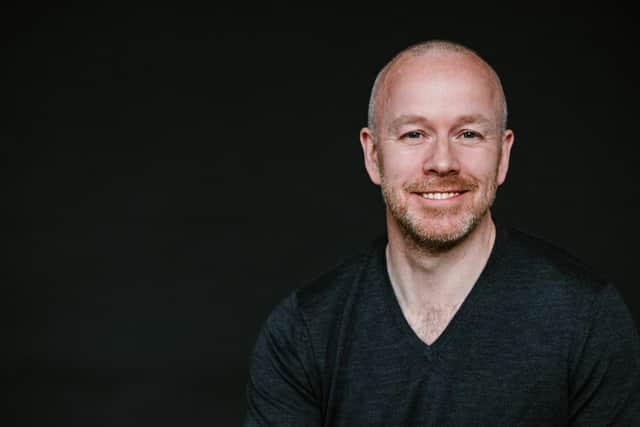

Q: Your career has spanned CTO, CIO, and Chief AI Officer roles—what first sparked your interest in artificial intelligence and technology, and how did that evolve into the expertise you’re known for today?
Kieran Gilmurray: Realistically, this started about 25 years ago, if not even 30 years ago at university. When I was there, there weren’t really computers, and the computers that were there were not exactly great. I remember typing and typing and typing and not having a clue about how to do saving. So you can imagine trying to write essays on one of the first computers that came into Manchester University wasn’t the most fun thing in the world. But it sort of sparked an interest, because you were looking at something there that really was the future at the time.
And it wasn’t until a couple of years later, till I went and taught English abroad, when I started to see customer records—and then you start sort of thinking, oh my goodness, hold on, we should be going into databases. Because we should be making far more use of our customer data to allow us to actually make better decisions and work. And then I remembered computers, and then I put computers and databases together and went and did a Master’s in Queen’s University in Belfast.
Oddly enough, as you can imagine, my dissertation was on databases and coding and something else. I was doing a tech Master’s, and then got into computer coding, and then got into automation. And then a couple of years later it was, no—actually, we’ve got the insight, and we’ve got the computing technology and the automation that we need, but what about the foresight?
And I was fortunate to come across a company in England who were doing a lot of predictive analytics. And then you could start to see—oh my goodness—if we know what’s happening, and why it’s happening, and what might happen, and actually what can we do about it to get the results that we want, then as businesses, we can turn something extraordinary into place.
And I did all that and ended up over the years being a CTO, a CIO, a Head of Process Excellence, a Chief AI Officer, and I’ve just been in that space ever since. So now I want great automation, great technology, great insight and great foresight. And once you put those things together with financial literacy or some form of business acumen, and you keep your eye on the end goal—particularly focusing on what the customers want—then you can have a much better decision than any other business.
And so far, it’s worked out all right, because any of the businesses I work with, when they do all of those things, become really fun places to work—where there’s a lot of high-performing teams able to use technology. Rather than the robot being in them, we take the robot out and just make things very profitable, very efficient, and a lot of fun.
Q: With AI dominating headlines, what do you believe is the most damaging misconception businesses have about its capabilities?
Kieran Gilmurray: Yeah, there are so many misconceptions now because it’s reached what I would describe as, you know, an inflated point of hype. The biggest one is that AI can do everything. And interestingly, I’m just off a consulting call a second ago—because I tend to teach, I tend to talk, I tend to consult, big and small—and I think that’s a lot more effective. Once you can set strategy that works in the real world, when rubber hits road, and then when you’re able to actually implement it, you just come up with a much more effective person or role or function.
But it can’t do everything. You know, it’s a tool in your toolkit. It’s an amazing tool. And if you use that tool in the right lock—for want of a better phrase—then the world opens up to more efficiency, more creativity, more innovativeness, more productivity, higher sales, higher ROI, reduced operating cost, and the multiplier effect of using this technology is immense.
But if you use it in the wrong circumstances, the cost effect is multiplied over and over again. And rather than doing, as I discovered recently when I was chairing a conference for some of the biggest CTOs and CIOs in the world—one had 223, what they confidently described as proof of concepts, what I confidently re-described as proofs of cost—because there was nothing of any business benefit that was going to come out.
So as long as you know what you’re doing, AI is a great tool amongst other great tools. It’s a brilliant one, I should say. And if you put a great tool with a great person, you can normally get a better result, as long as you point everyone in the right business outcome-based direction.
This exclusive interview with Kieran Gilmurray was conducted by Mark Matthews of The Motivational Speakers Agency.
For More Information: Champions Technology Speakers