
Farming jobs fall sharply as Northern Ireland employment in general grows: Work 'still has to happen, but cash-strapped families can't afford labour' says UFU
Jobs in agriculture in Northern Ireland have seen the steepest decline of all sectors in Northern Ireland, at the same time as employment in general massively increased.
Losses at a time of rising jobs overall have sparked concern among a major body representing the sector.
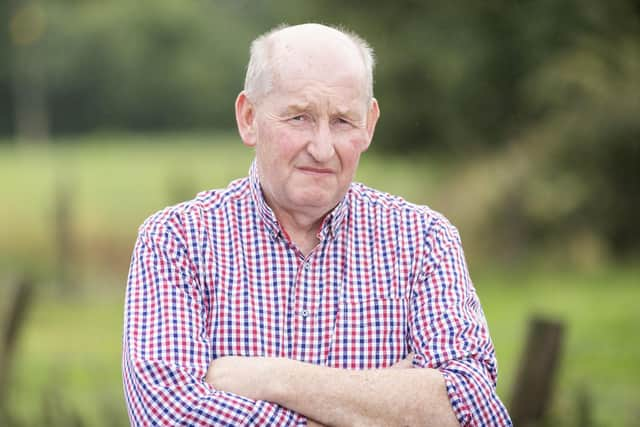

According to the Ulster Farmers’ Union (UFU), the work still has to be done but a mix of inflation, spiralling feed and energy costs, and wage rises mean families can’t afford to take on labourers and now need to handle the jobs themselves.
That’s added to difficulties faced by already hard-pressed farmers, the body says.
Recently released figures state that over a 10-year period, the province saw its job market grow substantially with around 15% more positions opening up.
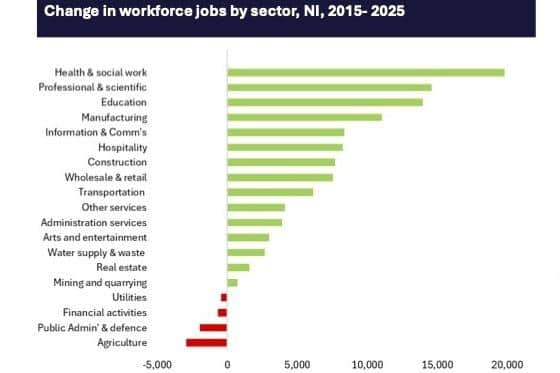
Of 19 sectors studied by the Ulster University, the overwhelming majority saw employment opportunities rise from 2015 to 2025 – but farming was a major exception.
Jobs in four parts of the Northern Irish economy shrank over that period, with agriculture decreasing by the largest amount.
From a graph produced by the university, the sector lost between 2,000 and 3,000 jobs.
By contrast, health and social work gained close to 20,000 new positions, while both education and the professional and scientific sector went up by around 15,000 apiece.
Overall, the province gained around 107,000 jobs over 10 years in what was mainly a steady increase over time, with only a dip in 2020 and 2021 as Covid hit interrupting growth.
For UFU deputy president Glenn Cuddy, however, agriculture’s decline in employment during a period of general growth demonstrates “the pressure farm businesses have been under for some time” in relation to rising wage and production costs.
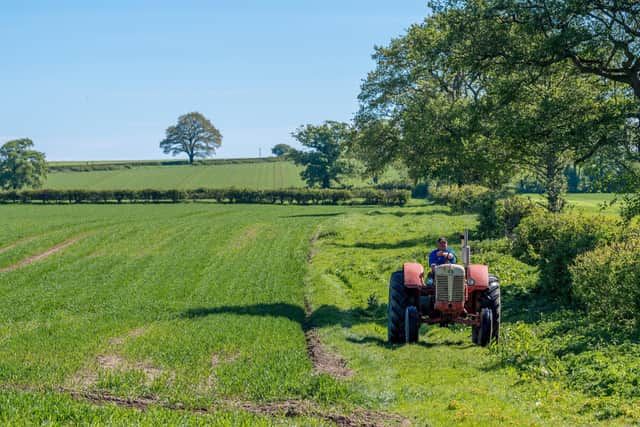
“Crucially, the need for labour on farms has not disappeared,” he told the News Letter. “Instead, we are seeing a shift away from employed workers and towards farmers and their families taking on more of the workload themselves.
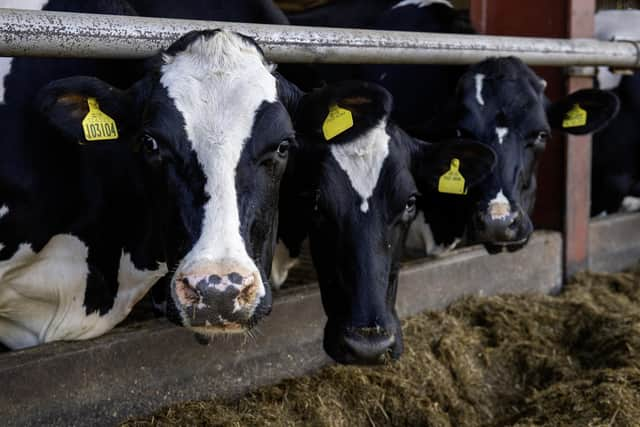
"Farming is a seven-days-a-week job; this shift is putting more pressure on family farms, while also making it harder to encourage the next generation into the industry.”
Wages and national insurance plus feed and energy fees have all risen rapidly, he added, but individual farmers don’t have much leeway to cover those costs by upping their own prices at market.
“If we want farms to employ people, those businesses need to be profitable and able to invest,” Mr Cuddy said.
He also hit out at the Agricultural Wages Board, an independent body that sets minimum pay and conditions for farm workers in Northern Ireland.
The UFU sits on that board, as does fellow union Unite, while its chair and independent members are appointed by Stormont’s Department for Agriculture, the Environment and Rural Affairs.
According to Mr Cuddy, the board is known to set pay for certain grades of workers at a level “significantly above” minimum wage, placing costs on farmers that can stop them taking on additional labour.
He said: “We maintain the board is outdated and should be abolished, particularly as workers are already protected by wider employment legislation.”
Mr Cuddy added: “These figures should be taken seriously. Northern Ireland needs profitable, sustainable farm businesses that can employ people, invest for the future and give the next generation a reason to see farming as a worthwhile career.”