
“I never thought I would own a blade of grass, never mind the largest all-pedigree herd on the island': Alpacas on parade at Balmoral Show
The Balmoral Show is the place to be for livestock of all kinds, bringing the best in show for cattle, sheep and pigs – and, it turns out, alpacas.
Owner Michelle Dunniece brought three of her herd in a small paddock, showcasing what was undoubtedly the most unusual trio of animals at the third day of the biggest agricultural event of the year.
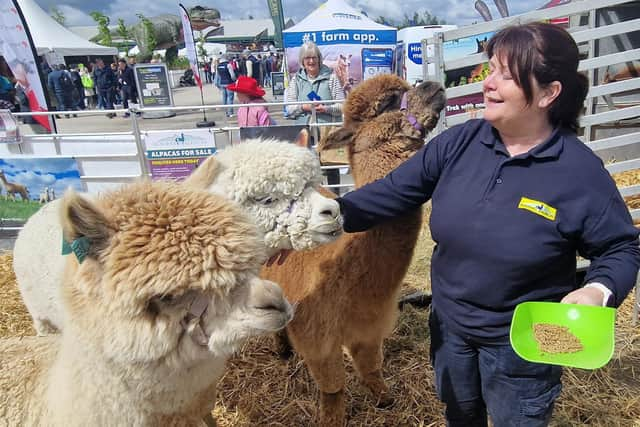

As she told the News Letter, she first encountered alpacas years ago while studying in France. Dispatched to record them while on a PhD course, she instantly fell in love.
“I never believed I would own a blade of grass, never mind what is now the largest all-pedigree breeding herd on the island of Ireland,” she says.
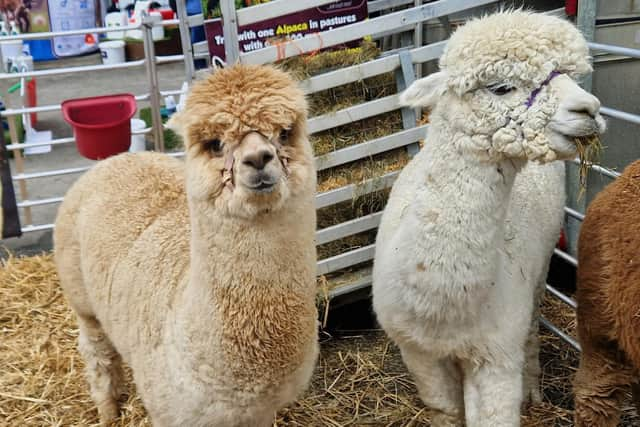
Her business, Mourne Alpacas in the countryside near Dromara, offers trekking events as well as producing alpaca wool – which, says Michelle, is a soft, luxurious and hypoallergenic fibre that makes especially good socks, duvets and scarves.
From her paddock opposite the Balmoral Show’s sheep rings, she admitted she’s not quite on the level of some of the big commercial operations, but says the experience of alpaca farming is second to none and the wider industry is getting used to being there.
“It’s changed a lot since we first started coming to the Balmoral Show, we don’t get asked if they’re stretched sheep any more,” she laughs.
The three certainly proved to be a big hit with youngsters, a steady stream of kids excitedly dragging their parents over to see Michelle’s unusual herd.
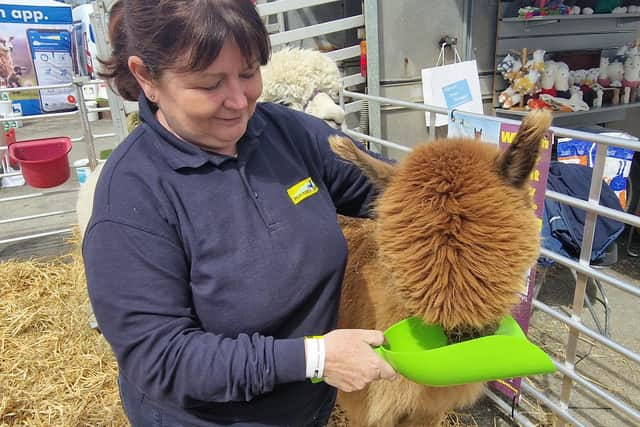
“They’re incredibly popular with kids,” she says. “In their indigenous environment alpacas are preyed upon at night; they’re a timid animal and their herd instinct is hugely important. That makes them an incredible animal to work with people.”
But the questions has to be asked, what is it actually like to shear an alpaca?
“We now use a tilt and turn table system, which is much easier and less stressful than it was,” says Michelle. “You turn your table 90 degrees, strap the alpaca on and turn the table horizontal again.
“It’s like a wee funfair ride for the alpacas, and it means we’re able to stand to shear them. The fibre comes off in three sections, which is much easier to classify, bag and send to our production lines.”