
No way to guarantee under-14s get quality education, says report - while dispute meant only 13 schools got full inspections in six years, undermining 'robust oversight of SEN'
It’s not possible to guarantee kids aged under 14 are getting good quality education, a provincewide report has concluded.
Officials have criticised the Department of Education for keeping scant records of school pupils’ grades before they hit their GCSEs, stating there’s “little assessment data” for that age group resulting in “significant gaps in the information available”.


They also state that only a handful of schools were given a full inspection over a six-year period, something that’s blamed on industrial action short of going on strike on the part of assessors.
Action short of strike from school inspectors means children with special educational needs (SEN) haven’t been properly observed in the classroom, stare officials, meaning “robust oversight of SEN has been undermined” at a time when the number of pupils in that category is increasing and spending on it has skyrocketed to £620m per year.
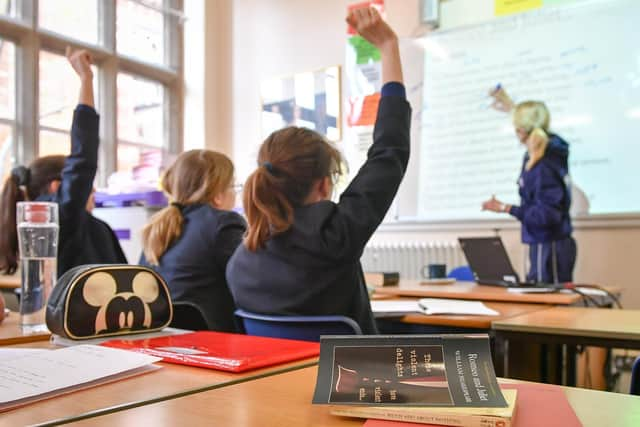
That’s all according to checks of the province’s government-run education system by the Northern Ireland Audit Office, which called for a clearer definition of what ‘quality of education’ actually means, as well as better data and stronger mechanisms to safeguard high standards for all pupils.
Although the concept of ‘quality of education’ is well understood in principle, conclude auditors, the department doesn’t have a formal definition of the phrase enshrined in policy, making it “extremely challenging” to monitor how well it’s being delivered.
Currently, there is a heavy reliance on exam results, but officials highlighted "significant gaps” in the information available. While grades are widely recorded at GCSE and A-level, they state, that’s not the case for younger pupils – meaning “policymakers cannot evaluate progress or intervene early enough to address underachievement”.
Industrial disputes at the Education and Training Inspectorate result in “ongoing disruption”, to the point that between 2018 and 2023 only 13 schools got a full inspection in Northern Ireland – all of them primaries. The disrupted inspections, stated auditors, means “fewer schools were identified where safeguarding needed improvement, increasing the risk that vulnerable pupils were not receiving adequate support.”
Comptroller and Auditor General Dorinnia Carville said that while GCSE and A-level results are improving and there is much to be proud of in Northern Ireland’s education system, “significant information gaps and prolonged disruption to inspection have limited assurance on the quality of provision across our schools”.
Education Minister Paul Givan acknowledged the report highlighted issues with pre-GCSE testing, stating reforms bringing in checks for literacy and numeracy levels at ages 8, 11 and 14 are on the cards.
He also said changes to the inspection system have been put forward, bringing the province in line with “legal protections” found elsewhere in the UK.
“I am committed to building a modern, data‑rich, high‑trust education system in which every learner can thrive,” he added.