
Antrim mum's heart attack was dismissed as a panic attack
A fit and healthy woman from Antrim is urging the public to be aware of their cardiovascular health after her heart attack was dismissed as a panic attack.
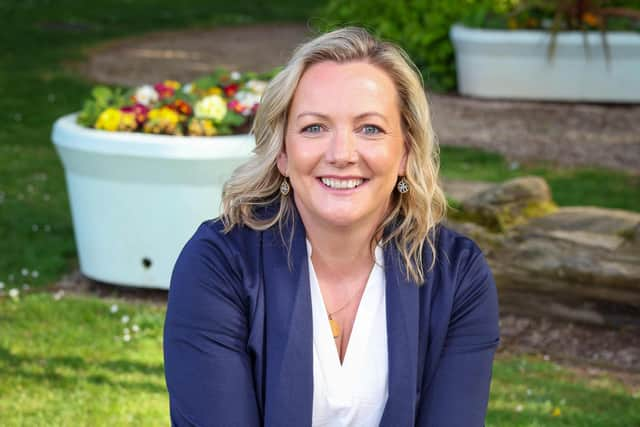
Mary McFarland, 44, was fit and healthy when she unexpectedly suffered a heart attack at work in October 2024.

The mum-of-three and medicinal chemist working in drug discovery had a SCAD (spontaneous coronary artery dissection)—a rare condition where a tear appears in the wall of a coronary artery, disrupting blood flow to the heart.
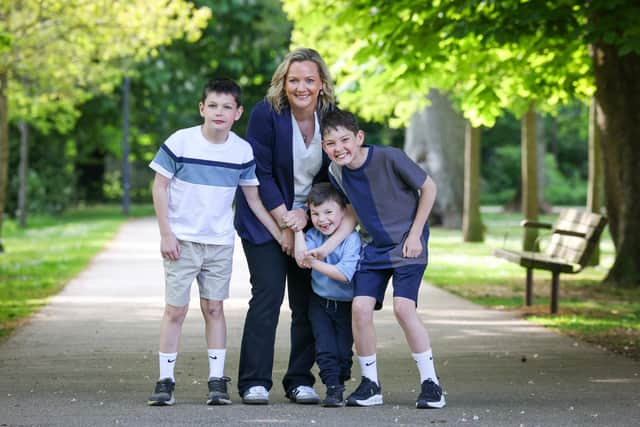
“Before my heart attack, I was working full time, active with my three boys, and had recently taken up rowing with my local club,” Mary said.
“It was a Friday morning, and I felt unusually breathless after walking up and down the stairs. I chalked it up to a stomach bug I’d had earlier in the week.”
During a panel interview at work, 10 minutes into speaking with a candidate, she felt a crushing chest pain that spread down her arm.
“I thought it would pass, but I couldn’t even hold my pen. My arms were weak, and I started sweating. I had to leave the room—and collapsed just outside the door.”
A colleague who saw her fall called emergency services and got a defibrillator ready.
“As a first aider for 15 years, I knew I was having a heart attack,” Mary recalled. Though the pain began to ease, she was still short of breath and had pins and needles in her limbs.
When paramedics arrived and performed an ECG, they told her she was likely having a panic attack. Mary disagreed. “I kept repeating that I was the interviewer, not the one being interviewed. It made no difference.”
A colleague drove her to the hospital, where a blood test revealed elevated troponin levels—a sign of heart damage. She was admitted.
“Given my age and no family history of heart problems, the doctor was surprised. But looking back, there were signs in the days before the attack.”
Mary recalled feeling unwell on Monday and taking the day off. On Wednesday night, she experienced sharp chest pain while putting her children to bed.
“I thought it was indigestion from the stomach bug. On Thursday, I even joked to a colleague that it felt like a heart attack—but I never imagined it was possible. I eat well, stay active, and am in my early 40s.”
Mary remained in The Mater Hospital over the weekend. On Sunday, she was transferred to the Royal Victoria Hospital in Belfast, where a cardiologist considered an angiogram but hesitated because Mary didn’t look like a typical heart patient. Thankfully, a senior consultant insisted it be done.
“Until then, I wasn’t convinced I’d had a heart attack. The Friday cardiologist thought maybe my heart was under stress,” Mary said.
“I do a lot—three kids, full-time job, busy schedule. But Dr. Murphy at the Royal was clear: there was too much evidence to suggest anything else.”
The angiogram revealed a tear in her left anterior descending (LAD) artery. She began treatment and was due for discharge on Tuesday. But on Monday night, the severe chest pain returned.
Another angiogram showed a blood clot blocking her artery, requiring an emergency balloon angioplasty to widen the artery and save her life.
Mary remained hospitalised for another week, initially on complete bedrest.
“They said I was a special case—they didn’t know what to expect.”
Discharged in late October, her recovery was slow and complex. She experienced recurring chest pain and needed to be readmitted twice.
In January, she began cardiac rehabilitation, which marked a turning point.
“When I left the hospital, I was scared to do anything. Rehab has helped so much. The team in Antrim was amazing—they helped me build confidence in my body again. I started with short walks, and now I’m back to gym-based workouts.”
When Mary started the cardiac rehab she realised there were still a lot of misconceptions around who can be affected by a heart attack.
“Some of the people there with me couldn’t believe I’d had a heart attack and thought I must be training for something.”
Mary has now made great progress on her recovery journey and is back to work full-time, taking her boys to their sports and she’s also recently started back to her rowing club.
She says: “I am quite a positive person, I know it would be very easy to be afraid and not trust your body anymore, but I know that I’m doing everything I can to build up my strength and reduce stress.
Mary is also supporting British Heart Foundation’s new strategy, which calls for further investment in cardiovascular research to stop heart disease, save more lives and support everyone with heart disease to live a longer, healthier life.
The BHF has warned that Northern Ireland's heart health is at a “tipping point” with heart disease and related risk factors reaching record highs. Since 2020, diagnoses of heart failure, atrial fibrillation, and diabetes have surged, and the region continues to struggle with high obesity rates. Cardiac waiting lists have also increased significantly, with over 3,000 people awaiting surgery or treatment by December 2024.
Heart-related deaths in 2023 reached the highest level since 2012, including 1,133 premature deaths under the age of 75. While decades of progress had previously reduced heart-related deaths, these troubling trends are reversing.
BHF Northern Ireland's Head, Fearghal McKinney said: “We are at a tipping point in Northern Ireland’s cardiovascular health, with the prevalence of many heart diseases and risk factors at a record high, but we’re entering an era of immense scientific opportunity that can turn this tide.
“By driving a research revolution, we can reverse this worrying trend and save and improve more lives than ever before. The BHF's new strategy will be key to this, as we aim to save many more families the heartbreak of losing loved ones far too soon.”
“