
Belfast teen Katie proves possibilities are endless for deaf children
A Belfast teenager, who was diagnosed as deaf as a baby and wears cochlear implants is proving that with early and effective support the possibilities are endless for deaf babies and children and they can learn to talk just like their hearing friends.
Katie McKenna, 13, was supported to listen and speak by charity Auditory Verbal UK (AVUK) and is now at thriving at mainstream school. She loves music and sport especially football and is part of the Northern Ireland Girls National Performance Programme for football. Her ambition is to gain a scholarship to America and play in the National Collegiate Athletic Association soccer league.
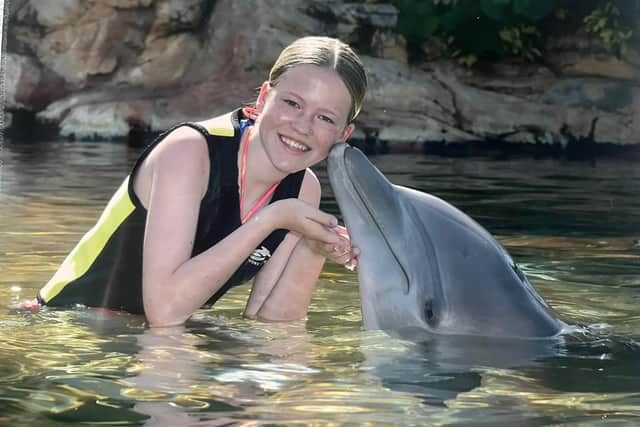

This week her mum Abbie is calling for greater understanding about what is possible and challenging common misconceptions that persist about deafness, after new research published by Auditory Verbal UK shows only a quarter of adults in the Northern Ireland believe it is possible for a child born profoundly deaf today to learn to speak as a child without hearing loss.
Abbie said: “Katie is the youngest of three children and by far the most confident and independent. She has always wanted to do everything on her terms and been determined that being deaf will not stop her doing anything at all.
“It is so disappointing to see that attitudes about what deaf children and young people can do are still so low. All we have to do is look at what Katie has already achieved and her ambitions to know that this needs to change and we hope during Deaf Awareness Week that we can help to challenge these expectations and break down some barriers.”
Deaf children, young people and their families are joining AVUK calling for a greater awareness and understanding of what deaf children can achieve with early and effective support to develop language and communication in the vital early years.
Auditory Verbal therapy helps deaf children process sound they receive from hearing technology, like hearing aids and cochlear implants, and supports them to develop their spoken language.
But this support needs to be offered early in a child’s life, while their brain’s neural pathways are developing, to ensure they have the very best opportunities to achieve their potential.
Charity AVUK works with the families of deaf children who want their child to learn to listen and talk and four out of five children who attend the family-centred Auditory Verbal therapy programme achieve spoken language skills on a par with hearing children and the majority attend mainstream school.
AVUK chief executive Anita Grover said: “Deaf children and their potential is constantly underestimated and this new research for Deaf Awareness Week continues to show this lack of belief and understanding in what is possible with early, effective support.
“There are approximately 7,200 deaf children under the age of five in the UK who currently face the prospect of lower academic achievement, lower employment, and are at higher risk of poor mental health, bullying and social exclusion. But it doesn’t have to be this way. As children like Katie are proving when children and families have access to effective, early support, deaf children can get an equal start at school and opportunities are transformed. This is critically important whether a child uses sign language, spoken language or both. There is not one approach that works for all families of deaf children.”
AVUK wants all families who want their child to learn to listen and talk to have the opportunity to access Auditory Verbal therapy through publicly funded services. The charity’s #HearUsNow campaign is calling on UK governments to invest in early and effective support for deaf children in the UK is backed by the general public: The YouGov survey showed 69% of adults in Northern Ireland believe Auditory Verbal therapy should be available to all deaf children via publicly funded services like the NHS.
For more information visit www.avuk.org