
Christian Institute describes assisted dying bill as 'a terrible message to vulnerable people that their lives are not worth living'
The Christian Institute’s Northern Irish wing has hit out at what it describes as a “profoundly dangerous” bill to legalise assisted death.
Meanwhile a group called My Death, My Decision has called for a similar bill to be brought forward to cover Northern Ireland, saying that it is “no longer acceptable for [MLAs] to ignore this issue”.
They were reacting to the Terminally Ill Adults (End of Life) Bill, tabled in Parliament by Labour MP Kim Leadbeater last month, and the details of which were published in full on Monday.
The bill would apply to England and Wales, and a debate and first vote are expected to take place on November 29.
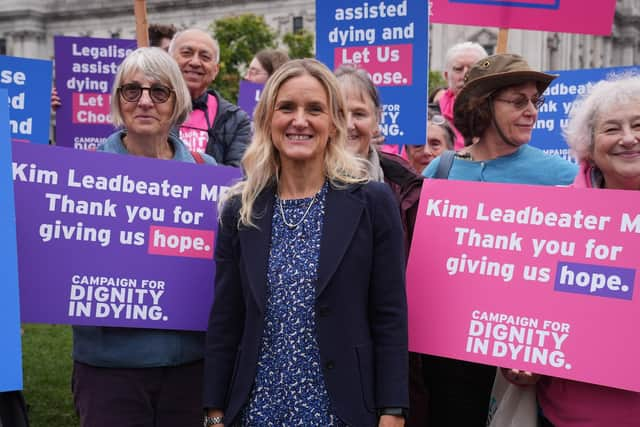

It would mean people could apply for help in ending their lives, without anyone involved being charged.
Assisted suicide is banned in England, Wales and Northern Ireland, with a maximum prison sentence of 14 years.
In Scotland it is not a specific criminal offence but assisting the death of someone can leave a person open to being charged with murder or other offences.
Under the bill, people could apply for help to die if they are aged 18 or over, and are terminally ill and expected to die within six months.
They must make two separate declarations, witnessed and signed, about their wish to die.
The process must involve two independent doctors being satisfied the person is eligible, and that they have not been pressured.
A High Court judge must hear from at least one of the doctors regarding the application, and can also question the dying person as well.
There must be at least seven days between the two doctors making their assessments and a further 14 days after the judge has made a ruling so the person can reflect on their decision (though this can be cut to 48 hours if death is imminent).
Doctors would not be under any obligation to take part.
When it comes to the final act, the dying person must take the fatal medication themselves.
James Kennedy, Northern Ireland policy officer at The Christian Institute in Belfast, said: “This is a profoundly dangerous bill.
"It sends the terrible message to vulnerable people that the state officially endorses their fear that their lives are not worth living.
“It fundamentally re-writes the relationship between doctors and patients, making them providers of death to the sick. Lawyers are already arguing that it is ripe for expansion to other categories of vulnerable people, just as we have seen in other countries.
"The idea that MPs should be given less than three weeks to try to take advice and canvas opinion on a 38-page bill of such massive social significance is, frankly, an abuse of the Private Members’ Bill procedure.”
Gavin Walker, chairman of the NI wing of the activist group My Death, My Decision, takes a different view.
"When passed, this bill will only apply to England and Wales and clearly reflects the wishes of the people there.
“Voluntary assisted dying is now being seriously debated in parliaments in every jurisdiction across these islands – except Northern Ireland, where our MLAs continue to refuse to engage in the issue, in effect disenfranchising people here.
“We now need our MLAs to rise to the challenge and look to the best means of engaging the people of Northern Ireland in a debate to determine what assisted dying legislation here would include. It’s no longer acceptable for them to ignore this issue, and in effect disenfranchise the people of Northern Ireland...
“Whether by special committee within the Assembly or by establishing a single-issue Citizens’ Assembly to determine the wishes of the community, politicians have to overcome their fear of this subject and respect the wishes of the people for action.”