
Church of Ireland reacts to assisted dying debate saying the best safeguard of all is 'do not kill'
The Church of Ireland has issued a statement on the plan to legalise assisted dying, saying that the best “safeguard” of all is this: Do not kill.
It released the statement today ahead of Friday’s vote in the House of Commons on the second reading of the Terminally Ill Adults (End of Life) Bill, put forward by Labour MP Kim Leadbeater.
Though it only applies to England and Wales, critics fear that by passing such a bill it will pressure the Scottish and Northern Irish governments to do likewise.
Assisted suicide is banned in England, Wales and Northern Ireland, with a maximum prison sentence of 14 years.
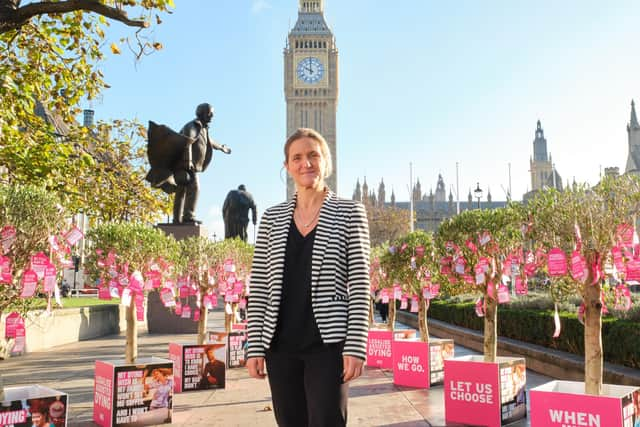

In Scotland it is not a specific criminal offence but assisting the death of someone can leave a person open to being charged with murder or other offences.
Under the bill, people can be given drugs to kill them if they are aged 18 or over, and are terminally ill and expected to die within six months.
They must make two separate declarations, witnessed and signed, about their wish to die.
The process must involve two independent doctors being satisfied the person is eligible, and that they have not been pressured.
The Church of Ireland’s statement today says: “As Christians we believe that all life is created in the image of God, as a gift from Him, and has intrinsic value, regardless of who we are, our personal circumstances and our abilities and limitations.
"If we accept that, in some cases, there are those who by means of age, disability or illness would qualify for assisted suicide, have we not judged their life to have less value?
"How can they be expected to see meaning and value in their own life if we accept that this value somehow depends on a person’s health or their stage in life?
“As the overall age of the population moves upwards, there are often understandable concerns and discussions around the economic consequences of caring for the elderly for the rest of the population.
"So common is this talking point that we can lose sight of how this framing devalues and depersonalises older people. No longer contributing to the workforce and so past their useful economic lifespan, they become, even if only in the abstract, perceived as a burden.
“The social pressure that this creates is not direct, but it is real, and it is insidious...
"Our faith requires us, as Christians, to protect the vulnerable, the poor, the orphan and the widow. If we allow our society to create pressure, albeit inadvertently, on anyone who is vulnerable to end their lives, we fail in that duty.
“When lawmakers elsewhere have legalised assisted suicide, they have found time and again that it is incredibly difficult to maintain and enforce legal and ethical boundaries.
"Laws written with great care are still found lacking and parliaments and assemblies find themselves allowing wider and wider criteria, as occurred, for example, in both Canada and Columbia in a relatively short period of time.
“The surest safeguard in law for our lives and the lives of others, especially the most vulnerable, is ‘do not kill’.”
It concluded: “We do not accept that legislating for assisted suicide will inevitably reduce suffering. The only inevitability of such legislation seems to be its progressively widening scope.”