
Co Down woman Bronagh on 'shock' MS diagnosis after emergency eye appointment
A Co Down woman, who was diagnosed with multiple sclerosis (MS) when she was just 30 years old while preparing for her wedding, shares her experience of coming to terms with the condition and the importance of positive conversations around MS.
Bronagh Patterson from Dundrum said her diagnosis of MS came as a “complete shock”. “Out of the blue in June 2023 my right eye began to react like it would to a flare up of hay fever. An emergency appointment with my optician resulted in a referral to ophthalmology. This appointment discovered damage to the optic nerve which then led to an MRI scan. By February 2024 I had received a diagnosis of relapsing remitting MS.”
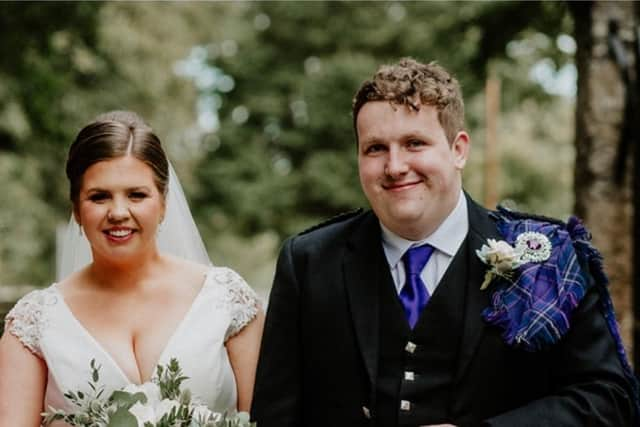

Bronagh said coming to terms with the diagnosis was difficult.
"I was newly married, had a new career path, and wanted to start a family. What should have been an exciting time of looking to a happy future now seemed bleak. At the time I didn’t know much about MS and what it meant for me. My future looked scary, and I was frightened.”
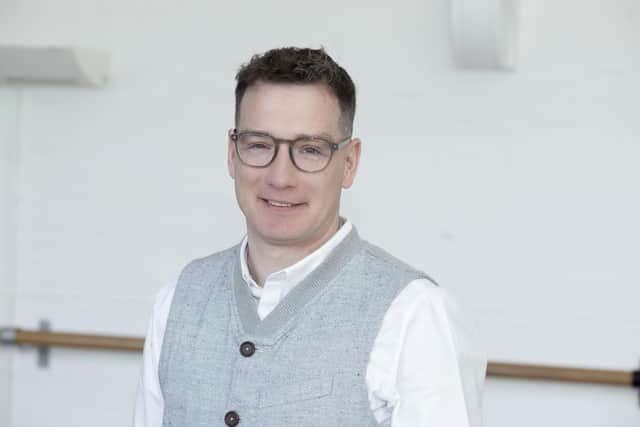
She added: “I would describe living with MS as a bumpy road. Relapses throw major bumps into my path but one year on from diagnosis I have begun to learn to tolerate the bumps as I understand MS more. Conversations with my MS nurse mean I can feel more involved in my care and ensure the treatments I receive are effective but meet my personal needs such as being safe for when I’m ready to start my family.”
This MS Awareness Week Bronagh is supporting a new national charity campaign, MS Conversations. Spearheaded by a collaboration of the UK’s MS charities - MS Society, MS Trust, MS Together, MS-UK, the Neuro Therapy Network, Shift.ms, Overcoming MS, and Talks with MS – the campaign aims to encourage people to start conversations about their multiple sclerosis (MS).
More than 5,300 people in Northern Ireland, and more than 150,000 people in the whole of the UK, live with MS. It’s a condition that affects nerves in the brain and spinal cord and impacts how people move, think and feel.
Symptoms are different for everyone and are often invisible. But one thing everyone with MS has in common is that they’ll all have conversations about their condition, whether they’re explaining it to family members or friends, asking an employer or medical professional for support, or opening up to a new partner. Those conversations won’t always be easy.
The eight charities are encouraging everyone affected by MS to get involved on social media throughout MS Awareness Week by using the hashtag #MSConversations to share their most memorable MS interactions.
Bronagh believes that having conversations about MS creates an environment that is positive and supportive where people like her can get advice, learn new skills and share coping mechanisms.
“When I was first diagnosed, I didn’t want to talk about MS,” said Bronagh. I was worried my family and friends would treat me differently. I became isolated because I thought they would be embarrassed by the changes that were happening to me. I also didn’t want them to read into the condition and then share what my future could look like.
“I spoke to my MS nurse about how I was feeling, and she shared a publication written by the MS Society to answer some of my questions. This book spoke for me when I couldn’t! I was grieving my health, my education and what I felt was my ability to improve myself. I felt like an altered Bronagh.
“During a recent relapse I couldn’t manage something as simple as holding a spoon, brushing my hair or doing up a button on my trousers. But people will often say “but you look so well” or “how could you be so tired?” Having to explain myself is so difficult. I want the people around me to listen and understand.
“When I reflect on MS conversations, I know they are extremely important to remove the feeling of being alone. I feel very new to the world of MS and am afraid of offending people who have been living with the condition for a long-time. Having conversations about MS creates an environment that is positive and supportive where people like me can get advice, learn new skills and share coping mechanisms. Having conversations and sharing knowledge and experiences with others from the MS community makes a big difference when those major bumps are thrown my way.”
Stewart Finn, country director, MS Society Northern Ireland, said: “Talking openly about MS is vital for increasing awareness, breaking down stigma, and ensuring everyone can access the support they’re entitled to. But starting those conversations can be hard.
“This MS Awareness Week we’re pleased to once again be partnering with other leading MS charities across the UK, this time shining a spotlight on MS Conversations. Encouraging conversations about MS is at the heart of everything we do year-round at MS Society Northern Ireland, from inviting people to contact our free MS Helpline, to supporting Local Groups to bring people together, and promoting volunteers’ stories. This week we’re taking that one step further and sharing tools and advice to help more people have conversations about their MS.
“We’d like to say a huge thank you to Bronagh and everyone else who’s shared their experiences so far. There’s still time to join in using #MSConversations on social media.”
Join the conversation and find support by searching #MSConversations on social media. Follow MS Society Northern Ireland’s MS Awareness Week coverage on Facebook, Instagram and X.