
Decades-long waits for serious illness diagnoses
Some people with hypermobility conditions are waiting up to 21 years for diagnosis, according to research.
The study also found that people with hypermobile Ehlers-Danlos syndrome (hEDS) and hypermobility spectrum disorders (HSD) face fragmented healthcare, while it can have a major impact on their mental health, education and employment.

The conditions affect connective tissue throughout the body and are associated with joint hypermobility, chronic pain and fatigue, alongside neurological, gastrointestinal and psychological symptoms.
The University of Edinburgh-led study of more than 2,000 people, said to be the largest of its kind in the UK, found patients waited an average of 19 to 21.7 years for diagnosis, while many respondents travelled outside of their home nation to be diagnosed.
Experts said their findings suggest low awareness of the conditions among healthcare professionals and limited care pathways are leaving patients without timely diagnosis or co-ordinated support.
Kathryn Berg, trial and research manager at the university's Institute of Genetics and Cancer, said: “This study highlights the profound impact hEDS and HSD can have across every aspect of life.
“Our findings show the urgent need for equitable, multidisciplinary care pathways that recognise the complex and multisystemic nature of these conditions.”
The researchers found many people travelled for a diagnosis.
More than a third of Welsh respondents (37.3%) and 39% of those in Northern Ireland reported leaving their country for diagnosis, as did 17.4% of people in Scotland.
People in England were most likely to receive a diagnosis within their country of residence, at 97.6%.
Respondents from Wales reported the longest “diagnostic journey”, waiting on average 21.7 years between symptom presentation and diagnosis by a healthcare professional, while it was 21.1 years for Northern Ireland, 19.5 for Scotland and 19 for England.
The study was conducted using an online survey co-developed with patients, clinicians and Ehlers-Danlos Support UK between September 2023 and January 2024.
Researchers are now calling for formalised care pathways, better professional awareness, and multidisciplinary services integrating rheumatology, pain management, physiotherapy, occupational therapy and psychological support, alongside co-designed approaches reflecting neurodivergent needs.
A spokesperson for Northern Ireland's Department of Health said: “Ehlers-Danlos and hypermobility-spectrum disorders can be complex and challenging to diagnose and treat as people can experience a wide range of symptoms.
“The route to diagnosis will likely initially occur with the patient's GP who may make a referral to secondary care for assessment by a specialist. The specialist will assess the indications for EDS and HSD and agree the appropriate clinical care plan.
“Currently, services here conform to established Nice guidance as is standard with all health services in NI.”
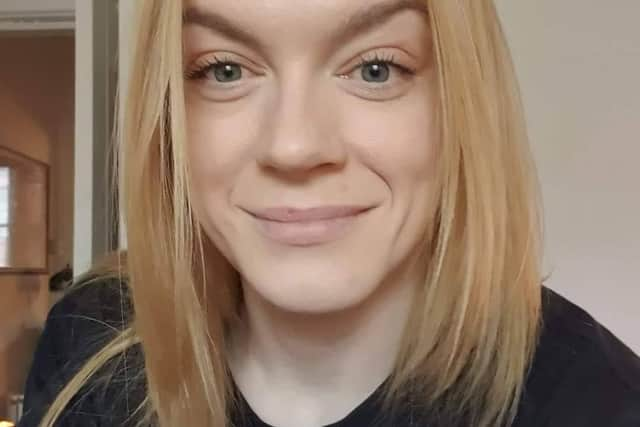
Glasgow woman Jo Sinclair, 40, experienced symptoms such as headaches, visual problems, back pain, tremor, muscle spasms and insomnia from her teenage years onwards but said she struggled for treatment or a diagnosis on the NHS.
It was not until 2021 that she was diagnosed privately in London with hypermobile Ehlers-Danlos syndrome, atlantoaxial instability, dystonia and mast cell activation syndrome.
She has called for a ‘pathway of care’ to be created to offer better support to patients.
Ms Sinclair, a medical secretary at the Queen Elizabeth University Hospital in Glasgow, said: “This is a multisystemic condition which requires service users to see several specialists in a timely manner to avoid significant deterioration and debilitating symptoms leading to loss of independence, unemployment and lack of social life, extreme emotional distress and poor quality of life.
“It is beyond imperative that GPs and specialists are required to undertake mandatory training to recognise the complexities that come with the condition to recognise, diagnose and offer treatment modalities so that patients can lead a meaningful, fulfilling life and contribute to society.
“GPs should be the first line to diagnose the condition and make the immediate necessary baseline referrals to genetics, cardiology, rheumatology and physiotherapy and provide meaningful advice on self management and lifestyle modifications.”