
Devastated father calls for a change in ME care in Northern Ireland, England and Wales after his 27-year-old daughter who suffered from Chronic Fatigue Syndrome 'died of malnutrition' in 2021


The heartbroken father of a 27-year-old daughter who died from malnutrition whilst suffering from ME tells why he has fought to try to change the system.

In a devastating interview with BBC’s Good Morning Ulster, Sean O’Neill – originally from Dungannon in Northern Ireland – explained how his daughter Maeve Boothby O’Neill was a 27-year-old woman who died at home of malnutrition in Exeter in 2021.
She had been living with ME for a decade.
"ME is also known as chronic fatigue syndrome and a coroner in the inquest said it is a condition neglected by research, medical guidance and training for doctors,” said Sean O’Neill who is a journalist at the Times.
On October 7 Coroner Deborah Archer spoke out following the death of Maeve Boothby-O’Neill, who had suffered with ME for a decade before she died at home in Exeter in October 2021 from severe malnutrition.
The coroner said there was no current available funding for research into and treatment for the chronic fatigue syndrome and there was “extremely limited” training for doctors treating patients.
Ms Archer, assistant coroner for Devon, Plymouth and Torbay, wrote a preventing future deaths report recording her concerns.

"At the start we did not know very much about ME and it was characterised as or dismissed as yuppy flu,” said Mr O’Neill. “But Maeve was physically affected and that got worse and worse over the years.
"When she finished her A Levels at 18, and she did really well, she did not feel well enough physically to go to university.
"So she stayed at home and the advice she was getting, not really from the NHS, was to rest and limit her exertion of energy.
"So she tried to pace herself and do just what she could do.
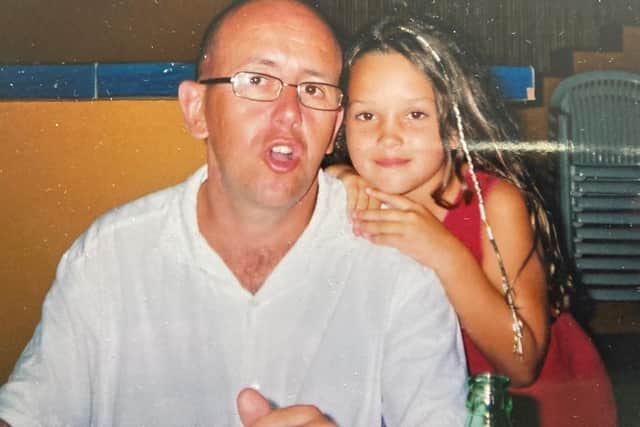
He added that with ME “some people have good periods and bad periods” but “Maeve’s seemed to get worse again – plateau – get worse again – plateau”.
Mr O’Neill said that eventually when Maeve was in her 20s “she was basically housebound and increasingly isolated”.
"For a long time I could not see her because she could not tolerate visitors because it was too draining for he,” he added.
"She was eventually bedbound and in the last seven months of her life it was very, very acute.
"She became very ill and was admitted to hospital three times.
"But as the coroner found the hospital was ‘unable’ to help her – and I found that ‘unable’ very very hard to accept almost.
"This disease has been around for decades and decades and hospitals now are unable to do anything about it.
"That is staggering I think.
"She died from malnutrition. “
Mr O’Neill said: “There is a deeply entrenched view in areas of medicine that ME is a physical manifestation of a psychological problem and it is not a medical/physical illness.
"That view is something I subscribed to for a while as I thought there was something like counselling could help because that was the wisdom for a long time.
"Counselling and exercise would get you out of this rut was the view and still is in some parts pf the medical profession.
"That has done immense harm to a lot of people.”
He said that “since the inquest I have been inundated with stories from people all over the country and I saw another world where people told me about their loved ones, especially women, who were more severely affected (by ME) more than men”.
He added: “A lot of people are suffering in silence.
"They don’t get medical care, they are stuck at home, their families become the carers and people become utterly dependent on the carers.
"It is a lot more common than we think and does not always get reported, get inquests and reported as ME or CFS.
"The fact that the coroner said the provision of care for people with ME was and is non existent, with no specialist services or services or beds or wards in England for patients with ME.
"And that is the same in Scotland, Wales and Northern Ireland.”
When asked if being artificially fed in hospital would have saved Maeve’s life, Mr O’Neill said: “Maeve originally went into hospital thinking she was going to be tube fed to get nutrition and stay alive that way.
"She was unable to sit up and they wouldn’t feed her unless she was sitting upright.
"But now they are now prepared to feed people at an elevation of just 10 degrees and they are prepared to send feeding equipment into people’s homes.
"They have around 10 ME patients in hospitals in that Trust (in Exeter) where they are being kept alive by innovations that have been put in place since Maeve died.
“That has changed in Exeter where Maeve was in hospital since she died and the local hospital has been very constructive in deviating from national NHS policies.
"Now if any of them have to go into hospital there will be a bespoke plan put in place for each of them – and those are changes that have been put in place since Maeve died, by a very progressive medical team.
"But those changes need to be put in place and replicated right across the UK.”
Mr O’Neill said he “made a very conscious decision” at the beginning of his daughter’s inquest “to make a fuss about this because I despair that this will happen again and again and again”.
The Coroner said this could still happen unless you take action.
What is ME?
According to NHS Choices – Myalgic encephalomyelitis or chronic fatigue syndrome (ME/CFS) is a long-term condition that can affect different parts of the body.
The most common symptom is extreme tiredness. The cause of ME/CFS is unknown.
ME/CFS can affect anyone, including children.
Symptoms of ME/CFS are:
- feeling extremely tired all the time (fatigue), which can make daily activities like taking a shower, or going to work or school, difficult
- sleep problems, including insomnia, sleeping too much, feeling like you have not slept properly and feeling exhausted or stiff when you wake up
- problems with thinking, concentration and memory (brain fog)
- symptoms getting worse after physical or mental activity, and possibly taking weeks to get better (also called post-exertional malaise, or PEM)
Some people with ME/CFS may also have pain in different parts of the body or flu-like symptoms, such as high temperature, headache and aching joints or muscles.
The symptoms of ME/CFS are similar to the symptoms of some other illnesses, so it’s important to see a GP to get a correct diagnosis.