
Disease-carrying ticks ‘living for longer’ in UK thanks to hotter summers
Disease-carrying ticks are living for longer in the UK thanks to heatwaves, an expert has said.
It has previously not been warm enough for hyalomma ticks to survive into adulthood.
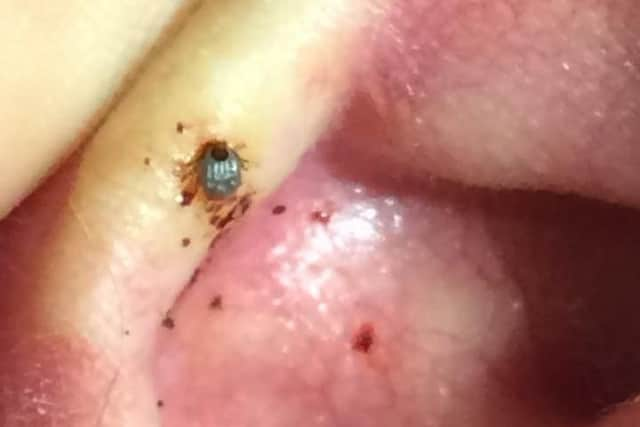

While still rare, it is something health officials are “starting to pick up a bit more”, according to Dr Jolyon Medlock, head of medical entomology at the UK Health Security Agency (UKHSA).
Hyalomma ticks are the main transmitter of Crimean-Congo haemorrhagic fever, a potentially severe and life-threatening virus.
They sometimes arrive in the UK by latching on to migratory birds from the Mediterranean and Africa as nymphs.
This is the middle stage of a tick’s life cycle when they are roughly the size of a poppy seed.
Ticks reach the next stage of their life cycle in a process called moulting, when they shed their hard outer covering.
Dr Medlock told the Press Association: “They would normally come in on migratory birds as a nymph, and then fall off, and they wouldn’t be able to moult. It’s not warm enough.
“What we’re seeing now in heatwave years is that they can moult through to the adult stage, and we then could be able to pick up records of adults through our tick surveillance.
“These have happened less than probably five times in the last 10 years or so, but it’s something that we and colleagues across northern Europe are starting to pick up a bit more.
“It doesn’t mean the tick will survive, and it doesn’t necessarily mean it’s an infection risk.”