
High blood pressure nearly killed me says stroke survivor
Clare Doherty suffered a severe stroke last summer caused by undiagnosed high blood pressure.
And now the Londonderry woman is sharing her story in support of World Hypertension Day and Northern Ireland Chest Heart & Stroke’s (NICHS) current blood pressure awareness campaign.
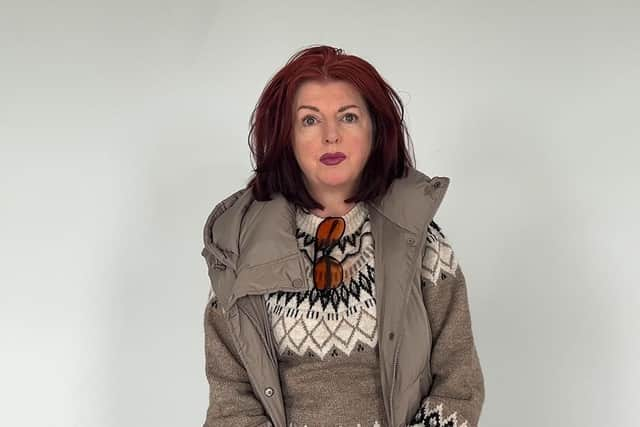

Clare hopes her experience will encourage others to get their blood pressure checked, as high blood pressure rarely shows symptoms and is often only discovered after a stroke or heart attack.
Clare recalled:,“I had my stroke in July last year. I had returned home from a trip away and had just sat down to watch some TV with a cup of tea when I started to feel extremely sick. I vomited and went back and forth to the bathroom for a while, but I just knew something was terribly wrong.”
Her symptoms didn’t resemble the typical FAST signs. “It started in my right hand. It went a funny colour of purple and then I could feel it moving up my arm.
"I said to my daughter, Niamh, ‘phone an ambulance, I’m having a stroke’. I just knew. I don't know how I knew as I've never experienced anything like that before, but I did. I was so lucky my daughters were at home; I could have died otherwise.”
Niamh called 999 and ran to a neighbour for help. “Their son is a paramedic, and he just happened to be there. When he came in, I just kept saying ‘stroke’ over and over again, that’s all I could say.”
In the ambulance, Clare fought to stay conscious. “I remember thinking, ‘I am not closing my eyes. If I close my eyes, I'm not going to open them again.’ I read the signs in the ambulance just to keep me conscious and present, but at this stage I couldn't talk.”
By the time she reached Altnagelvin Hospital, Clare had lost her sight, speech, and mobility.
“I was blind, I couldn’t talk and I couldn't walk but I could hear everything that was going on. I was screaming on the inside, but nothing would come out.
"That was terrifying. I thought, ‘goodness, this is what Locked-In Syndrome is like’. I was so scared, but I was determined to try and stay awake.”
Doctors warned her family she was unlikely to survive the night. “My daughters were told I wasn’t expected to make it through the night. I was still aware of everything that was happening, so it was a horrific experience for us all.”
Clare survived, and tests confirmed she had suffered a haemorrhagic stroke caused by high blood pressure.
“Treatment wise I wasn’t really given any medication. I wasn’t given blood pressure medication because although it was raised at the time, it was also dropping and going extremely low. I had paracetamol and a sleeping tablet and that was it for about five weeks.”
Recovery was slow and gruelling. “Each day I came around a bit more, but it was five weeks of just trying to keep myself alive. Eventually I was able to sit up in bed, and I could talk and see again.
"I had to learn to walk again and had a lot of spasticity in my arms. The muscles were very tight and stiff, and I would also experience spasms.”
Despite the challenges, Clare focused on gratitude. “I wasn't supposed to survive, or if I did, I should have had severe long-term effects. My consultants would say they didn’t know how I was still living. I didn’t know and I didn’t care; I was just so grateful I survived.”
Before discharge, she insisted on another scan. “I kept thinking, ‘is my brain still bleeding?’. I said I wasn’t leaving until they were sure the bleed had stopped. Thankfully the CT scan showed the bleed was healing well.”
At home, Clare was referred to NICHS. “One of NICHS’s care coordinators, Nikki, visited me and explained the different services. I felt very strongly that I needed to be around people who had experienced stroke themselves.”
She attended NICHS’s Post Rehab Exercise Programme and now goes to their wellness sessions. “Through the NICHS groups I have the opportunity to talk to others who have had strokes and that has been so important to me.”
The long-term impacts have been significant. “There are a lot of losses when you have a stroke. I have been unable to return to work in therapeutic counselling and stepping back from that has been a big loss.”
Fatigue and sensory changes also affect her daily life. “My entire right side feels numb all the time and it’s sore as well. Putting on a shoe or pouring the kettle can be nearly impossible. I also get my words mixed up regularly and what is in my head doesn’t always come out of my mouth.”
The emotional toll has been equally heavy. “There is the physical impact but also a massive mental impact and going to the NICHS groups has really helped. You can relate to each other, you don’t have to explain, people just understand.”
Despite everything, Clare remains resilient. “I'm lucky to be alive, lucky to be able to communicate. I’m only 51 and never thought in a million years something like this could happen to me. Yes, stroke is part of my life and my story but I’m still me, it doesn’t define me.”
Clare is supporting NICHS’s campaign to highlight the dangers of undiagnosed high blood pressure. “I hope sharing my story encourages people to get their blood pressure checked. There are often no symptoms and if you don’t check it, you won’t know.”
Fidelma Carter, head of public health at NICHS, says Clare’s story shows “just how dangerous undetected and untreated high blood pressure can be.”
She highlights that around 120,000 people in Northern Ireland have high blood pressure without knowing it. “Undetected high blood pressure is often known as ‘The Silent Killer’. The only way to know is to have it measured.”
She urges the public to get checked through GP practices, pharmacies, home monitors, or NICHS’s free pop-up checks at selected MACE stores. “A blood pressure check is quick, simple and only takes a few minutes, but it really could help save your life.”
l For further information and support about blood pressure, visit www.nichs.org.uk/highbloodpressure