
‘I was gone for ten minutes before they got me back’: Sandra’s fight for life
Today marks World Heart Day, and with coronary heart disease the biggest single cause of premature death in people under 75 in Northern Ireland - and 75,974 people here living with a diagnosis, with many more undiagnosed - local health charity Northern Ireland Chest Heart & Stroke (NICHS) is using the day to shine a spotlight on heart health.
In support of World Heart Day and the charity’s work, Sandra McCartney, 65, from Londonderry, has shared her story of surviving both a heart attack and a cardiac arrest to help raise awareness.
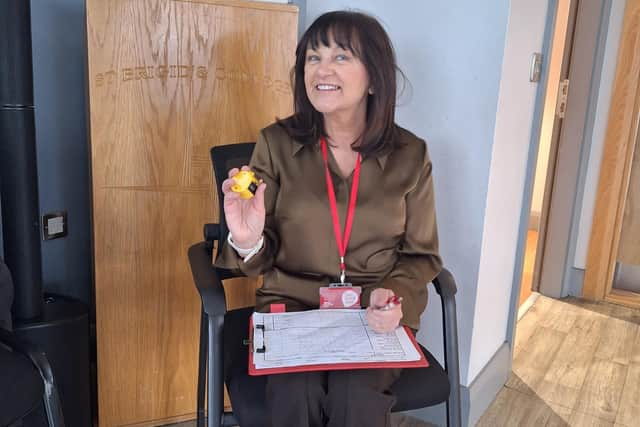

Sandra recalled: “I was in Spain on holiday just after Christmas 2019. It was supposed to be a lovely break – I could never have imagined I would have a heart attack, followed by a cardiac arrest, and end up seriously ill in hospital.”
“The night before New Year’s Eve I went to bed early but couldn’t sleep. All day I’d been having what I thought were indigestion pains, which I put down to my hiatus hernia. By 3.30am I knew something was seriously wrong – my right arm was tingling, and I was bent over in pain. I told my husband I needed to go to the local health clinic.
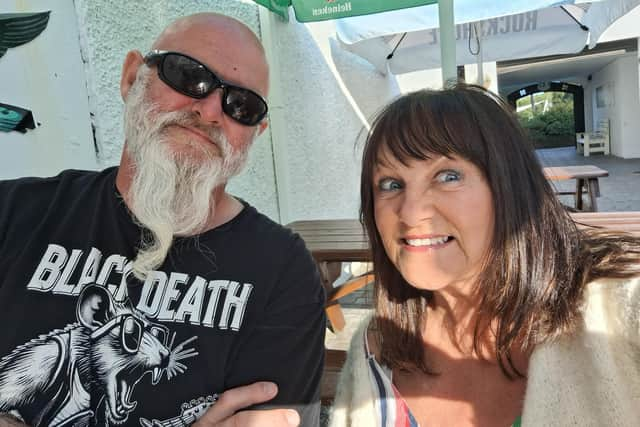
"When I was getting my shoes on, I nearly passed out. My husband shook me and brought me round, but it happened again in the car on the way to the clinic, which thankfully was only three minutes away.
“When we arrived, the doctor took my blood pressure, which was sky high, and told me I was having a massive heart attack. An ambulance was called.
"I remember seeing my husband in the ambulance, but nothing more until four days later. I’d had a cardiac arrest, and the paramedics had to give me six defibrillator shocks and five shots of adrenaline to save my life. I had three cracked ribs from the CPR.
"I was gone for ten minutes before they got me back, which is terrifying to think about.”
Sandra continued: “I was ventilated for eleven days in hospital, and my children had to fly out to Spain as it was feared the worst might happen.
“I remember nothing until day four when I was brought round, but a few hours later I was ventilated again because both my lungs collapsed.
"I was woken four days later but then developed laryngeal stridor – noisy, difficult breathing - which is potentially life‑threatening. It happened because I’d been ventilated too quickly, too many times. I then had to be ventilated again.”
“I was taken to a ward on day thirteen and stayed there for another week. I wasn’t allowed to fly home until February and had to use a wheelchair because of severe muscle wastage.
"It was horrendous – an ordeal for me, but also for my husband and children. Never in a million years did I think something like this could happen to me. I was fit, healthy, ate well, and had no signs or symptoms.
"That’s why I’m sharing my story for World Heart Day - to make people more aware of heart health and to spread the message that if you experience any symptom of a heart attack, or think someone has gone into cardiac arrest, phone 999 immediately.”
Sadly, Sandra’s ordeal didn’t end when she left Spain. “I wasn’t home long when I passed out one day and had to be admitted to Altnagelvin Hospital for a week. The pandemic started soon after, so I didn’t get any cardiac rehab, which would have been so beneficial.
"My recovery looked very different to what it would now, and that’s a shame. I suffered an awful lot with PTSD and still do.”
Sandra later learned she had heart failure. “I had to have an ICD fitted because I’m at high risk of another cardiac arrest. I also had surgery to have two stents fitted. My ejection fraction is only 20–30%.
"There’s damage to my heart’s left ventricle, and it’s lying dormant. Lots of things are much more difficult now - walking upstairs or uphill, even throwing a duvet on the bed leaves me breathless. There are days I can do very little.”
One place Sandra did receive support was NICHS. “I was put in touch with one of the charity’s Care Services Coordinators, Karen, through my sister. Karen was doing chair yoga classes via Zoom, which I took part in. She then contacted me when NICHS started a local Heart Strong Education Programme group.
"After four years of no real support, I was so grateful. Meeting people who’d experienced something similar made me feel less alone. I got tips and advice from other participants, which has been really helpful.”
Sandra now volunteers with NICHS’s Post Rehab Exercise Programme for stroke survivors and its Breathing Better Wellness Session for people with respiratory conditions.
“People might think there isn’t much hope after a diagnosis, that there are lots of things they can’t do now, but I can show them differently. Their life might be different, but it can still be good.”
Ursula Ferguson, director of care services at NICHS, says: “We are very grateful to Sandra for sharing her story. This World Heart Day we urge people to remember the STOP acronym:
S – Something’s not right.
T – Tightness or pain.
O – Other symptoms.
P – Phone 999 immediately.
She also highlights the signs of cardiac arrest: no breathing, no movement, no response. “Phone 999, start CPR, use a defibrillator if available. Every minute counts.”