
"My brain felt scrambled": Tyrone father highlights the invisible lifelong toll of stroke
In February 2017, life changed forever for the McDonnell family from County Tyrone.
John McDonnell, a 48-year-old IT manager, marathon runner and volunteer running coach, suffered a sudden stroke.
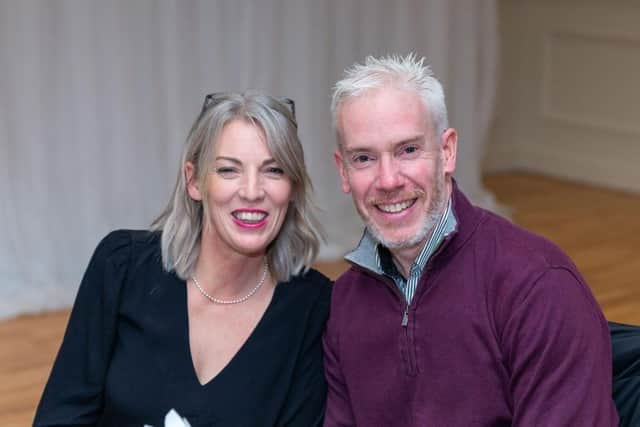

In an instant, an active father and husband was thrown into the terrifying reality of brain injury recovery, blindsiding his wife Roisin and their four children.
While John’s speech and mobility returned to almost normal relatively quickly, the hidden psychological scars ran deep, triggering an emotional crisis for the household.
"John was one of the lucky ones physically," explained his wife Roisin. "However, he struggled with deep depression and bouts of anger. It was a scary, lonely, and difficult time for our entire family.
"Stroke doesn't just impact the survivor; it affects everyone. There’s the fear of what could have happened, and the reality of dealing with the aftermath – emotionally and mentally. But with the right long-term support, families can find a way to move forward."
John’s initial transition back to work highlights the severe lack of guidance facing survivors.
"I was in hospital for eight days," he recalls. "I spent the first few days home alone before deciding to return to work the following week. This was one of the worst decisions I could have made. I am convinced that going back to work so soon delayed my recovery significantly."
The invisible nature of John's brain injury made employment an uphill battle as anger and frustration took over.
"My brain felt like it was still scrambled. I found it hard to speak coherent thoughts. I looked exactly the same to everyone on the outside, but I was certainly not the same on the inside. I know I was one of the fortunate survivors, but it feels like I lost six months of my life."
John and Roisin’s ordeal represents the hidden family cost duplicated across thousands of households.
A major new report from the Stroke Association, ‘The Urgent Case for Investing in Stroke in Northern Ireland’, reveals that the economic and societal cost of stroke is set to skyrocket within the next decade as the number of survivors rises. The charity warns this escalating crisis demands immediate action from the Northern Ireland Executive and Health and social care services.
According to the report, every three hours in Northern Ireland, someone has a stroke. In that same window, the total economic cost of stroke to health services, social care, and the government accumulates to more than it costs to buy a house in Northern Ireland today.
As the population ages, more people are living with major risk factors like high blood pressure and diabetes. Consequently, the number of stroke survivors in Northern Ireland is projected to increase by 46% by 2035, reaching an estimated 59,100 people. This is the highest percentage increase of any UK nation, positioning NI at the epicentre of a healthcare emergency.
Because of the complex needs associated with brain injuries, ongoing social care costs in Northern Ireland are already estimated at £380 million a year. Combined ongoing health and social care costs are projected to balloon from £480 million to £695 million within the decade.
The report emphasises that stroke is frequently misunderstood as a brief medical emergency. In reality, it is a lifelong condition.
Long-term impacts account for the vast majority of public spending, with 86% of total NHS and social care expenditure incurred after the first year, long after a survivor has left hospital.
The brain injury leaves many survivors forced to relearn basic skills like walking, talking, or swallowing. Around one-third of survivors also suffer from depression.
The treatment provided in the immediate aftermath dictates the level of lifelong disability. Time is critical: around 1.9 million brain cells die every minute following a stroke, making rapid diagnosis and hyper-acute treatment vital.
However, emergency care is only the first step. Robust rehabilitation is essential for survivors to regain independence. While evidence proves people can regain function years later, far too many individuals in Northern Ireland are left without rehabilitation tailored to their needs.
New figures from the Sentinel Stroke National Audit Programme (SSNAP) expose a severe deficit in current investment. In 2025/26, only 5.7% of stroke patients in Northern Ireland received the amount of rehabilitation time recommended by clinical guidelines while in hospital.
Guidelines state patients should receive at least three hours of daily rehabilitation, five days a week, across physiotherapy, speech and language therapy, and occupational therapy, continuing seamlessly from hospital to home.
The financial wreckage extends beyond hospital wards. Wider societal costs total roughly £190 million annually in Northern Ireland, capturing the devastating economic impact when individuals are forced out of the workforce, including survivors and loved ones who become overnight carers. Fiscal costs to the state - comprising welfare benefits and reduced income tax – are estimated at £70.6 million.
The Stroke Association is calling on the Northern Ireland Executive to treat stroke as a top-tier health, research, social care and economic priority.
"Stroke can have a devastating impact, changing lives in moments and affecting families and friends," says Lauren Shaw, policy and influencing lead at the Stroke Association.
"As a major cause of adult disability, stroke has long-lasting consequences, making access to appropriate rehabilitation and emotional support essential. While healthcare professionals work hard, there are still major gaps in care across Northern Ireland.
The recent introduction of 24/7 thrombectomy shows what can be achieved when stroke care is made a priority. We need that same commitment applied to improving long-term rehabilitation."
Robert King, senior health economist at LCP Health, who led the economic analysis, warns that the current trajectory is completely unsustainable.
"Behind these financial costs are real people whose lives, independence, and wellbeing are profoundly affected, alongside families who provide support over many years," King states.
“Earlier action to manage risk factors could significantly reduce avoidable cases. This would mean fewer families experiencing these life-changing effects, while easing future pressures on the NHS, social care, and the wider economy."