
New report reveals majority of NI electrical workers suffer electric shocks
An alarming 80 per cent of electrical workers in Northern Ireland have experienced electric shocks on the job, with nearly three-quarters of incidents going unreported, according to a new report by the Electrical Training Trust (ETT).
The findings, unveiled at the organisation’s annual ‘Stay Connected’ event for the NI electrical industry at Galgorm Resort & Spa, shed light on critical safety failings within the industry, highlighting what ETT has termed a culture of ‘shock silence.’
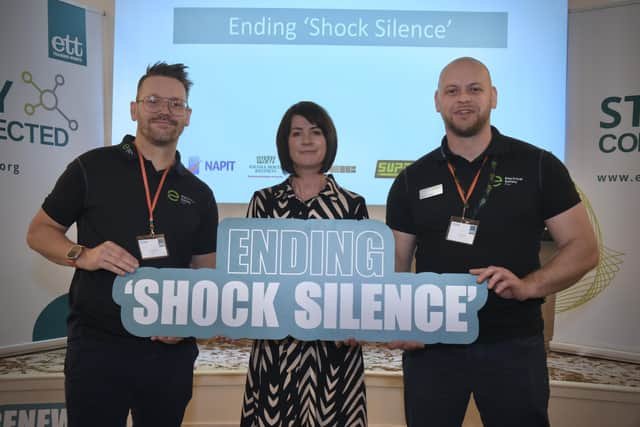

The report summarises the findings of a survey completed by almost 350 electrical workers from across Northern Ireland, with 80 per cent revealing they have experienced an electric shock at work and 40 per cent at least three shocks in their careers to date. Of those who have experienced an electric shock, 89 per cent sustained an injury and almost all (95 per cent) required time off work.
Despite the frequency of electric shock incidents, almost three-quarters were not reported to employers. This trend of underreporting has been termed ‘shock silence’ by the organisation, with the survey finding company culture, ineffective reporting procedures, and time pressures as the three most common reasons staff failed to report an electric shock at work.
Chief Executive of ETT NI, Charlotte Bamber, said: “The findings outlined in the Ending ‘Shock Silence’ report should serve as a wake-up call to the electrical industry, revealing disturbing statistics that simply cannot be ignored. Electric shocks can lead to severe and life-changing injuries or fatalities. The figures in this report represent real people and real families. It’s time for the industry to act.”
The Health and Safety Executive for Northern Ireland’s Deputy Chief Executive, Dr Bryan Monson, added: “HSENI is deeply concerned about the alarming number of electrical workers experiencing electric shocks and related injuries, as revealed by the findings of the Ending ‘Shock Silence’ report. HSENI fully supports the Electrical Training Trust in their vital work to highlight these dangers and implement strategies to prevent such incidents.”
One of the key findings from the report is the failure to carry out safe isolation procedures using ‘lock-off’ kits – a key safety measure in electric shock prevention. As a result, the UK-based charity, Electrical Safety First (ESF), has partnered with ETT to provide free safe isolation ‘lock-off’ kits to all first year Level 3 Electrical Installation apprentices in NI.
Charlotte Bamber added: “As an industry, we must work towards creating a safety conscious culture where all electric shock incidents are reported, investigated, and prevented in the future. Every report of an electric shock is a step towards a safer working environment for everyone.
“ETT aims to engage with industry to create an action plan to not only target underreporting, but to significantly reduce the number of electric shocks occurring in the first place. The Ending ‘Shock Silence’ report launch demonstrated the collective determination of our industry to prioritise safety and protect lives. Together, we can and must do better.”
To obtain a copy of the Ending ‘Shock Silence’ report, or to find out more about the industry-led working group developing the action plan, email [email protected].