
Newtownabbey woman wants to raise awareness of young stroke after having two at just 31 years old
A Co Antrim woman’s life changed completely in 2023 after battling through two strokes aged just 31.
Ellis Dawson, from Newtownabbey, who works as cabin crew had her first stroke, a TIA (transient ischaemic attack), or mini stroke as it’s often referred to, in the September whilst working on a flight to Corfu.
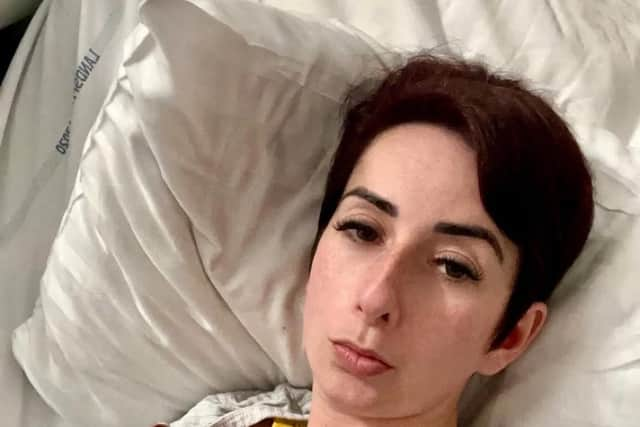

She said: “It was terrifying to have that happen whilst up in the air. My face had drooped and when I spoke to colleagues it was decided the plane should be diverted to Manchester. I was taken to A&E and had CT scans and blood test, but the doctors couldn’t determine what had happened. I was sent home and told to get a second opinion back in Belfast but not to go to work or drive.” Back home Ellis was referred for an MRI scan and it was after that the doctor confirmed she had had a TIA, which she described as “the biggest shock” of her life.
"I didn’t think anything like that could happen because of my age. I was just 31, and I was fit, active, at the gym all the time, walking the dog every day. I couldn’t believe it.”
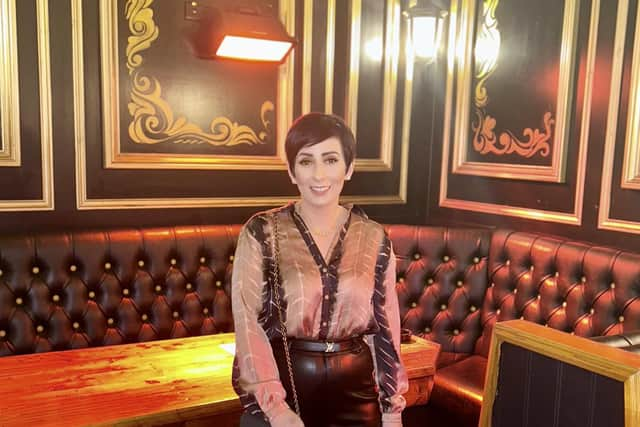
Ellis was prescribed blood thinners, and it was discovered she had a PFO (Patent Foramen Ovale), a hole in her heart, which was the cause of her stroke.
"The doctors explained I would need surgery to close the hole in my heart and I was put on the waiting list for that. I was advised that if I felt ok, I could go back to work, which I did after a few weeks.”
However, three months later Ellis was on holiday in Iceland when she had a severe stroke.
“I woke up with complete paralysis of the left-hand side and difficulty with my speech. It was terrifying and being abroad made it even more so. I was rushed to hospital for a thrombectomy, which is a procedure to remove blood clots and help restore blood flow to the brain and other organs. The not knowing how things would turn out was so frightening, especially as the whole left-hand side of my body was paralysed. I was told my mobility might only come back to about 80%, and the best-case scenario was 90%. To hear that was just unbelievable.”
She added: “I had my stroke on a Thursday, and I was able to fly home on the Sunday night. The doctors let me come home because I was able to ‘walk’ in some fashion.”
Once home, Ellis was keen to continue her recovery and avail of statutory rehabilitation services but unfortunately that did not happen, as she explained: “When I got home, I contacted the health service and was told I would need an appointment to speak to my stroke consultant who I had been under the care of after my TIA. There must have been some sort of miscommunication however as I never got an appointment and therefore never got any physiotherapy or rehab.
“By that stage I had done my own physio based on the exercises the staff did with me when I was in hospital in Iceland and YouTube videos. I had worked hard on regaining my strength and fine motor skills and felt like I was back to my old self physically by that time, but it was hard. It would be scary enough navigating recovery after a stroke when you are under the care of a hospital team but being left to navigate that by yourself was a very difficult experience. I am so lucky, however, and I know I represent the best-case scenario of a recovery after stroke.”
Ellis said the impact of the stroke on her mental health was “massive”.
“I was on the PFO closure waiting list for six months and that time was just horrendous for me. I had panic attacks, and I've never suffered from any kind of mental health issues before. It took me a couple of months before I asked for help with that because I usually just try and do everything myself. Time has been a healer however and having the PFO closure has really helped. I had my surgery on the 16th of May. Everything went well, and my recovery was brilliant afterwards. It is good to know the cause of my stroke has been fixed. It helps take away that feeling of being at risk. It also meant I was able to return to work in July.”
Now Ellis is focussing on the future and getting back to life as it used to be as much as possible, including getting back to exercising regularly, and is taking part in the Northern Ireland Chest Heart & Stroke’s (NICHS) Red Dress Fun Run
She explains; “I got to know of Northern Ireland Chest Heart & Stroke because after I had the TIA, I followed them on Instagram. The charity shares lots of stroke survivor stories, in particular ones from young stroke survivors, and reading these really helped me during my recovery process.”
“I am taking part in the Red Dress Fun Run and sharing my story to help spread awareness of young stroke and support NICHS.
"I want people to be aware that stroke can strike anybody at any age, even if they are fit and seem perfectly healthy, that’s really important to me. Just because you are young doesn’t mean you are immune to stroke.”
Last year, the Red Dress Fun Run raised a staggering £70,000 to support Northern Ireland Chest Heart & Stroke’s work and the charity is once again hoping for a sea of red participants at this year’s event which takes place at Stormont Estate, Belfast, on Sunday, February 23.You can sign up to the Red Dress Fun Run at www.nichs.org.uk/RedDressFunRun or find out more about getting your primary school involved at www.nichs.org.uk/RedDressPrimary