
NI hair transplant specialist, Paradigm Clinic, warns of skin cancer risks linked to hair loss as sunny weather arrives
With warmer weather making an appearance, and more on the horizon, a Belfast-based hair transplant specialist is urging the public to take scalp protection seriously, especially those experiencing hair loss.
Hair provides an often-overlooked yet vital line of defence against the sun, shielding the scalp from the damaging effects of ultraviolet (UV) rays.


However, for individuals with thinning hair or baldness, that natural protection is significantly reduced—leaving the scalp exposed and increasing the risk of sunburn and, more worryingly, skin cancer.
“Hair acts as a physical barrier against UV radiation,” says Brendan Fogarty FRCS (Plast), consultant plastic surgeon and director of Paradigm Clinic (www.paradigmclinic.co.uk) on the Lisburn Road, Belfast.
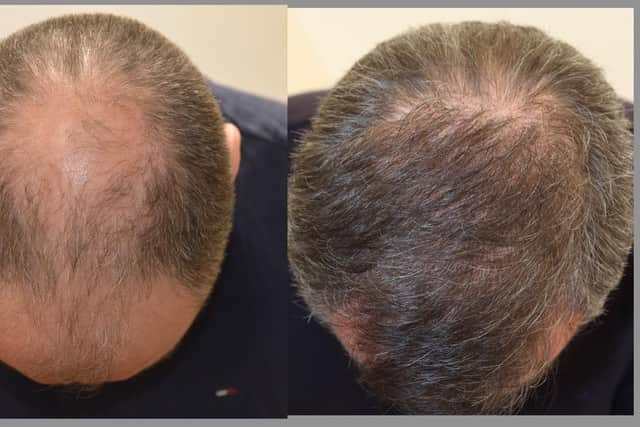
“Without it, the scalp is highly vulnerable. We often hear from patients who, after their first summer with significant hair loss, experience sunburn on their scalp—often quite severe.
"It’s not something to brush off lightly. People who spend long periods outdoors—golfers, farmers, runners, construction workers—are particularly at risk.”
Scientific studies have reinforced these concerns, demonstrating a clear link between male pattern baldness and a heightened incidence of skin cancer on the scalp.
Two of the most common types—squamous cell carcinoma and basal cell carcinoma—tend to develop more frequently in individuals with significant hair thinning, especially in areas most frequently exposed to sunlight.
In fact, the scalp is one of the most common sites for skin cancer in men, due in part to both hair loss and underestimation of UV exposure in this area.
On the island of Ireland, skin cancer is the most commonly diagnosed cancer. In Northern Ireland, over 4,000 cases are diagnosed annually—making up more than 30 per cent of all cancer diagnoses. Alarmingly, 11 new cases are diagnosed each day, and the National Cancer Registry of Ireland (NCRI) projects that skin cancer incidence will double by 2040.
Another contributing factor is skin type.
“Ireland has a high proportion of fair-skinned individuals who burn easily and tan poorly,” says Mr. Fogarty.
“This makes sun protection even more crucial, particularly on areas of the body we often forget—like the scalp.”
At Paradigm Clinic, the only clinic in the UK or Ireland led by a practicing NHS plastic surgeon working across both public and private healthcare, Brendan and his team offer a modern solution: Growth Optimised Follicular Unit Extraction (GOFUE).
This advanced, minimally invasive hair restoration technique does more than improve appearance—it can help restore the scalp’s natural UV defence.
“While GOFUE is transformative in terms of restoring confidence and aesthetics, it also has real health implications,” says Joanne Scannell, Paradigm’s Nursing Lead.
“We often find patients are completely unaware of their scalp’s vulnerability until they experience sunburn or develop suspicious skin changes.
"Even for those not considering a transplant, we urge them to take sun safety seriously.”
For transplant patients, the benefits are twofold: cosmetic rejuvenation and increased protection from UV rays. “It’s genuinely life-changing,” Joanne adds.
“We see patients regaining not just hair, but a sense of safety and confidence.”
Despite the serious risks, scalp skin cancer is highly preventable. Mr. Fogarty offers clear guidance: “Use a high-factor sunscreen—SPF 30 or above—on exposed scalp areas, especially if you’re bald or have thinning hair.
“Wear a wide-brimmed hat, avoid peak sun hours between 11 am and 3pm., and regularly check your scalp for any unusual moles, sores, or growths.
"If in doubt, get it examined by a healthcare professional. When it comes to skin cancer, early detection can save lives.”
The message is clear: just because the scalp is out of sight doesn’t mean it should be out of mind. With rising skin cancer rates and greater UV exposure due to climate change, taking proactive steps to protect this vulnerable area is more important than ever.