
Northern Irish public urged to report mosquito sightings on website as Queen's University Belfast researchers try to map spread
The public in Northern Ireland are being encouraged to report any sightings of mosquitos.
Queen's University Belfast has embarked on a project, called MosquitoNI, to build up a picture of the distribution of the insects, known the world over for spreading viruses.
Warming world temperatures are increasing the range of the insects.
Dr Ross Cuthbert, from the School of Biological Sciences at Queen’s, said: “This project aims to challenge the narrative that mosquitoes do not exist in Northern Ireland, with risks shifting as climate changes and species invade from more tropical regions.
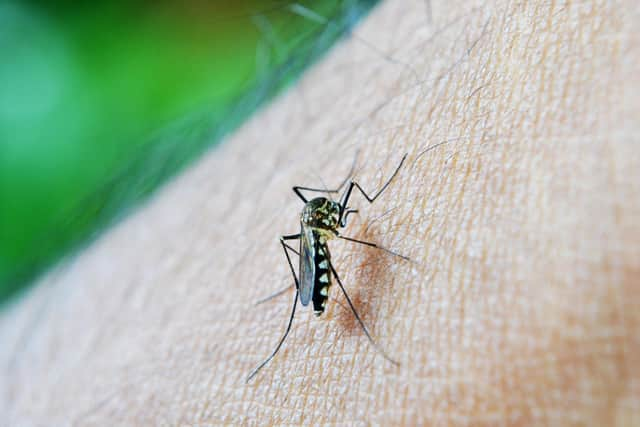

“Mosquitoes are generally overlooked here, and in many other temperate areas worldwide.
"The cooler climate on the island of Ireland has been traditionally thought to limit mosquito abundance and stifle disease risk.
"However, previous research at Queen's found surprisingly high numbers of mosquitoes across Northern Ireland.
"Last year, thousands of mosquitoes were collected in specialised traps set around various wetlands and urban sites where mosquitoes breed.
"So far, around 20 different species have been found across the island of Ireland.”
No Irish cases of mosquito-borne sickness have been detected, and Queen’s PhD student Ryan Carmichael said one of the project’s aims is to “gain insights into whether mosquitoes here are currently carrying diseases”.
Queen's said people should submit sightings of mosquitoes through the ‘Report a Mosquito’ form on the website www.mosquitoni.com .
The website includes information about how to identify and photograph mosquitoes.
The project lasts for four years, is funded by the Biotechnology and Biological Sciences Research Council, and is happening with the help of the University of Glasgow and the UK Centre for Ecology and Hydrology.
In 2023, a major government report titled “Health Effects of Climate Change (HECC) in the UK” found that "the UK currently has 36 recorded species of mosquito, with approximately 20 species considered common; however, some species such as aedes albopictus are not yet considered established”.
It went on to add: "A concern under warming temperatures is the potential introduction and establishment of invasive mosquito species in the UK, particularly aedes albopictus, an aggressive daytime biting mosquito species that can transmit several arboviruses of public health concern, including dengue, chikungunya and Zika.
"Climate modelling suggests that the area around London already has a suitable climate for ae. albopictus survival, and most of England will become suitable for its establishment by the 2040s and 2050s.
"Under this reasonable worst-case scenario, by the 2060s or 2070s, most of Wales, Northern Ireland and parts of the Scottish Lowlands could also become suitable.”
It says that West Nile Virus “continues to expand northwards in Europe, having recently been reported in both Germany and the Netherlands”, and “while current UK temperatures appear too low for West Nile Virus transmission cycles to be established, projected increases to UK temperatures in the coming years will increase the risks of West Nile Virus outbreaks, with epidemics possible by the second half of the century”.