
Presbyterian and Church of Ireland figures tells MLAs why they oppose Eoin Tennyson's bid to outlaw 'conversion therapy'
A senior official inside Northern Ireland’s biggest Protestant church says that its members fear that a planned new law outlawing “conversion therapy” will be “weaponised” against them.
Dr Rebecca Stevenson, the public affairs officer of the Presbyterian Church in Ireland, made the comments as she and fellow Christians spoke out against the Alliance Party proposals at Stormont.
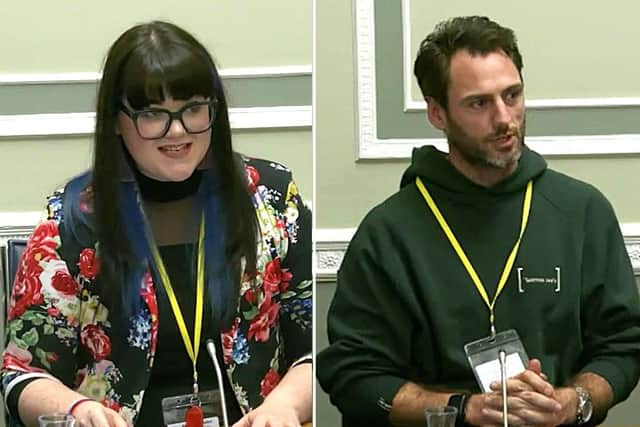

Meanwhile a Church of Ireland minister who said he had “wrestled” with same-sex attraction himself said the bill would mean Christians would be forced to tell people in a similar position: “I cannot risk talking to you about this.”
In addition, a minister within the much smaller Free Presbyterian Church told MLAs that the bill “would actually criminalise the Son of God Himself if He lived in Northern Ireland”.
They were all speaking at a hearing of the communities committee at the Northern Ireland Assembly, where the Conversion Practices (Criminalisation) Bill is being examined.
The bill was moved by Alliance deputy Eoin Tennyson, and would make it a crime to do something “with the intention that the sexual orientation or gender identity of the victim would be suppressed”.
Under its provisions, it would be no defence to argue that a person had consented to such a “conversion practice,” because “consent to such practices cannot be informed” and is often given due to “imbalanced power dynamics”.
The punishment for violating the new law would be seven years in jail and a fine.
In March Marcus Evans, a psychotherapist and former member of the UK’s main child transgender clinic The Tavistock, told the News Letter that the bill is "a means of intimidation" designed to deter any questioning of someone's self-declared gender identity.
Dr Stevenson began by telling MLAs her church has “a significant voice to offer in this discussion,” given that 316,000 people told the 2021 Census that they were Presbyterians, amounting to 45% of all the Province’s Protestants.
She voiced concern about the bill’s injunction against causing “distress”, and said: “We are concerned that these provisions could be weaponized through complaints against ministers and church workers in respect of their preaching and teaching.
"Even where no prosecution followed, this could have a significant chilling effect.
"This is of great significance to Presbyterians.
"Preaching is central to Presbyterian worship, and Bible teaching plays a significant role in Bible studies, youth groups, Sunday schools, and in the home…
"The bill places limits on the freedom to conduct preaching and teaching, and consequently on the freedom of hearers to accept it.”
The bill “would bring the ordinary work of churches, ministers, elders, and parents within the scope of criminal law,” and would do so “without sufficient clarity as to where the line lies”.
Also speaking was Rev Mike Darbandi of Six:Eight Church, which meets at St Patrick’s Church in Ballymacarrett, east Belfast.
"I speak today as both someone who has wrestled personally with attraction towards both sexes and my Christian faith, and as a member of clergy who has spent walking years walking alongside many others trying to do the same,” he said.
"Over the years counselling, talking therapy, pastoral care, prayer, and honest conversations with trusted friends had been among the most life-giving experiences of my life.
"They helped me understand my sexuality, examine what I believe, make my own decisions, and work out how I wanted to live.”
He added: “Sexuality can already feel like a taboo subject.
"This bill will only serve to vastly increase that fear and encourage further an atmosphere of silence and isolation.
"This bill risks making the safest response: ‘I care about you, but I cannot risk talking to you about this’.
"This will not protect vulnerable people. It will only isolate them.”