
Psychotherapist describes puberty blockers trial involving Northern Irish children as a 'massive mistake'
A psychotherapist and critic of transgender ideology has hit out at the upcoming puberty blockers trial in which Northern Ireland is participating.
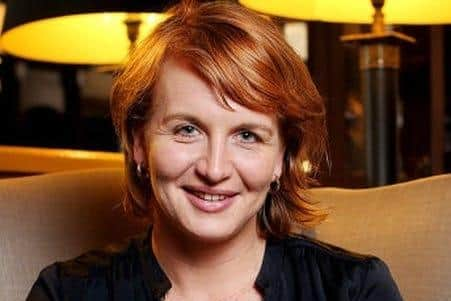
Stella O’Malley, Irish founder and executive director of the international organisation Genspect, also said that she knows of cases of multiple schoolchildren from the same class in Northern Ireland claiming to be transgender – echoing the findings of a review into the Northern Irish youth gender services, published this week.
Mrs O’Malley said the number of people whom she has personally counselled who have described themselves as transgender, plus their parents, numbers in the hundreds.
Asked whether Northern Ireland should be involved in the trial, she said: “No. I think the puberty blockers trial will go down in history as a massive mistake.”

She said that across the British Isles since about 2010 “over 2,000 children have already been prescribed puberty blockers”.
Genspect recommends that, instead of giving more out, what should be done is “a kind of follow-up of the children who have already had puberty blockers”.
“We know for a fact that cognitive functioning will reduce,” she said.
"We know for a fact they will be infertile.
"We know for a fact they will have sexual impairment.
"And we know for a fact, the most important fact, that 98% of children who went through this puberty blockers system since 2010 go on to cross-sex hormones.
"So this is the first stage of medical transition, and pretending it’s anything other than that is disingenuous.
"We already have subjected children to puberty blockers.
"The results have shown that their well-being didn’t have lasting improvement.”
She added: “The outcomes are dreadful. And the reason it’s been continued is not because there’s good outcomes, it’s because trans activists are a very, very strong group…
"That’s the primary reason we’re having this trial.”
In her review of NI youth gender services, published this week, Dr Cass had said that there were examples of pupils from the same class presenting as transgender.
Asked if this is something she has encountered, Mrs O’Malley said: "Yes, I’ve had a lot of contact with schools in Northern Ireland.
"In some schools in Northern Ireland, they haven’t been touched at all – it’s literally ‘we don’t know what you are talking about, we do not have this issue’.
"In other schools it’s been a very big issue.
"It’s kind of by nature of what school you go to whether your child will be impacted by it.”
She added that “the social contagion aspect of it, in my view, is undeniable," noting that cases of suicide and anorexia are also subject to a similar “contagion” phenomenon.
Mrs O’Malley said that, prior to about 15 years ago, the rates of people seeking to medically “transition” their gender was about one in 10,000 for males and about one in 30,000 for females.
Since then, she said, there has been a roughly 1,000% rise in demand among male under-18s, and a 4,000% rise among female under-18s – “an astonishing rise”.
This co-incides with the rise of smartphones, she said, adding: “They’re very often online too much, that’s part of the issue.”