
Ulster Hospital doctor Catherine McCarroll tells of her 'gift of life' after double lung transplant
A doctor at the Ulster Hospital, Dundonald, who underwent a successful double lung transplant two years ago is sharing her story during this Organ Donation Awareness Week.
Resident doctor Catherine McCarroll, 32, recalls her inspirational journey from being terminally ill, struggling to walk from her bed to the bathroom, to getting her life back.
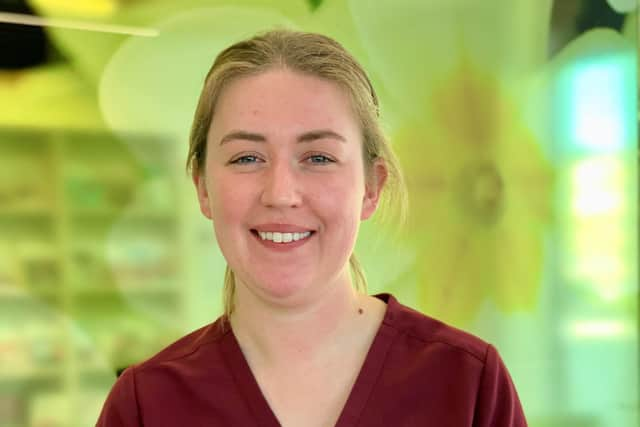

Catherine, who lives in Belfast, was diagnosed with a non-specific inflammatory lung disease when she was 26 at medical school, however she continued to be medically stable for many years.
"I had a persistent dry cough with some shortness of breath. That's what made me first go to my GP. I never actually got a diagnosis because it's a rare type of interstitial lung disease, so they still, to this day, don't really know what it is. I think the uncertainty was probably the most worrying element, but I was able to live a fairly normal life really," she said.
Catherine was treated with steroids and immunosuppressants and was under respiratory care for three to four years before her condition escalated.
“I went over to London for specialist input and advice, and they decided maybe a couple of years in that everything had stabilised. They took me off all my medication and then I got the ok that I had enough lung capacity to carry a pregnancy.”
Catherine described her pregnancy with daughter Eve as ‘fairly normal’ up to 20 weeks.
“Then breathing became very difficult. At about 30 weeks I ended up on ambulatory oxygen. I was still working at this point. I was doing a GP training stint, but I just started getting more and more unwell and short of breath.
"Eve was delivered at 34 weeks by C-section because I couldn't carry her anymore. Thankfully she was absolutely fine when she was born, but then things escalated quite rapidly. Ten days after Eve was born I was told that my lung condition had progressed and basically if I didn’t get a transplant within nine months to a year, I would die. This was devastating news for our family,” said Catherine.
“I was put on the transplant list in September. In December I was flown over to Freeman’s Hospital in Newcastle to go on to the urgent list. That was then further escalated as I became more unwell, and I ended up being on the super urgent list and I was put on to ECMO, which is like a life support machine for your lungs.
“My parents had Eve, so I got to see her twice while I was over there. It was very difficult.”
After 19 days in ICU, Catherine received the news that organs were available and she would have her “transformative” double lung transplant
“It was such a relief because it had been such a long wait, but they were very complicated emotions. You can feel quite detached from the process because you're just thinking about yourself and your own survival. I don't think all the emotions about the donor come until after.”
Catherine added: “Before my transplant I was on oxygen 24/7 and now I’m here doing all the things I love such as being a mum, being a doctor and I couldn’t be more thankful to my donor.
“If you do make that decision to come onboard as an organ donor you are making such a brave, selfless choice in giving someone the gift of life.
“By donating your organs it is such a gift to someone who is on the organ donation waiting list. Every person that donates their organs can save up to nine lives. Until you hear someone’s own story you don’t really grasp how life changing it can be.”
Donor recipients are told the age and the sex of their donor, and have the opportunity to write to the donor family. It’s up to the donor family whether or not they write back and whether or not they disclose any information.
Catherine said: “I wrote a letter three months post-transplant to the family. I've never actually heard from my donor family, so I don't know anything about her, but it doesn’t change how thankful you feel. It's totally the gift of life.
“I haven't felt this good in years, and obviously whenever I was sick with Eve, I was becoming less able to practically do stuff for her, which was very difficult. My husband was primary care for her and myself, so it was a very different picture to new parenthood for us. To get an opportunity to be the mum that I was always imagining myself being, and being very active and just completely physically capable of looking after he, it's just been amazing.”
Catherine added: “Everyone's recovery and story is different, but a transplant always gives people extra time that they wouldn't have had with their family.”
Organ Donation Week is an annual week-long campaign that raises awareness about the ongoing need for organ donors.
Statistics show that more than 7,600 people in the UK are currently in need of an organ transplant, including over 250 children.
Each year around 1,400 people donate, but despite these remarkable people the waiting list for donors continue to rise.
From June 2023, all adults in Northern Ireland are now considered potential organ donors unless they choose to opt are or are in an excluded group.
The Organ and Tissue Donation (Deemed Consent) legislation, known as ‘Dáithí’s Law’ in honour of seven-year-old Dáithí Mac Gabhann who has been waiting for the gift of a heart transplant for over six years, changes the way consent is granted and follows similar law changes in Wales, England and Scotland.
Organ Donation Week runs until September 29 and provides an opportunity to raise awareness of the current law in place around organ donation.