
Why Hong Kong is ready to reclaim its city break crown
Hong Kong has two faces. The first glances westwards towards Great Britain, colonial gatekeeper for more than 150 years of this 426-square-mile territory comprising a densely populated peninsula and 236 islands.
The other face is tilted expectantly – and perhaps nervously – northwards to the People’s Republic of China, custodians of Hong Kong since July 1, 1997 under the Sino-British Joint Declaration, with an explicit understanding that the region will continue self-governance for at least 50 years.
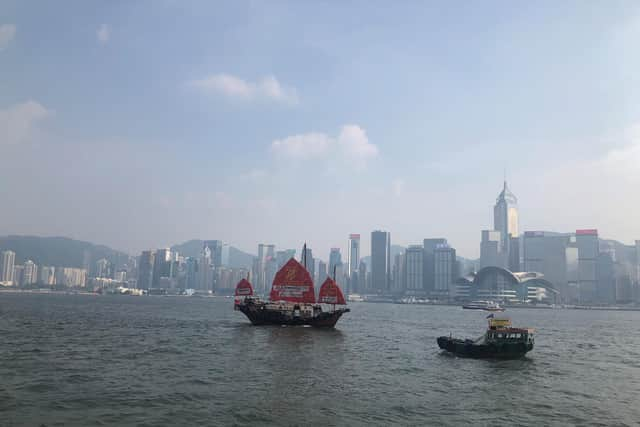

Almost three decades into the agreement, the two faces continue to trade pleasantries during my first-time visit. Unlike mainland China, UK tourists don’t require a visa costing upwards of £130 to stay in Hong Kong, international credit cards are widely accepted and internet search engines and social media sites are accessible, but with some local restrictions.
The past few years have been challenging for the neon-lite city, due to a combination of Covid closures and political demonstrations. But the city feels calm and settled, ushering in a renewed sense of optimism for the future.
National airline carrier Cathay Pacific is increasing daily flights from the UK in 2025 (five from London Heathrow, three from Manchester) with newly retrofitted Boeing 777-300ER aircraft that deliver cosmetic and ergonomic improvements across all three cabins for a smooth landing into the island of Chek Lap Kok.
I’m personally glad to avoid the low-altitude, 45-degree sharp turn required to approach the old Kai Tak Airport runway, flying so close to high-rise flats that passengers could see laundry drying on rooftops.
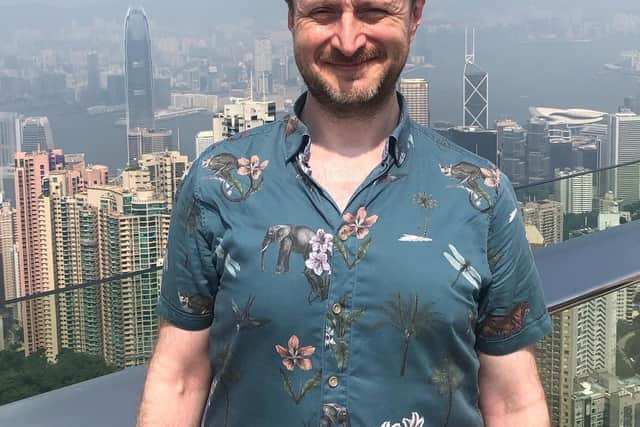
Vertiginous thrills of a different kind await on Sky Terrace 428 at Victoria Peak. The highest viewing platform in Hong Kong provides breathtaking panoramic views of the islands until 10pm each night (adults HK$75/£7.45, children HK$38/£3.80).
The 1.4km journey to the summit on one of the world’s oldest funicular railways takes under 10 minutes in handsome two-carriage trams, which serenely ascend a 25.7-degree incline on the steepest part of the route (return ticket adult HK$88-108/£8.75-£10.75, children HK$44-54/£4.40-£5.30).
From this vantage point, more than 500 gleaming skyscraper fingers (the most in the world) claw majestically towards heaven, divided by Victoria Harbour where a nightly Symphony of Lights illuminates the waterside skyline with lasers, searchlights and LED screens to a recorded musical score.
Descending back into the Central region, the Mandarin Oriental has been an elegant and silent witness to the dramatic land reclamation of Victoria Harbour over the past three decades.
The flagship of the global hotel chain celebrated its 60th anniversary last year and remains a comforting beacon of luxury in a changing skyline that now includes the newly opened Henderson building, designed with curving glass to evoke a soon-to-blossom Hong Kong orchid tree.
Economic divisions are immediately evident across the water in Kowloon, once renowned for a lawless walled enclave of over 30,000 residents, which the British demolished in 1994.
Handprints of more than 100 celebrities from Hong Kong’s celebrated film industry form an Avenue Of Stars in the Victoria Dockside cultural district where designer stores beckon come hither.
Walk up Nathan Road to Tung Choi Street, close to Mong Kok Mass Transit Railway (MTR) station, and the eye-watering price tags are replaced by the too-good-to-be-true bargains of Ladies’ Market, a one-kilometre stretch of open stalls heaving with fake Louis Vuitton handbags, electronics, silk pyjamas and colourful tat.
Public transport is cheap and stress-free using a rechargeable Octopus smart card, available from convenience stores and machines at stations.
The card covers trains, buses, ferries, coaches and trams, known affectionately as Ding Dings because of the warning bell that sounds when the vehicle is about to stop.
Where to eat
An elegant Chinoiserie tearoom adorned with chest-puffing peacocks hosts the contemporary dim sum and tea-inspired cocktails of Dim Sum Library. Moreish crispy cod rolls embedded with Yunnan termite mushrooms (HK$88/£8.75 for three) are a perfect partner for aromatic and intensely flavourful black truffle har gau shrimp dumplings (HK$78/£7.75 for three).
Yum Cha in the bustling Tsim Sha Tsui tourist hub boasts the cutest, Instagram-friendly presentations of scrumptious dumplings and bao buns. Steamed white piggies filled with barbecue pork (HK$49/£4.90 for three) are almost too darling to devour with their hand-sculpted pink ears and snouts, but gluttony prevails.
The family-run High Island (Yau Ley) Seafood Restaurant in Sha Kiu Village takes full advantage of hauls from local fishermen. Fried giant prawns with a molten soy sauce glaze (HK$178/£17.70 for eight) arrive scalding hot and demand Teflon fingers to disrobe.
Celebrating its 16th consecutive year with two Michelin stars, Amber at The Landmark, Mandarin Oriental seduces eyes with a gold and beige dining room of elegant curving banquettes. Dutch-born chef Richard Ekkebus’ dairy-free, eight-course contemporary French menus (HKS2058-2888/£204.80-£287.40 per person plus service) can include a tour of the kitchen.
The facts
*Return flights to Hong Kong with Cathay Pacific from £680 from London in Economy Class and £812 from Manchester in Economy Class.
Statue Square View Rooms at the Mandarin Oriental start from HK$3870/£385 per night, including breakfast.