
Council to spend £90,000 to restore statue of Napoleonic war hero
Ards and North Down Council is to spend £90,000 to restore the Victorian statue of Napoleonic war hero in Comber.
Councillors at the Environment Committee meeting last week agreed to the recommendation for ratepayers to cover the bill for work to the Rollo Gillespie Monument, after officials said it had failed to get any external funding for the project.
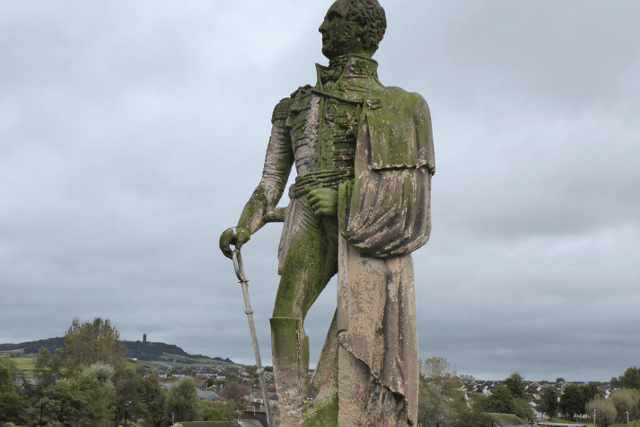

Around £15,000 has already been spent on phase one of the restoration.
A report was presented to the Environment Committee in February 2024 outlining the condition of the Monument and the works required to address deterioration.
The council officer report published for elected representatives this week states: “Since the earlier report, officers have explored potential external funding opportunities to assist with delivery of phase two works. No suitable external funding source has been identified for this project.
“In light of that position, a sum of £90,000 has been included in the rates for 2026/27 to provide for delivery of the phase two works and to allow the required conservation repairs to progress.”
The twelve metres tall Gillespie Monument is a free-standing sandstone square shaft column on a square stepped podium and is located in Comber town centre within landscaped gardens with brick paviour paths.
It was erected in memory of local military hero Sir Robert Rollo Gillespie. Gillespie was born in Comber in 1766 in a house which stood on the south side of the Square, now demolished. The monument was erected under the oversight of John Fraser, the first county surveyor for Down and unveiled on 24 June 1845.
Major General Sir Hugh Robert Rollo Gillespie (21 January 1766 – 31 October 1814) was an officer in the British Army.
The Army’s historian Sir John Fortescue called him “The bravest man ever to wear a red coat”. He was involved in the French Revolutionary Wars, the Vellore Mutiny, the Invasion of Java, the Anglo-Nepalese War, and the Battle of Nalapani.
DUP Councillor Libby Douglas said at the committee meeting; “We’re all aware that these works need to be carried out to protect this monument, which has been in situ since 1845, in memory of our local military hero.”