
'He really was a pathfinder': How the life of Belfast's unsung film hero took him from fighting in the First World War to directing a classic Christmas movie

This article contains affiliate links. We may earn a small commission on items purchased through this article, but that does not affect our editorial judgement.
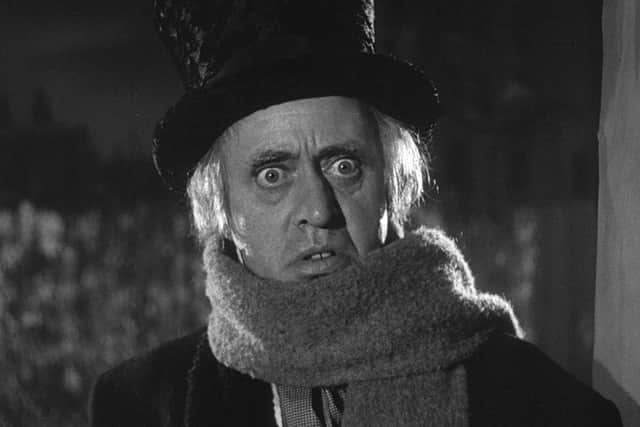
As Christmas nears, one of the nation’s festive favourite films is never far from the screen; 1951’s classic Scrooge, starring Alastair Sim. But the tale of its working class Belfast boy made good director is far less well known.
Brian Desmond Hurst’s life took him from a childhood on Newtownards Road to the First World War battlefield at Gallipoli to mixing with Hollywood stars as a hit moviemaker.
Yet even as Northern Ireland’s film industry takes off, the province home to both Oscar-winning domestic product such as ‘An Irish Goodbye’ and large-scale international blockbusting movie and TV, the Ulsterman who first blazed a trail into the industry is something of an unsung figure.
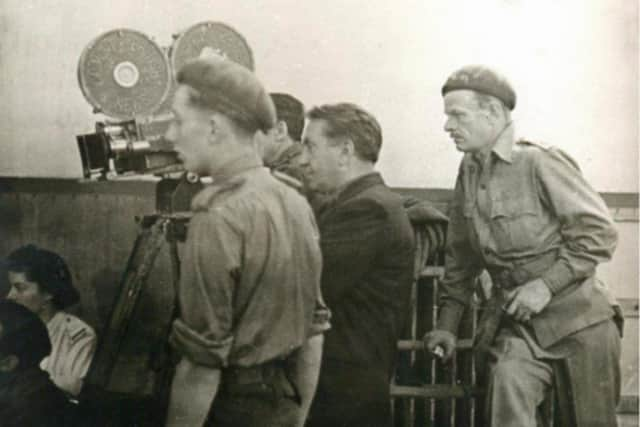
That’s something his great-grand-nephew, Allan Esler Smith, is trying to change. Since taking control of his relative’s estate in 2009, he’s been trying to raise awareness of the pioneer and win recognition for Hurst’s work – everything from his seasonal classic Dickens adaptation to gripping 1946 hit ‘Theirs Is The Glory’, which saw him recruit actual veterans of the Second World War’s Battle of Arnhem to recreate its events on screen, just two years after they’d lived it.
Other fascinating tales include his wartime documentary short ‘A Letter From Ulster’, which followed US servicemen as they trained in the province in 1942, and his 1936 love-across-the-barricades drama about partition, ‘Ourselves Alone’, which was so controversial in his homeland that it was banned in Northern Ireland despite Hurst’s insistence that it’s actually pro-British.
"He really was a pathfinder,” says Allan. “When people find out his story, they think ‘what, someone from Newtownards Road did all that?’ – and yeah, yeah he did.”
The director’s honoured with a blue plaque in Queen’s Film Theatre in Belfast, while a large soundstage in Titanic Studios is named in his honour and Hurst memorabilia is due to be on display in the city’s Strand picture palace when it reopens after refurbishment next year.
This week a new edition of the Belfast-born director’s collected writings about cinema, ‘Hurst on Film 1928 to 1970’, was published; it follows hot on the heels of a second edition of a book Allan co-authored about the director’s war experiences both on and off screen, ‘Theirs Is The Glory: Arnhem, Hurst and Conflict on Film – The Man Who Shot The Second World War’.
Born into a family of ironworkers in the Harland and Wolff shipyards, at age 19 Hurst enlisted in the British Army shortly after Great War broke out in 1914. The following year, he and the rest of the 6th Battalion Royal Irish Rifles were plunged into the horrors of the gruelling Gallipoli campaign – a baptism of fire for people who had never experienced combat.
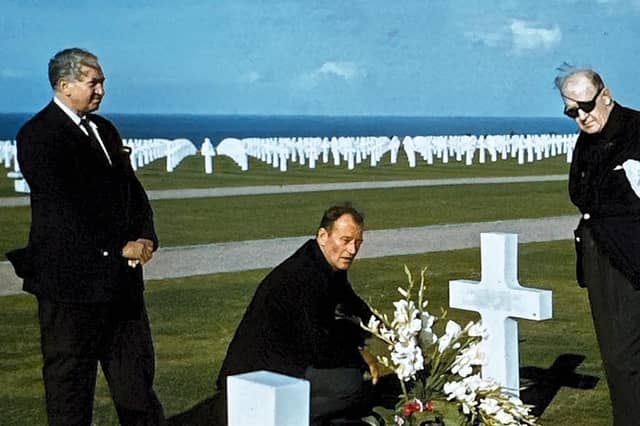
After the war he emigrated to Canada, studying art before making his way into the film industry, where he was mentored by a man who became a legendary director of Westerns; John Ford, the name behind John Wayne’s classic movies.
Returning to the UK, Hurst settled in London and spent the rest of his career there, though he often returned to Ulster for what he described as a “spiritual bath”.
For Allan, shining a spotlight on the director’s work is not only trying to bring now-unheralded works of art available to the public, but an act in the memory of the times in his youth he remembers “going to London to drink red wine with Brian”.
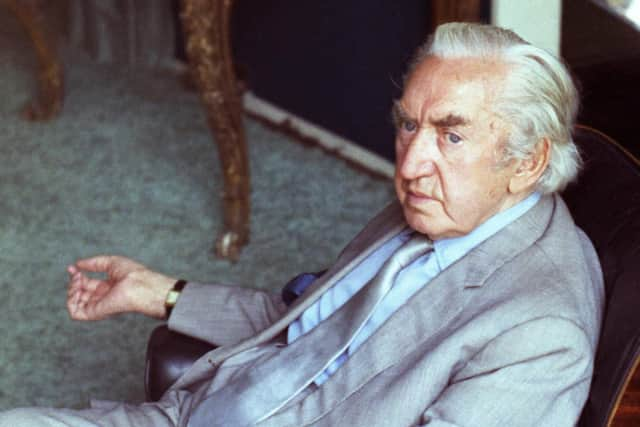
"He’d sit and tell me stories,” he remembers. “The one thing he’d never talk about was his time at war; people of that generation often didn’t. Sometimes he’d show me a large scar on his arm and say he got it at Gallipoli, but that was it.
“After he died, we found his memoirs; he wrote in great detail about the horrors he saw, like cradling a dying Australian serviceman and giving him his last drink of water, but he never spoke about it.”
But his military experience came to stand him in good stead during the Second World War, during which Hurst made a series of morale-boosting films for the Ministry of Information, as well as marshalling recent veterans for ‘Theirs Is The Glory’.
“They were soldiers and he’d been a soldier too,” says Allan. “They understood each other. Without that common ground, they wouldn’t have taken him seriously.”
But Allan’s favourite of his great-grand-uncle’s films is a film noir, ‘On The Night Of The Fire’, starring Ralph Richardson as man whose impulsive theft of a wodge of cash results in his personal and moral unravelling. “He tries to cover it up, but makes a mistake; tries to fix that, but there’s another mistake,” he says. “It’s a spiral into despair – bleak, but wonderful watching.”