
Retro: Rolling Stones cause chaos at the Ulster Hall (1964)

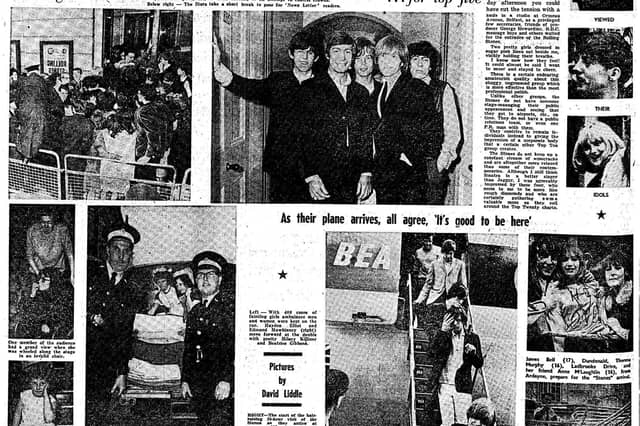

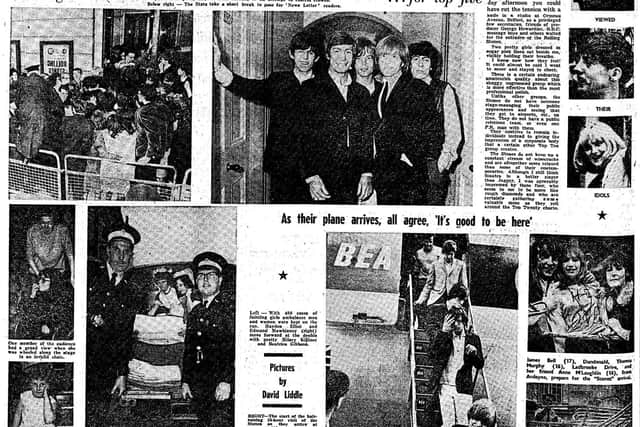
“It was chaos in there!” That was just one of many stories which had been relayed to the News Letter by fans of the Rolling Stones when they had played at the Ulster Hall, Belfast, at the end of July 1964.
The Stones were welcomed to Northern Ireland by “the screams of thousands of fans”, some had become so excited that “400 fainted and 25 were taken to hospital, six of whom were detained”, one of whom, it later transpired, had been a pregnant woman.
Inside the hall, the fans had been restrained by stewards but half way through, a police officer jumped on the stage and appealed to the crowds to “keep back” and The Stones hesitated in their playing for a moment and then continued.
Those outside were better off whereas inside St John Ambulance men were complaining that they had run out of water to throw over the fainting fans.
On stage, Mick Jagger, the vocalist of the group, appealed to the crowd to keep back, but still the platform was littered.
The chaos had all began in the early morning, fans had queued all day, but by 7 o’clock the two queues had met at the back of the hall. Spectators hung out of windows in Bedford Street, and by 9.30pm, the crowds began to get excited.
Already ambulance men, who had been kept on the go all day, but when, at about 10pm, a large Mack Daimler approached, the people broke loose. Police crash barriers were of no use, and in the chaos the car containing the group missed the entrance. A second attempt was made – this time successful – and all five of the Stones rushed in the back entrance of the hall.
“The corridors then turned into a battlefield,” wrote the News Letter’s correspondent who attended the concert. “Dozens of police lined the way but confusion reigned.”
The reporter added: “And then the group appeared on stage. I was right behind them and yet nothing but screams and shouts could be heard. Pandemonium broke out, and officials nearly had the show called off.
“When it did finish the climax of the night was reached. The Stones had to find their way from the stage exit to their dressing room, via bodies and more fans who suddenly appeared from nowhere.
“A fight broke out and one girl later shouted; as she wept, ‘Brian Jones touched me!’”
The Stones left Belfast at 11pm for Ballymena.
Four hours earlier a police spokesman had told the News Letter: “We are not expecting anything out of the ordinary – certainly nothing approaching the Beatles’ visit.”
When the dust had settled, he said again: “I’ve never seen anything like it – nor ever want to again!”
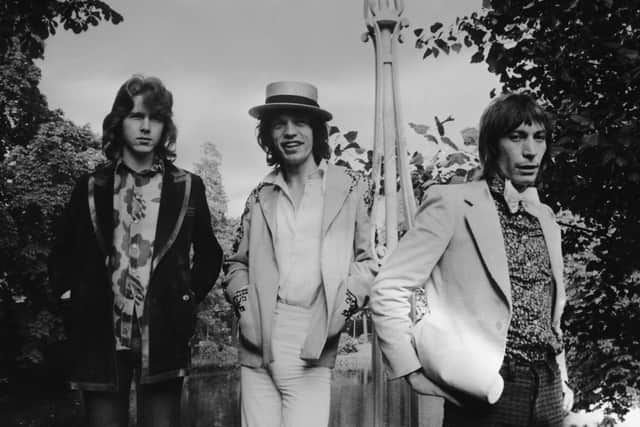
Keith Richards, the 19-year-old, black-haired member of the Rolling Stones, had arrived earlier to the quietest reception he had received for months. Keith was the “missing Stone” who did not fly with the four members of the group when they left London, and he had to make his own way to Belfast. Richards, who came from Dartford, confessed last night to the News Letter that he had overslept.
He said: “I’m a heavy sleeper and I didn’t wake up until after lunchtime.”
Richards had not reach the city until 8pm – only two hours before the group's scheduled appearance at the Ulster Hall.
“It was much quieter travelling alone and I rather enjoyed it,” he remarked.
The official figures issued by the St John Ambulance Brigade and the Royal Ulster Constabulary, the day after the concert detailed: Ulster Hall – 350 casualties; 20 taken to hospital; four serious cases, including a pregnant woman. It added that for the Ulster Hall operation the brigade had 43 members and seven ambulances on duty.
Mr W A Ryan, honorary public relations officer of the brigade, in a statement, refuted emphatically any suggestion that members of the brigade would be reluctant to maintain a similar duty in future.
“The public can rest assured that the services of our trained and dedicated brigade personnel will always be available for the relief of human suffering when and where the occasion arises, irrespective of the circumstances,” he said.
“It may be of interest to know that the 43 members of the brigade who were on duty with seven ambulances on the occasion dealt with nearly 400 cases, 20 of whom had to be conveyed to hospital for further treatment.”