
Saving Belfast's Assembly Rooms key to stalled city centre Tribeca development, says councillor as 18th century building in 'parlous state' formally added to global at-risk list
Rescuing Belfast’s crumbling 18th century Assembly Rooms is the key to getting the city centre’s stalled Tribeca regeneration scheme moving again.
That’s according to one city councillor as the derelict Assembly Rooms, among the oldest buildings in the capital city, were formally added to a global list of threatened treasured monuments.
Hopes are high that the Waring Street building’s presence on the World Monuments Fund watchlist could kickstart moves to preserve it.
Listed for protection in the 1970s, the Assembly Rooms have been officially at-risk since 2003 and are currently in the hands of a developer who plans to demolish much of the surrounding area to make way for the Tribeca regeneration project.


The 12-acre Tribeca scheme has been stalled for years; while Belfast Council has looked into getting hold of the Assembly Rooms, little has happened with that idea in the last 12 months.
But for councillor Brian Smith, saving the 18th century site is “the key” to getting city regeneration going again.
“I believe that once we have the outcome of the Assembly Rooms, in whatever shape or form, we’ll see the rest of the Tribeca scheme happening fairly sharpish,” he told the News Letter.
“The jewel in the crown here is the Assembly Rooms, it’s a monumental piece in the city centre. It’s uniquely Belfast, which is what we need to attract people and tourism – and it’s what we need from Tribeca, that’s the direction of conversation I’m hearing.”

High-ranking representatives from the World Monuments Fund (WMF) visited Belfast yesterday (26th) to formally welcome the Assembly Rooms to their books, in many cases getting their first looks at the crumbling property.
That includes WMF Britain executive director Magnus von Wistinghausen, who said that after touring the site it’s obvious “something needs to happen, and it needs to happen quite soon”.
"Just walking around the outside of the building, you can see the parlous state it’s in,” he told the News Letter during a special WMF event in the city’s historic Clifton House.
The WMF can bring a new international focus to the site, he explained, which the organisation hopes will result in it being properly conserved and brought back into public use.
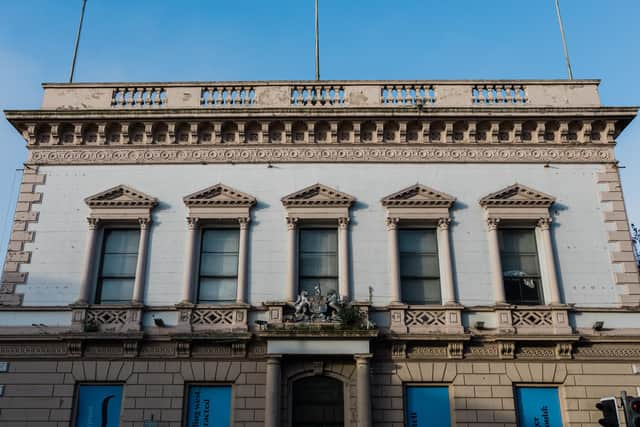
That would also, he added, see the WMF become “part of a coalition of the willing developing a credible plan for its future cultural use as a specific space for the people of Belfast”.
“Clearly, it’s a building that is very important to the history of Belfast,” said Mr von Wistinghausen. “There is a sense of urgency, [but also] a sense of opportunity.”
The WMF watch usually lasts for two years before a new list is developed; during that focus, said the executive director, the body wants to “come in and significantly contribute to the conversation, bringing the project forward”.
"It’s not for us to decide or come in with an idea,” he said. “What we can bring is a lot of experience bringing people together, curating conversations, making sure that enough people are heard, the options are considered and any feasibility work is done – we contribute to that financially.
“We are part of the process of shepherding the idea towards a vision that is culturally exciting, but also financially viable and can be put to key stakeholders who can leverage investment.”