
US President Eisenhower dismisses ‘preventive war’ talk (1954)

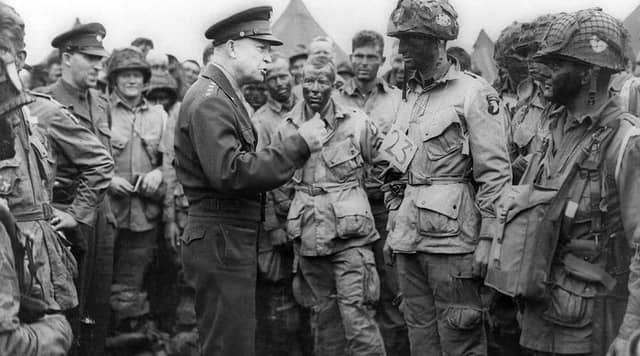

President Dwight Eisenhower during this week in 1954 dismissed the idea of a “preventive war” against the Communist Powers, which had been discussed in the US press, as “ridiculous, completely unthinkable and impossible”.
He also rejected recent suggestions in Congress that the United States should sever diplomatic relations with Russia.
The US President defined a preventive war as “the waging of a quick police action to avoid a terrific cataclysm of destruction later”.
“That was impossible today. How could we have a preventive war if one of its features was several cities lying in ruins? That was not preventive war: It was war.”
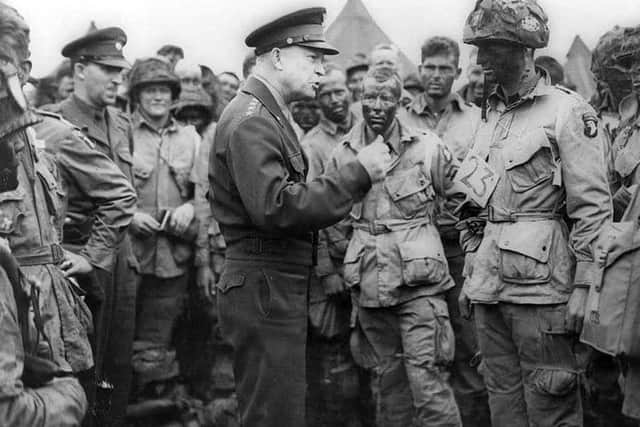
He said that he would not listen seriously to anyone who came in to talk about such a thing to him. “Preventive war is by definition ridiculous in itself. It is so completely unthinkable that there is no use going any farther on the subject,” said Eisenhower.
A correspondent referred to testimony before a Congressional committee by General Mark Clark, who had criticised the United Nations, who had said that it ought to be reorganised as a world alliance against Russia, and urged the US to sever diplomatic relations
The US President said that US interests would not be served by cutting off diplomatic relations.
He said: “General Clark's views are directly opposed to mine. The world must maintain a forum to discuss differences.”
He went on to say that he recognised that the UN had “become a forum for propaganda”, a field in which the US was “less skilful than others”, but “by and large the world's only hope was to improve this organisation, bringing it closer to the great thoughts which inspired it”.
The President reviewed the international situation as it was a year ago and as it at that time. He said: “A year ago we were fighting in Korea and Indo-China, there was a highly dangerous situation in Persia with the Tudeh (Communistic) Party leading Persia farther and farther away from the Western world, there were potential dangers in the Egyptian situation and a growing threat from Communism in Central America.”