
A mysterious plan to defend Brittany revealed (1946)

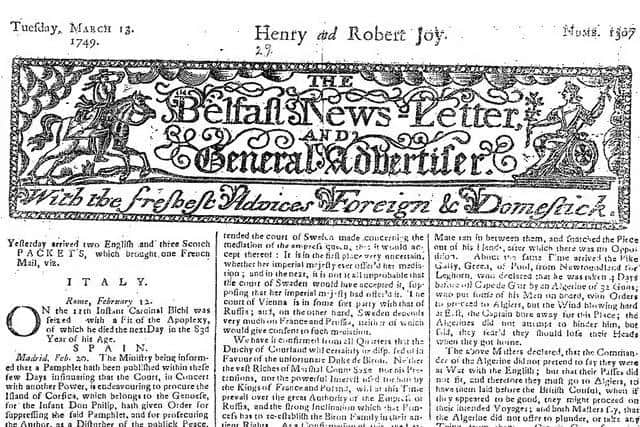
A mysterious plan to defend Brittany after the German breakthrough in June 1940 was disclosed in a despatch by Lieutenant-General Sir Alan Brooke (Lord Alanbrooke), then commanding Second Corps of the British Expeditionary Force (BEF) in France, submitted to the Secretary for War on June 22, 1940, reported the News Letter during this week in 1946, almost six years on from the events themselves.
The despatch had been published for the first time as a supplement to the London Gazette was the first of a series of war despatches of British generals which were to be made public.
The plan for the defence of Brittany was described to Sir Alan on June 14, 1940, by General Maxime Weygard, French Commander-in-Chief, who said it was in accordance with a decision taken by the Allied governments.
General Weygard described the plan as “romantic” and as having been adopted without military advice.

Being under the impression that the British government had approved the plan, Sir Alan signed a document which prescribed the role of the BEF in It.
Back at his headquarters at La Mans, Sir Alan had telephoned the Chief of the Imperial General Staff, Sir John Dill, and asked him whether the scheme had the British government's approval, and told him that both Generals Weygard and Alphonse Georges (Commander-In-Chief, North-Eastern Theatre of Operations) appeared to consider it “impracticable with the force available”.
The despatch stated: “The CIGS informed me that he knew nothing of the scheme, but said he would refer the matter to the Prime Minister [Mr Churchill].”
An hour later the CIGS telephoned to say that the Prime Minister knew nothing of the Brittany plan, and that all arrangements were to start for the evacuation of those elements of the BEF which were at that time not under the orders of the 10th French Army.
Sir Alan stressed: “As His Majesty’s Government had not been consulted with regard to the Brittany scheme, and the withdrawal of the BEF had been approved, I considered that I was no longer in a position to carry out the dispositions settled with Generals Weygard and Georges.
“I, therefore, requested the CIGS to inform General Weygard, and I understood this was done. The instructions I received later stating that I was no longer under General Weygard's orders confirmed this opinion.”
Later Mr Churchill himself spoke to Sir Alan on the telephone and asked about the employment of the elements of the 62nd Division, which were not under the orders of the 10th French Army.
“I assured him that I considered that no useful purpose could be served by adding them to the forces already with that army. They could not possibly restore the situation on that front, nor could they close the gap of some 30 miles which now existed between the 10th French Army and the Army of Paris.
“The Prime Minister then agreed to my proposal that the troops under orders of the 10th French Army should remain fighting with that army for the present, while the withdrawal of the remainder of the BEF should proceed.”
The withdrawal of the BEF began in the early hours of the following day, June 15. At 1230 hours the CIGS telephoned to say that the Prime Minister was anxious about the withdrawal of the 52nd Division (less the detachment with the 10th French Army).
The Prime Minister wished the embarkation to be cancelled, as he feared the effect of such a withdrawal on the morale of the French.
Sir Alan remarked: “I pointed out that my plans had already received approval, that orders had been issued for the move, and that any alterations now would complicate the embarkation at Cherbourg and might well endanger it. The CIGS, however, said that the Prime Minister did not wish the division to be embarked without the approval of HM Government.”
During the evening Sir Alan again spoke to the CIGS and impressed on him the need to evacuate the division. The following morning he was told that the division, less the men with the French Army, could embark.
It was on the following day, the 17th June, that the CIGS told Sir Alan that the BBC had reported that the Petain government had asked for an armistice. He agreed that all efforts should be directed to getting personnel away. That night Sir Alan left St Nazare in HMS Cambridgeshire. He reached Plymouth on the evening of the 19th, and reported in London the next morning.
Shooting of commandos on Hitler’s orders
Admiral Erich Raeder, former German naval Commander-in-Chief, “white and drawn with anger”, screamed and shouted during cross-examination by Sir David Maxwell Fyfe at the Nuremberg Trial during this week in 1940.
One clash came when Sir David called “entirely untrue” a charge by Raeder that Britain armed all merchant ships and ordered them to fire on any U-boat encountered.
Raeder replied in a shrill scream: “That is not an untruth. I don't tell untruths.”
Pressed to answer directly whether he approved Hitler's order for killing commandos, Raeder shouted: “I received the order from the Fuehrer and had to pass it on. I was not in a position to go to my supreme commander and ask him what the ground for the order was. That would have been mutiny and death for me."