
Esmond Birnie: Could England’s performance in the World Cup boost economic growth?
The Starmer Labour government made higher economic growth one of their highest goals. UK GDP growth has been pretty miserable since 2007-8.

Without better growth it is hard to see how higher wages and living standards can be achieved. Without much higher growth, and hence higher receipts in terms of income tax, VAT etc, the UK government will be forced to make tough choices such as breaking the fiscal rules limiting government borrowing, or in terms of raising tax rates still further or cutting public spending.
Starmer and Reeves were right to go for growth but the obstacles are formidable. Starmer said he would remove planning restrictions and push house building in England to the heady heights of 300,000 new starts each year (the NI planning system is even more sclerotic than the English one, our rate of house building falls short of demand).
Such moves faced the same opposition from localism and Not In My Back Yard-ism that frustrated Conservative governments during 2015-24. Time will tell whether Andy Burnham (if in charge) will be strong enough to overcome any anti-growth coalitions.
The lesson of history is that Labour governments often make economic growth a priority but fail to achieve it. The post-war 1945-51 Labour administrations may have been getting close to achieving export-led growth but were knocked off that course at the onset of the Korean War in 1950.
Rearmament imposed burdens on the British economy, disadvantaging it relative to recovering competitors such France, Germany and Japan.
Harold Wilson’s 1964-70 Labour governments talked about growth through the “white heat of technology”. That heat dissipated given the weakness of the UK balance of payments and difficult industrial relations.
With hindsight, we can see that the Blair administrations, May 1997-June 2007, were blessed by unusually favourable economic conditions, especially in terms of the state of the global economy. Insufficient use was made of this as foundation for economic reform, especially in terms of public services.
Could goals lead to more GDP?!
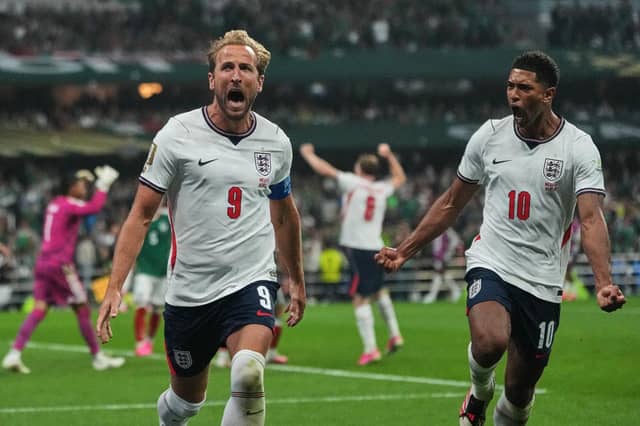
If England’s football team continues to progress through the World Cup, could this provide some uplift to the UK economy unexpectedly boosting Labour’s growth performance?
Back in the summer of 2018 whilst England was still in that World Cup, Bank of England governor Mark Carney pronounced that England’s progress was an “unadulterated absolute good” for the economy. At the same time, the Bank of England’s deputy governor Andy Haldane gave two reasons why he thought the economy might be doing better than expected: summer sunshine plus England’s World Cup achievements.
This time round in 2026 the likely impact on UK GDP is complicated. The summer weather has been hot and sunny. Fans going out to watch increase spending and hence GDP growth. Many English fans (and for a while Scottish ones too) travelled to North America.
In terms of the national income statistics that travel spending actually counts as an import into the UK economy reducing measured UK GDP. (Incidentally, estimates of the fan-based spend was one of the main economic arguments used to justify a hefty public subsidy to build Casement Park in time to host the next Euros but it is important not to exaggerate how much spending would actually be generated.)
Another complicating factor is the role of gambling. The 2021 Euros almost certainly led to a large increase in spending on betting. Comparing the 2014 and 2018 world cup estimates are that online betting in the UK increased from £1bn in 2014 to £2.5bn.
At the worldwide level betting may have increased by 13% comparing the 2018 and 2022 world cups. Total gambling on this world cup has been variously estimated as between $50bn and $500bn in 2026 depending on how far unregulated markets are included.
Upsurges in gambling, whether online or otherwise, will “count” to GDP but tend, invariably, to represent gains to the bookies’ profits much more than wins back to punters. Problem or addictive gambling remains a big challenge for UK public policy including Northern Ireland. (Whereas it is often claimed that an operational Stormont is helpful to Northern Ireland, regulation of gambling lags the rest of the UK - the remit of the Gambling Commission, for example, applies only to GB.).
Some of the football “gains” to measured GDP could represent impacts on people’s welfare and quality of life which are far from positive, they may even be negative. Sadly, research evidence indicates that alcohol-related violence and domestic abuse tend to spike during sporting tournaments.
One interesting application of economic theory is about how English progress in the World Cup could even lead to increased investment (and hence drive future growth).
The 1930s economist John Maynard Keynes argued a lot of investment was determined by emotions and gut instincts - confidence about the future. It might therefore be claimed that footballing victories could fuel “animal spirits” in England and increase a hitherto very low UK investment rate.
Perhaps, to a small extent, but UK industrial investment has been relatively low for a very long time now and there must be a range of factors which explain this.
How might the performance of the national team impact on productivity? In the short run the effect could even be negative - too much distraction from work.
One wonders how much output was “lost” during Monday, July 6, given the middle of the night England-Mexico match. But there is also the longer term possibility that in the warm glow of any further worldcup wins work effort and productivity rise.
History, unfortunately, suggests caution. England reached the semi-finals of the World Cup in 1990: in that year the economy grew by only 0.6%.
England famously beat Germany in 1966 but that did not stop German economic productivity surpassing UK levels during the mid 1960s.
Consideration of the GDP growth figures for the UK in 1960s provides little evidence of a post-World Cup growth surge unless one assumes an implausible two-year lagged effect. 1966 was one of the slowest growing years of that decade.
A year after the 1966 World Cup victory one of the major economic reversals of the post-war period happened: Sterling underwent a major devaluation.
The Arsenal supporting PM Starmer will be hoping no such economic reversal is on the cards. In any case, he will probably be stepping down as PM a couple of days before the World Cup final on July 19.
Dr Esmond Birnie, senior economist, Ulster University Business School