
Alleged IRA terrorist to stand trial over murder of UDR soldier more than 40 years ago
An alleged IRA terrorist was today ordered to stand trial charged with the murder of a UDR soldier more than 40 years ago.
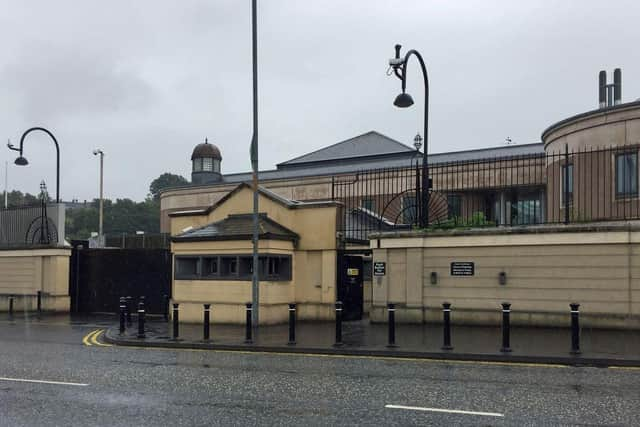
Appearing in the dock of Armagh Magistrates Court, sitting in Newry, and with relatives of his alleged victim watching from the public gallery, 68-year-old James Donegan confirmed his identity and that he was aware of the three charges against him.

Earlier this year Donegan, from Bruce Manor, Arva in Cavan, was extradited from the Republic to face the charges accusing him of the murder of Joseph James Porter on a date unknown between 22-25 June 1979.
The pensioner is further accused of having a firearm and ammunition, namely a Ruger Mini 14 rifle, 5.56x45mm calibre cartridges and .30''-06 M2 AP calibre cartridges, with intent to endanger life and with membership of a proscribed organisation, namely the IRA, on the same dates.
The body of Mr Porter, a 64-year-old farmer and part-time UDR soldier, was found close to the entrance of his farm at Creggan Road, Mountnorris in Co. Armagh around 9.30 am on June 24, 1979.
A post-mortem examination concluded that Mr Porter had died of gunshot wounds to the head and torso.
During a contested application for bail earlier this year, a prosecuting lawyer outlined that while Mr Porter was fully clothed, his socks were missing.
He had been in a local bar earlier that evening and was last seen alive driving home around 11.25pm, but the lawyer described how neighbours and witnesses heard two loud bangs, “which they recognised as gunshots,” around an hour later.
His body was discovered at 9.30am and when police arrived at the scene, they discovered that while there was no evidence of a forced entry, his house had been ransacked.
The assumption was that his killers were searching for his personal protection pistol and any other weaponry they could find.
His pistol was indeed stolen and a few days later, the Provisional IRA claimed responsibility for the murder, outlining that Mr Porter was “interrogated and executed because of his involvement in the British war machine in NI.”
Police enquiries established that the murder weapon, a Ruger rifle, had been used in subsequent attacks on the security forces, while a crime scene investigation found a fingerprint inside Mr Porter’s ransacked home.
That print was found to match a finger print taken from Donegan when he was arrested for alleged terrorist activities in 1977.
While there were no convictions or charges at that time, a review by HET and the Legacy investigation team established the alleged link to the murder scene.
It was also a feature of the case, the lawyer submitted, that Donegan had been given a six-year sentence for having a rifle and ammunition at Dublin Special Criminal Court in 1981.
Prosecutors in the South were asked to consider prosecuting Donegan for the murder but the court heard that twice in 2017, the Director of Public Prosecutions decided against prosecution.
It was after the legacy investigation team matched the fingerprint that extradition proceedings were initiated in June last year.
It was after the Supreme Court dismissed his appeal, that Donegan surrendered himself to the Garda who then handed him to the PSNI.
During interviews, Donegan referred to himself as being a soldier in a war and that Mr Porter was a legitimate target.
In court today, Donegan’s defence team said they did not accept there was a prima facie case and while they made submissions, those details cannot be reported.
Having considered defence and PPS arguments however, District Judge Anne Marshall ruled, “I find there is a case to answer.”
“I am satisfied there is sufficient evidence to return this case to Crown Court. It is not for me to adjudicate on guilt or innocence and all such matters will be aired at trial,” she told the court.
Returning the case to Newry Crown Court, Judge Marshall remanded Donegan on £500 bail with a combined total of £200,000 in sureties and ordered him to appear for arraignment on 2 December.