
'Clarity needed on legal definition of a woman in Northern Ireland'
Clarity on the definition of a woman within Northern Ireland’s legal landscape is needed as soon as possible, the High Court heard today.
Counsel for the region’s Equality Commission said it is seeking an advisory declaration about the impact of a landmark ruling on transgender rights across the United Kingdom.
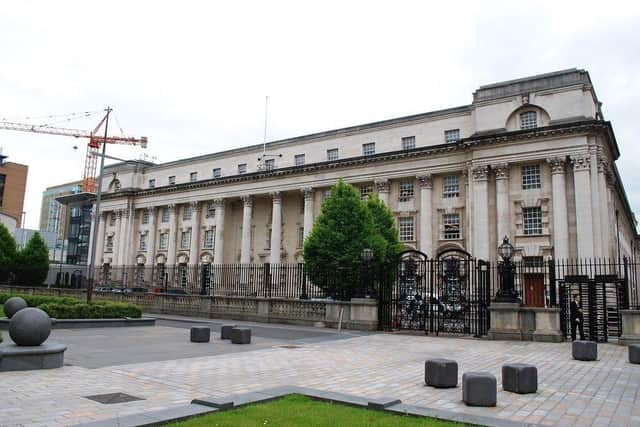

A judge confirmed the case, which also involves challenges from campaigners on both sides of the debate, will be dealt with next month.
In April last year the Supreme Court in London held that a woman is defined by biological sex under equalities law.
The verdict came after the Scottish government argued transgender people with a gender recognition certificate (GRC) are entitled to the same sex-based protections.
However, the judgment did not fully deal with a post-Brexit legal commitment specific to Northern Ireland.
Article 2 of the Windsor Framework imposes an obligation on the UK to ensure no reduction in human rights underpinned by European Union equality law and set out in the Good Friday Agreement.
The Equality Commission wants clarification on the implications of the Supreme Court’s ruling for Northern Ireland.
Amid ongoing uncertainty, the watchdog has also sought a judicial review into issues around Article 2 and EU law before it issues full guidance.
Professor Chris McCrudden, for the Commission, told the court: “There is a need for legal clarity, and we need it as soon as possible.”
Two other related challenges are being dealt with as part of the same legal battle.
The Women’s Rights Network has brought a case against the Commission as part of calls for it to issue guidance consistent with the Supreme Court ruling.
In separate proceedings, a member of the public understood to be exploring the possibility of gender reassignment is also seeking a judicial review on the current status.
Lawyers representing the Secretary of State, the Department of Education, the PSNI and Northern Ireland Prison Service also attended today’s preliminary hearing.
Mr Justice McLaughlin urged all participants not to just focus on what they allege to be the legal flaws in the current equality regime.
“It’s very easy to find deficiencies… solutions are much harder to come by,” he said.
Issuing directions and a timetable for dealing with the case, the judge listed a four-day hearing in December.
He also observed: “There are diametrically-opposed views, with the Equality Commission somewhere in the middle about what the end result should be.” ends