
EU intervening Hungary-style on trans matters 'now less likely' after Windsor Framework judgment
A Hungary-style slapdown of Northern Irish laws on transgenderism is now less likely thanks to the Supreme Court.
That is the view of KC and TUV leader Jim Allister in the wake of the Dillon judgment, handed down last week, “curbing the reach” of the Windsor Framework.
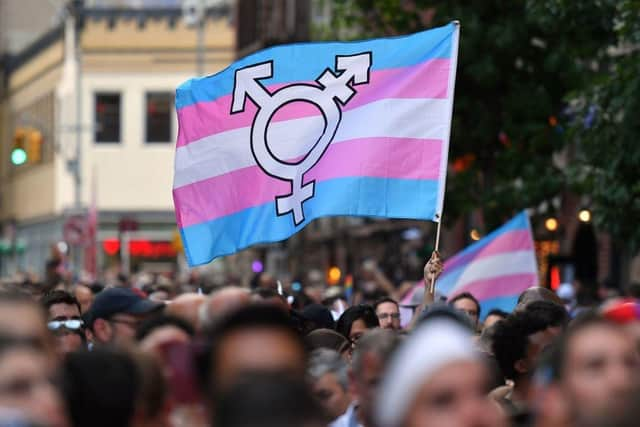

Mr Allister had feared the potential for repetition of a landmark EU intervention against Hungary last month, when the Court of Justice of the EU (CJEU) struck down that country’s ban on promoting LGBTQQIA+ material to children.
Mr Allister believes that the CJEU ruling signalled a willingness to take on legal fights over trans matters – such as possibly trying to thwart the application of last year’s UK Supreme Court judgment which found that the definition of “woman” in UK is limited to those who were born female.
Since Article 2 of the Windsor Framework guarantees “no diminution” of any pre-Brexit rights in Northern Ireland, Mr Allister had been concerned that the EU could “create an Irish Sea border when it comes to biology”, using Article 2 to argue that the Supreme Court definition of “woman” should not apply in the Province.
Speculation about this was stirred afresh last month when the CJEU ruled against a 2021 Hungarian law that “prohibits making available to minors [under 18s] content that promotes or portrays deviation from the self-identity corresponding to the sex assigned at birth, gender reassignment, or homosexuality”.
The CJEU found Hungary’s ban violated both EU law and the union’s “values”, and was “incompatible with the very identity of the Union as a common legal order of a society in which pluralism prevails”.
‘EU HAS SHOWN A WILLINGNESS TO INTERVENE’:
Mr Allister was asked if that CJEU judgment meant Northern Ireland would be barred from enacting a similar ban, and whether it could render last year’s Supreme Court definition of “woman” unenforceable.
Prior to last week’s Dillon judgment being handed down, Mr Allister had said: “I am concerned that attempts to push back against the trans agenda in Northern Ireland could become entangled with EU law and the jurisdiction of the CJEU.
"The recent ruling in the Hungary case demonstrates that the Court is willing to intervene where it considers that measures touching on gender identity or sexual orientation engage EU legal principles.
"In light of the UK Supreme Court’s judgment on the definition of a woman, there is potential for the EU to create an Irish Sea Border when it comes to biology, leaving women in Northern Ireland with fewer rights than those in other parts of the UK.
"If that happened, those who returned to government on the basis of the lie that the sea border was gone will owe the public an explanation.
"This judgment is a reminder that the constitutional arrangements imposed by the Protocol continue to carry consequences - and a warning of what may be coming down the tracks."
But the UK Supreme Court has now issued its Dillon ruling, which found that the immunity granted for Troubles incidents by the Legacy Act 2023 did not conflict with the Windsor Framework.
In the wake of that ruling, Mr Allister now says: “The welcome Supreme Court ruling, curbing the reach of Article of the Windsor Framework, will, happily, make it more difficult for the Equality Commission and other activists to argue against the ruling giving supremacy to biological sex.
"They may, of course, still try to engage European Court of Human Rights points, but CJEU rulings should now be of little help.”
‘NO DIMINUTION OF RIGHTS APPLIES TO WOMEN TOO’:
Fiona McAnena, director of campaigns for the charity Sex Matters, which is critical of transgenderism, cautioned against “reading too much” into the CJEU judgment against Hungary.
"The European court has ruled that Hungary cannot ban the promotion of transgender identities to under 18s, but it says nothing about single-sex spaces, or about the rights of other people,” she said.
"The Windsor Framework says there should be no diminution of human rights for people in Northern Ireland as a result of the UK leaving the EU.
"That isn’t just about people who claim a transgender identity.
"It applies to everyone, and it matters especially to women and girls.
"If a man can say he is a woman and access female-only spaces, then women lose privacy, dignity and safety.
"The Equality Commission for Northern Ireland needs to do its job and declare that the only lawful way to provide single-sex spaces, services and sports is on the basis of biological sex, not claimed identity.
"This is what the Supreme Court ruled a year ago, and it’s perfectly in line with European law."